1 / 1
0:00/0:00
Quartet
2017
Cimbalom
Double Bass
Electric Guitar
Harp
- Program Notes
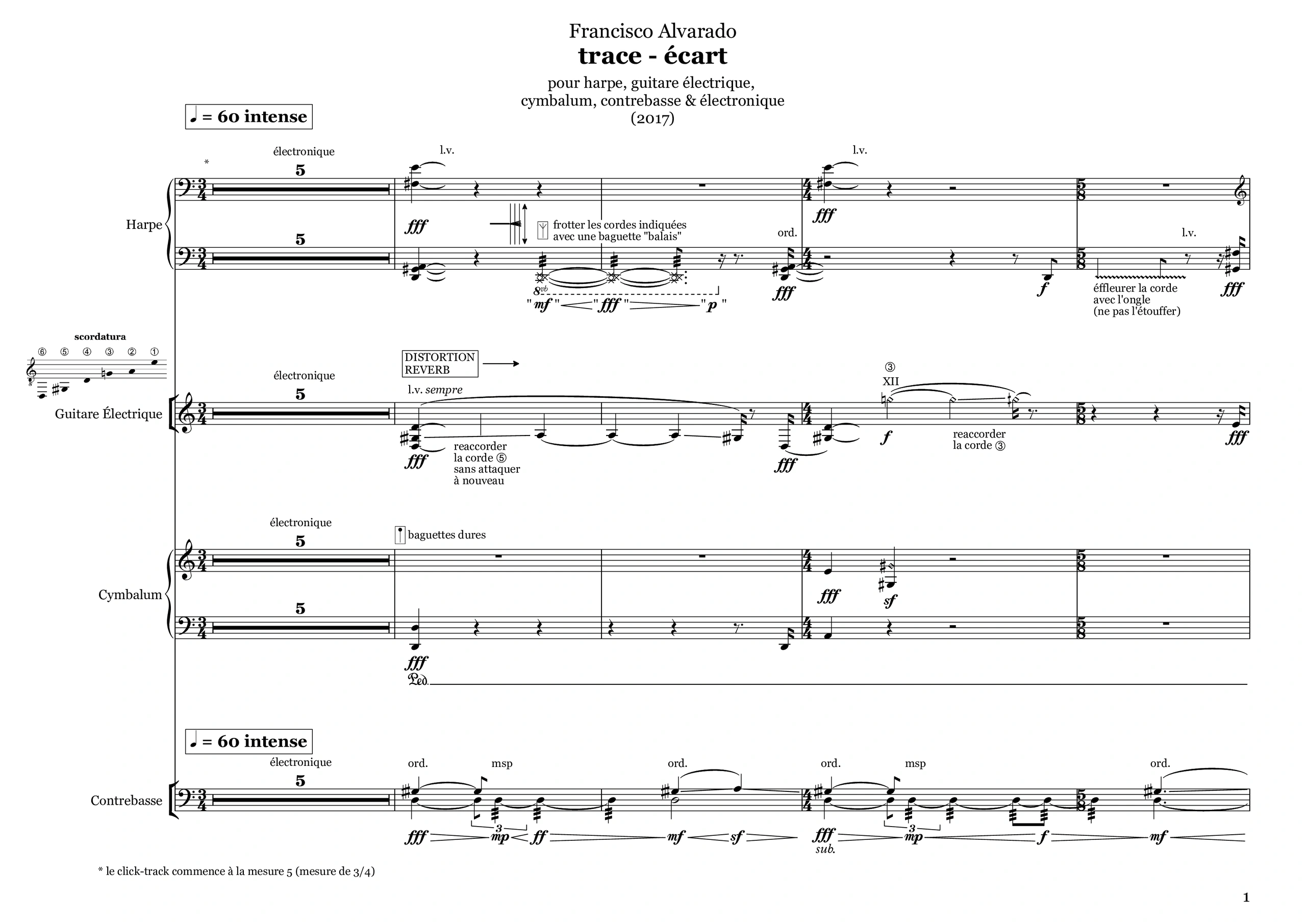
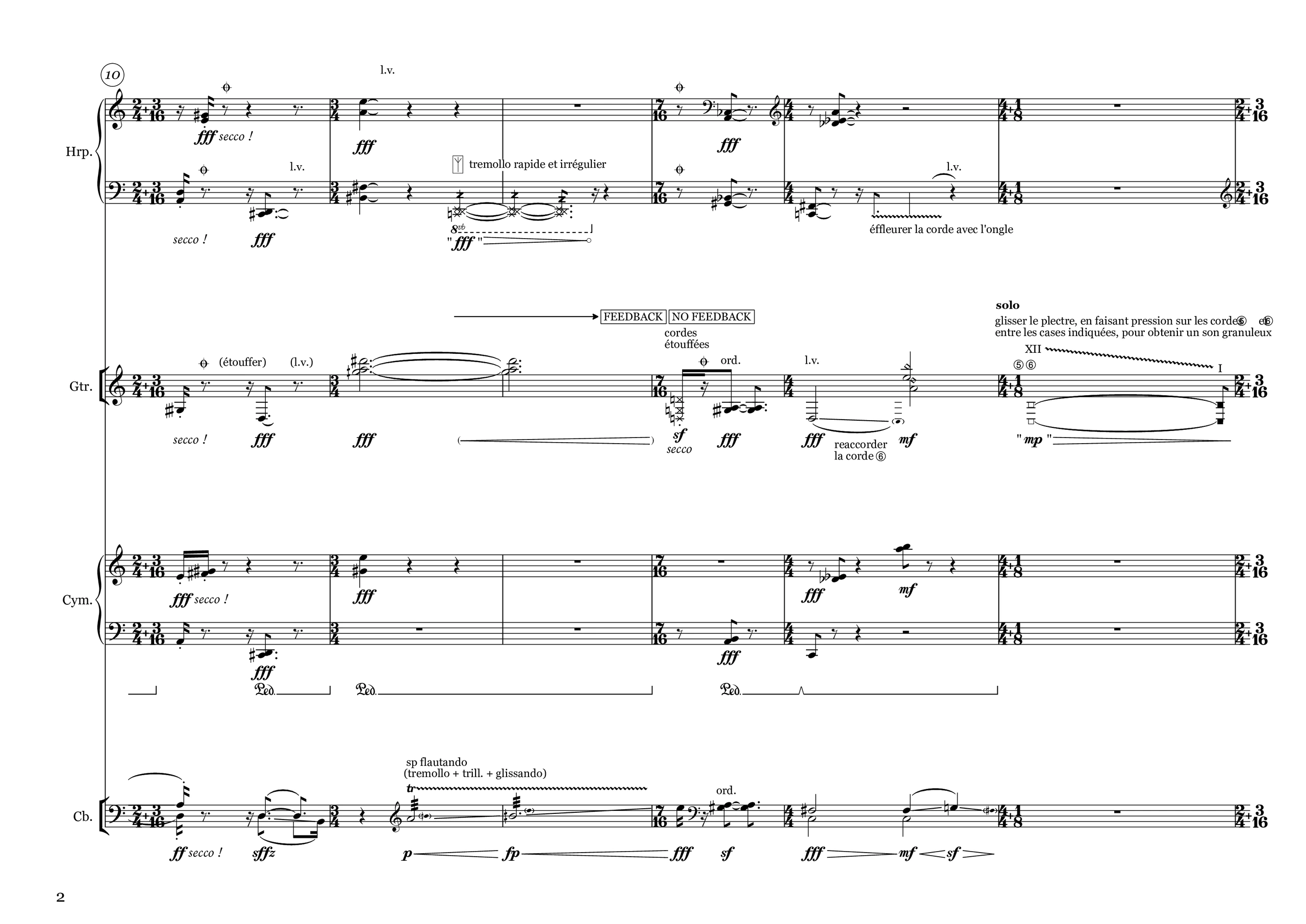
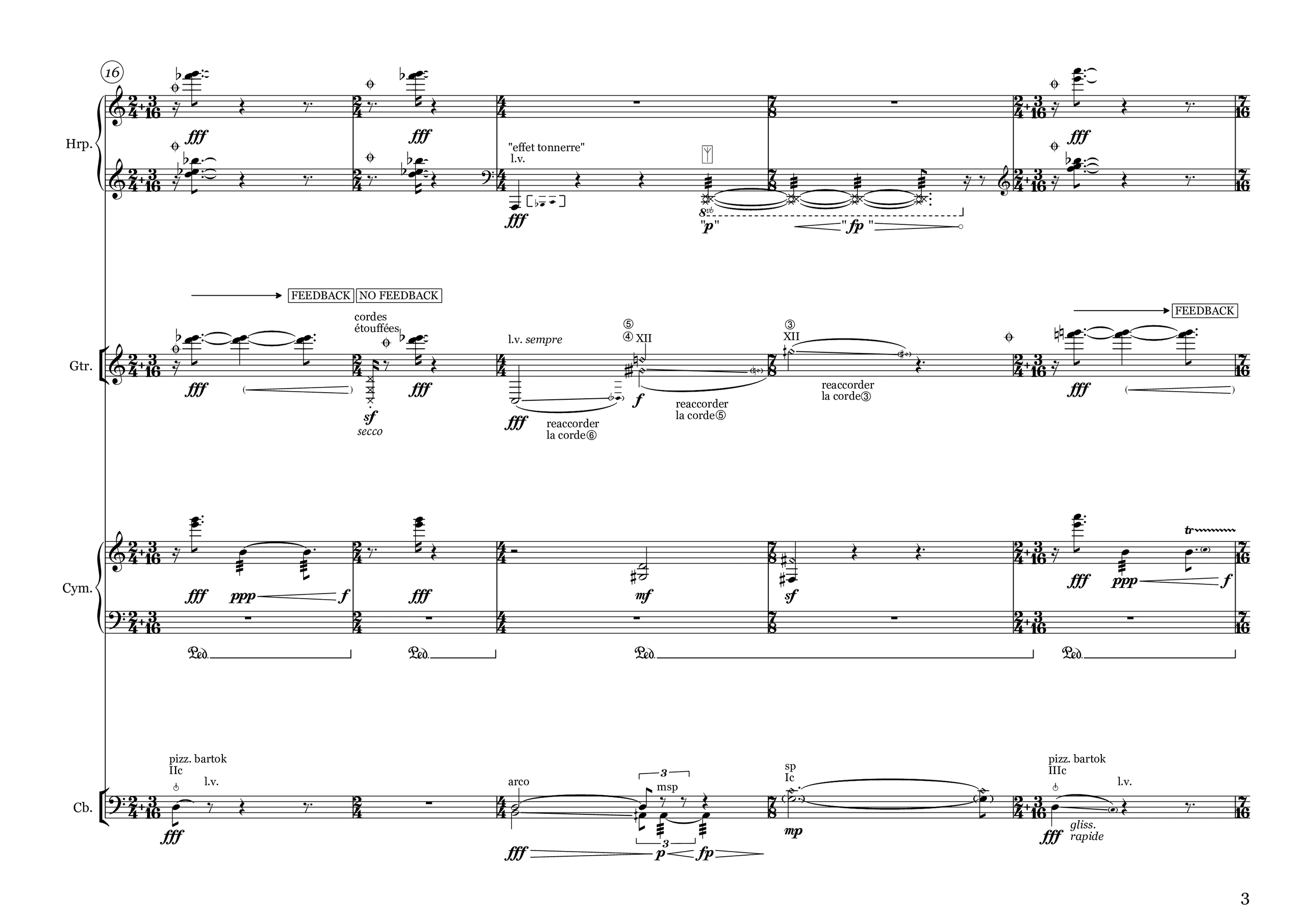
The central element of this piece is an audible / inaudible pulse, that transits continuously from the surface to the depths, leaving always a trace in our listening. The increase and the accentuation of this implicit / explicit pulse give form to complex rhythms and poly-rhythms, creating diverse and overlapped cycles within. I think of this pulse as an underground force, as a ruissellement continu[1], in which musical objects and rhythmic organizations emerge, taken the ephemeral form of an instant, within the infinite possibilities of this stream.
The four instruments sculpt and delimit this continuous space through their play, mostly characterized by plucking the strings. Electronics have a role of amplification, creating rhythmical networks, echoing or capturing and deploying the instrumental resonances, increasing the duration of sound’s sustains and decays. Following the steps of a wandering, the piece form is constructed by contrasting sections, succeeding one another in a non-directional voyage, following a trace that leads nowhere. In French the word trace is the palindrome of the word écart, meaning gap…
[1] [1] Foucault, Michel. Ni l’un ni l’autre dans Dits et Écrits, p. 537. Ed. Gallimard, Paris, 1994.
- Performer Credits
- Ensemble C Barré