1 / 24
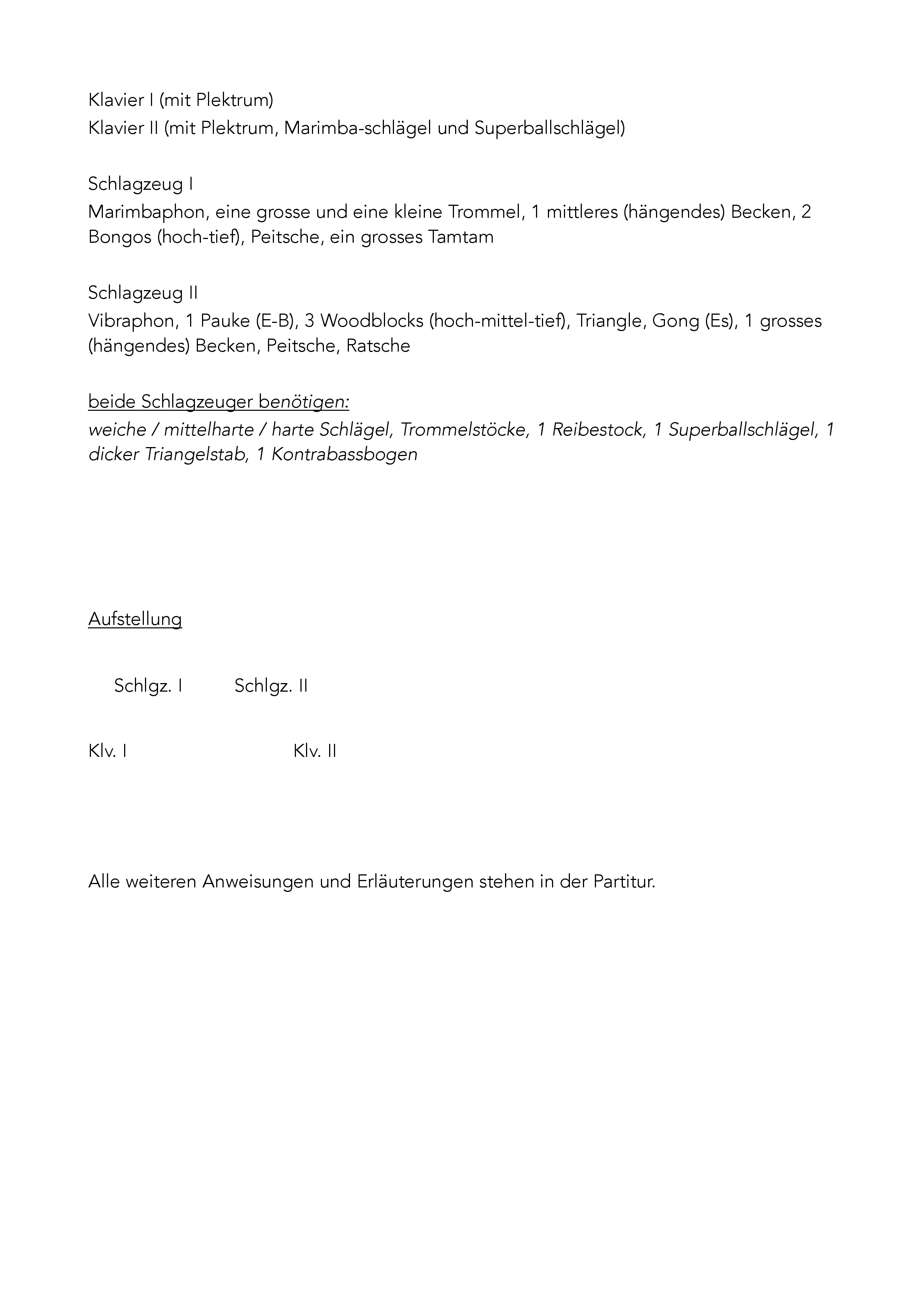
This work is written for two pianos and two percussionists.
Its title, Nachleben, comes from the German word meaning afterlife, afterliving, or the lingering life of something beyond its original moment. In cultural and aesthetic theory, Nachleben describes how memories, images, or emotional impressions continue to exist, echo, or transform long after the events that created them.
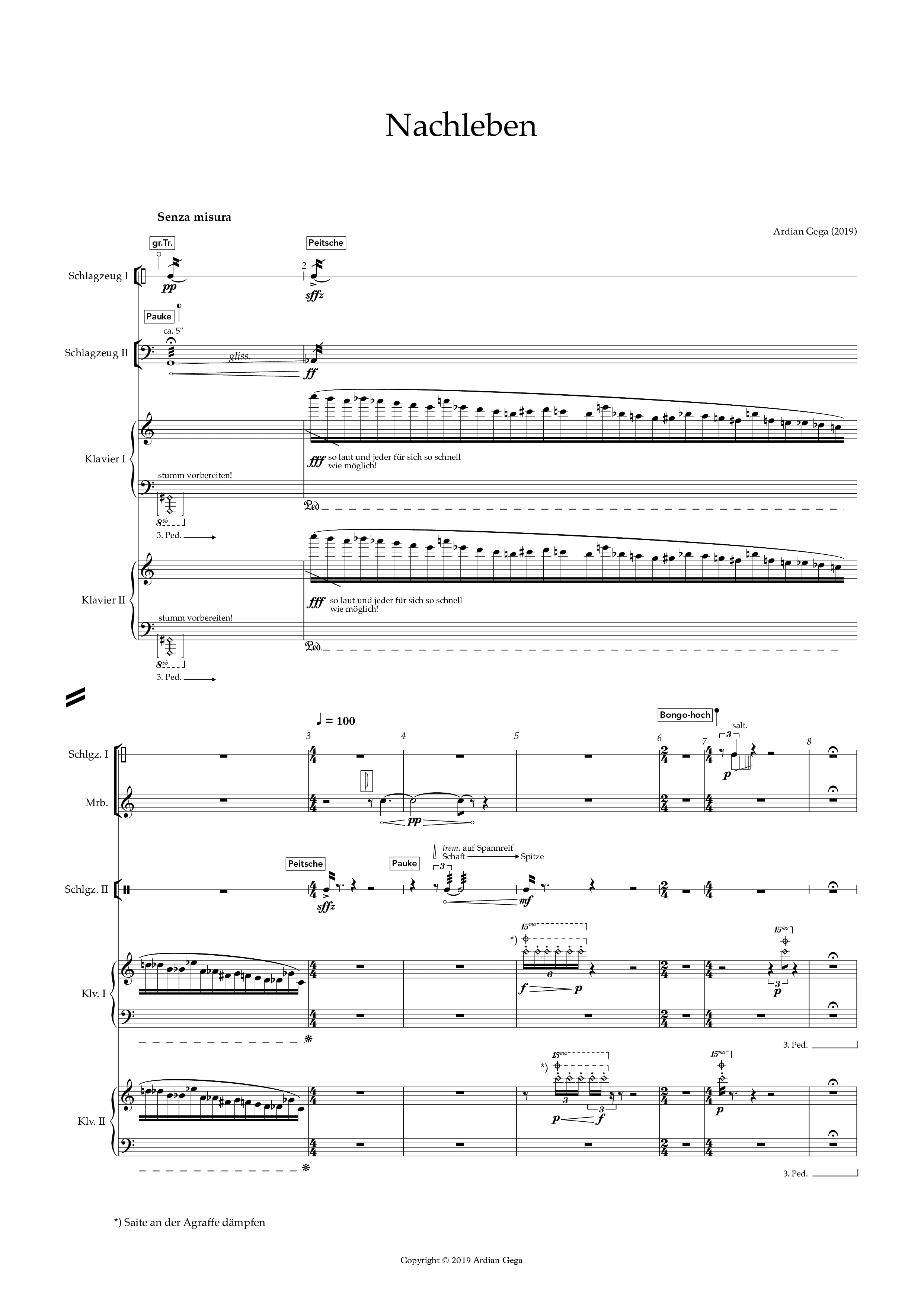
In this composition, Nachleben is not only a title but the central idea shaping the musical language. Sounds appear, dissolve, and return in altered forms — as reflections, shadows, or distant recollections. Rhythmic gestures re-emerge with new character, harmonic fragments unfold like memories resurfacing, and timbral combinations between pianos and percussion create resonances that seem to carry traces of what came before.
The piece seeks to portray this ongoing life of sound: the way every musical action leaves an imprint that influences what follows. Nachleben is music about what remains, what transforms, and what continues to live on.
Yeji Jung and Bunsen Kim - Piano
Paul Ebert and Henry Heizmann - Percussion
Recording: Håkon Stene
17.02.2021