1 / 41
0:00/0:00
String Quartet
2021
Cello
Viola
Violin
- Program Notes
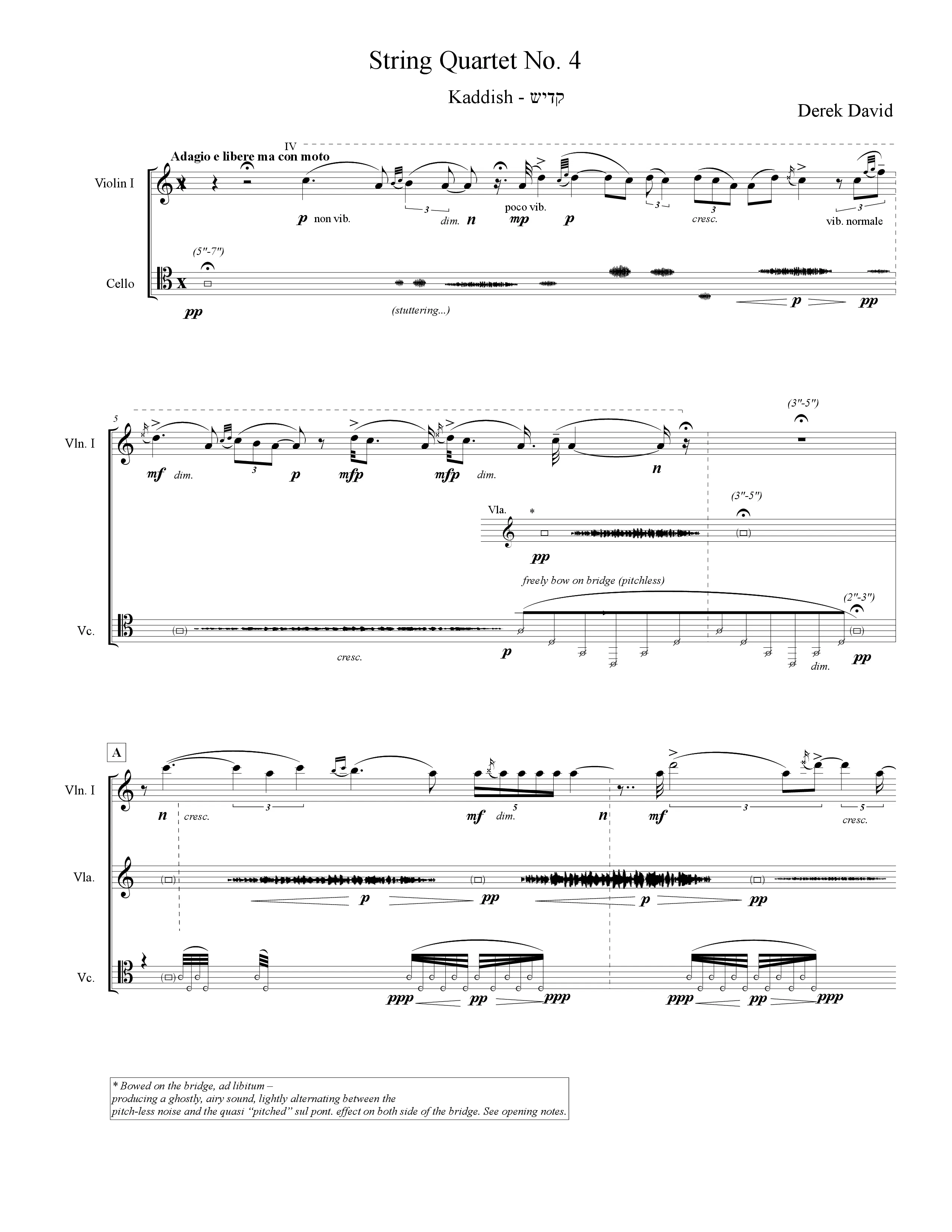
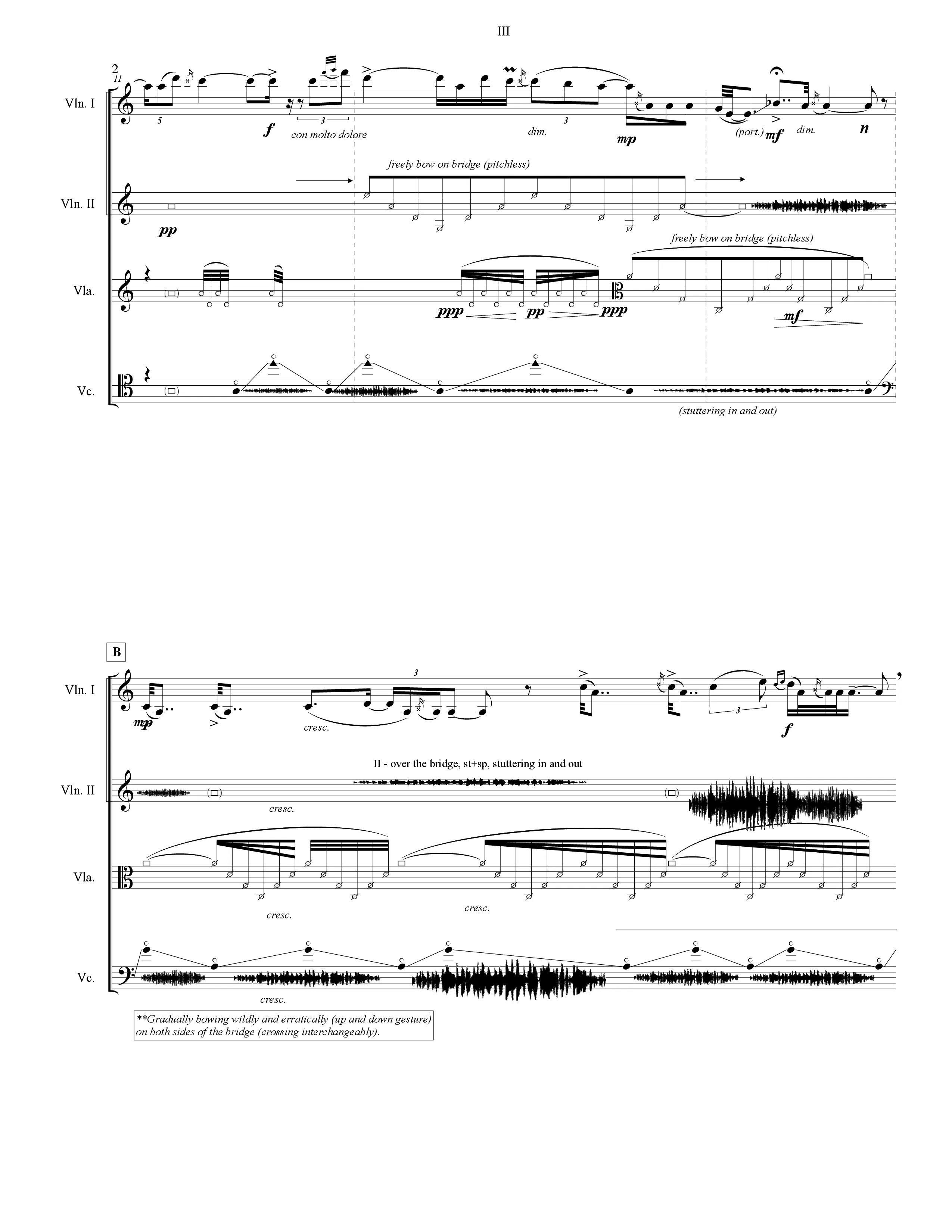
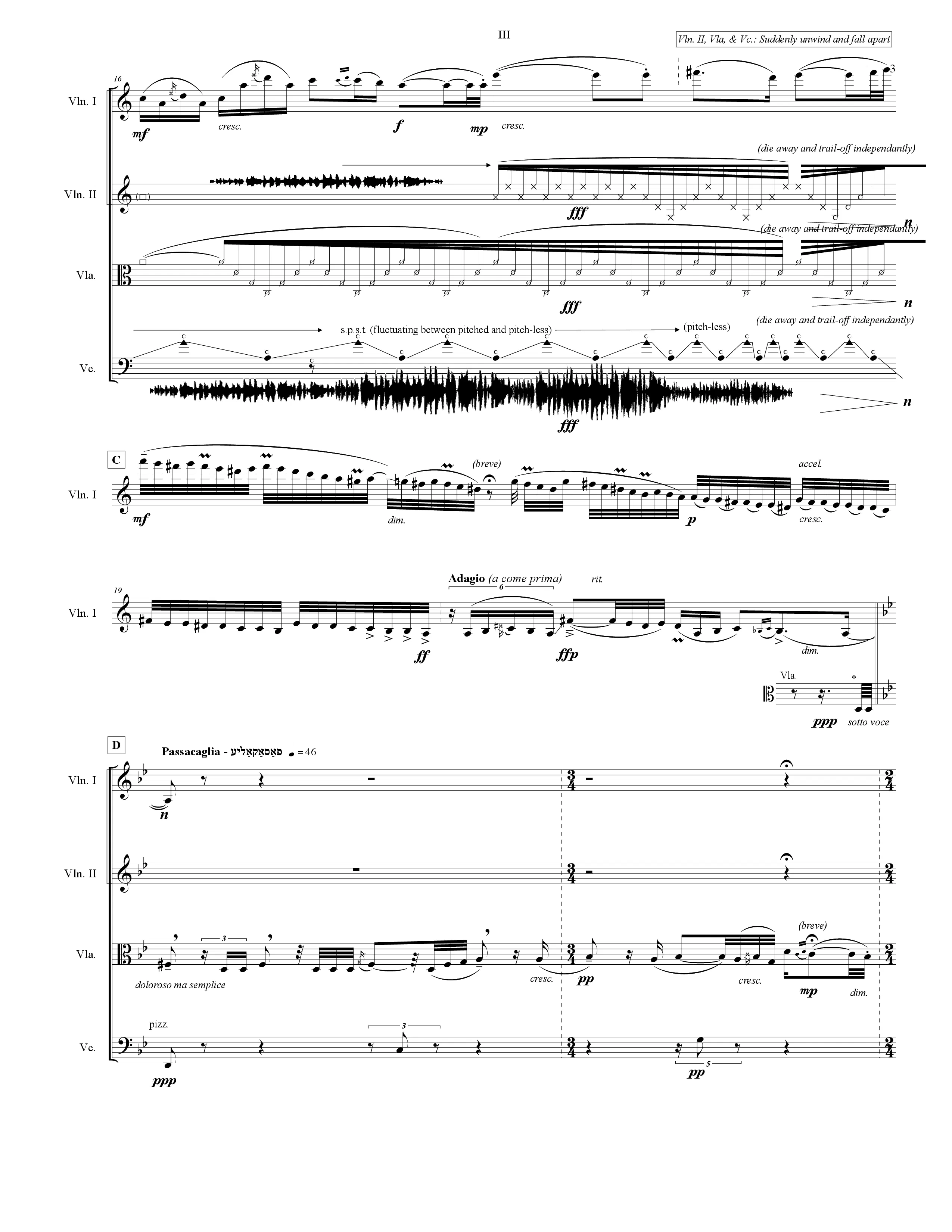
The fourth string quartet is my first foray into bringing Yiddish music into my compositional practice, the single-movement work explores loss and mourning through two Jewish folk melodies sourced from the Ruth Rubin Legacy archives through the medium of a large. expansive Passacaglia. Writing this work was, for me, an act of Kaddish, and the act of saying Kaddish musically was through these folk songs. And as the Kaddish is a prayer of mourning and death without referencing these themes directly; both folk songs indirectly reflect on death, dying, romance or loss.
- Recording Notes
In March 2024, Del Sol launched a groundbreaking chamber music series at an unlikely location: the former immigration processing center on Angel Island in the San Francisco Bay. The first of its kind, the Angel Island Chamber Concert Series amplifies the voices of cultural groups detained there–primarily Chinese immigrants, along with Korean, Japanese, and Russian communities–through a musical reflection on migration and identity. The concerts unfold within the station’s historic detention barracks–ironically, a space that violist Charlton Lee describes as “probably the best-sounding room in the whole Bay Area for chamber music.”
Del Sol’s September 2024 concert featured the experiences of Jewish immigrants. Our production captures their dynamic performance of String Quartet No. 4 (“Kaddish”) by Derek David, a Boston-based composer, conductor, and Lecturer in Music at MIT. Derek’s quartet traverses profound personal loss through the Kaddish, a Jewish prayer of stoicism and mourning. The single-movement work weaves two Yiddish folk songs Derek discovered in field recordings over a passacaglia. His unique compositional voice is also shaped by his study of partimento, a 17th-century method of improvisation from a bass line, similar to techniques that influenced composers like Bach, Beethoven, Haydn, and Mozart.
- Performer Credits
- Del Sol Quartet
- External Links