1 / 9
0:00/0:00
Piano Trio
2024
Cello
Piano
Soprano Saxophone
- Program Notes
Program Notes 2/9/2024
The American Mall was invented by Victor Gruen, an architect who had immigrated to America and sought to recreate the bustling, critical feel of a town square. The American suburb lacked a place of community, a place of meeting, and thus, the American Mall was born. Instead of journeying into the city, the rows of cookie-cutter suburbanites could easily get to mall, shop for things they wanted, congregate in a shrine of money. Today, there about 28,000 malls that have been built. Some empty, some dead, some alive, some in the limbo between worlds.
The emergence of malls drew away merchants from the city away. Gruen, who is often cited as the father of the shopping mall has made it decisively clear about the negative impact of the evolution of these things.
"I would like to take this opportunity to disclaim paternity once and for all. I refuse to pay alimony to those bastard developments. They destroyed our cities." – Gruen.
And thus malls grew. Growing, coiling great scales of highway and asphalt around them, until the only way to reach them was by car. We industrialized. More and more suburbs were born like parasites to these malls, great incubators of life. They were farther and farther away from the center. So other malls were born. And so the industry became too populated. As more malls were constructed more and more malls devalued. So they lost customers.
Malls are also said to be the epitome of the American Dream. A place where prosperity and wealth is on display, a place where it has been made true—connection, entertainment, freedom all bundled into one. The amanuensis of the American Dream. But perhaps, in our decline and forgettance of the Mall, we have forgotten this.
And in an age where it is simply more convenient to engage online rather than in person, the need for a town square has declined.
But not all hope is lost—the structure of these things, these temple complexes to greed and connection are built so well, so lasting and common it is easy to convert them to better things—schools, warehouses, community colleges, museums. And there is something to be said about the memory of a place—everyone has at least one good memory at the Mall. And even in death it rises again—having created long-lasting chain stores, fast-food restaurants, culture—a reawakening in media, in storytelling, television marked by a distinct feeling of nostalgia.
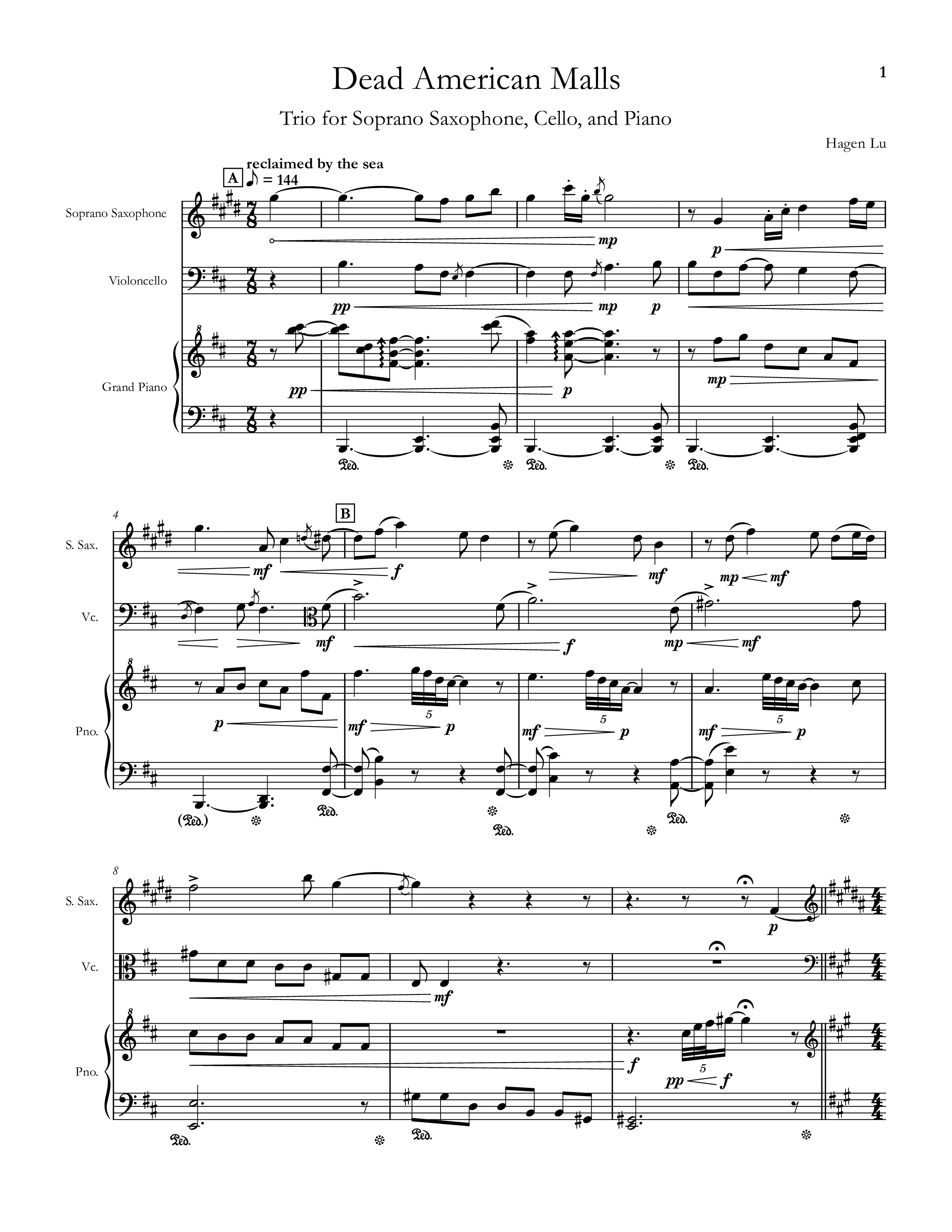
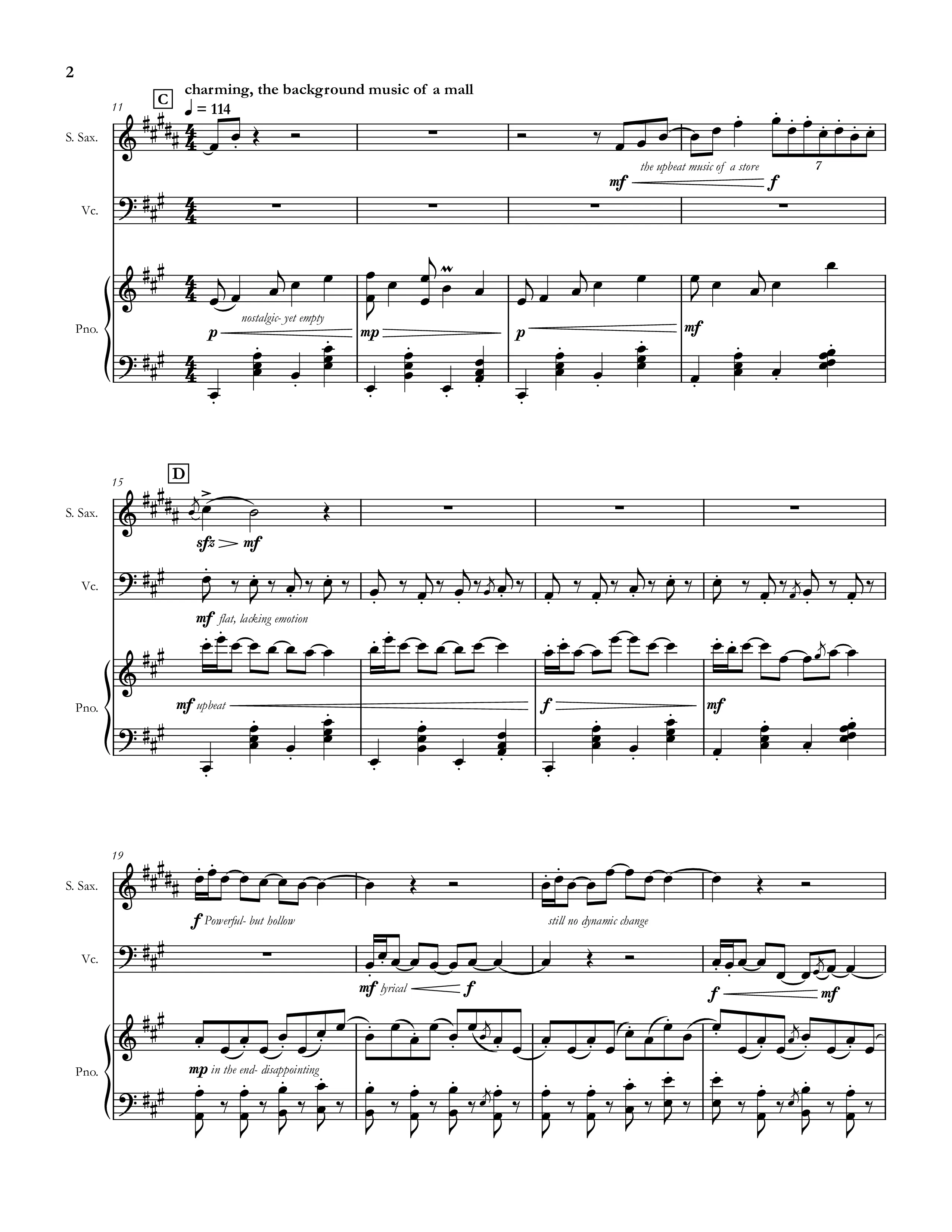
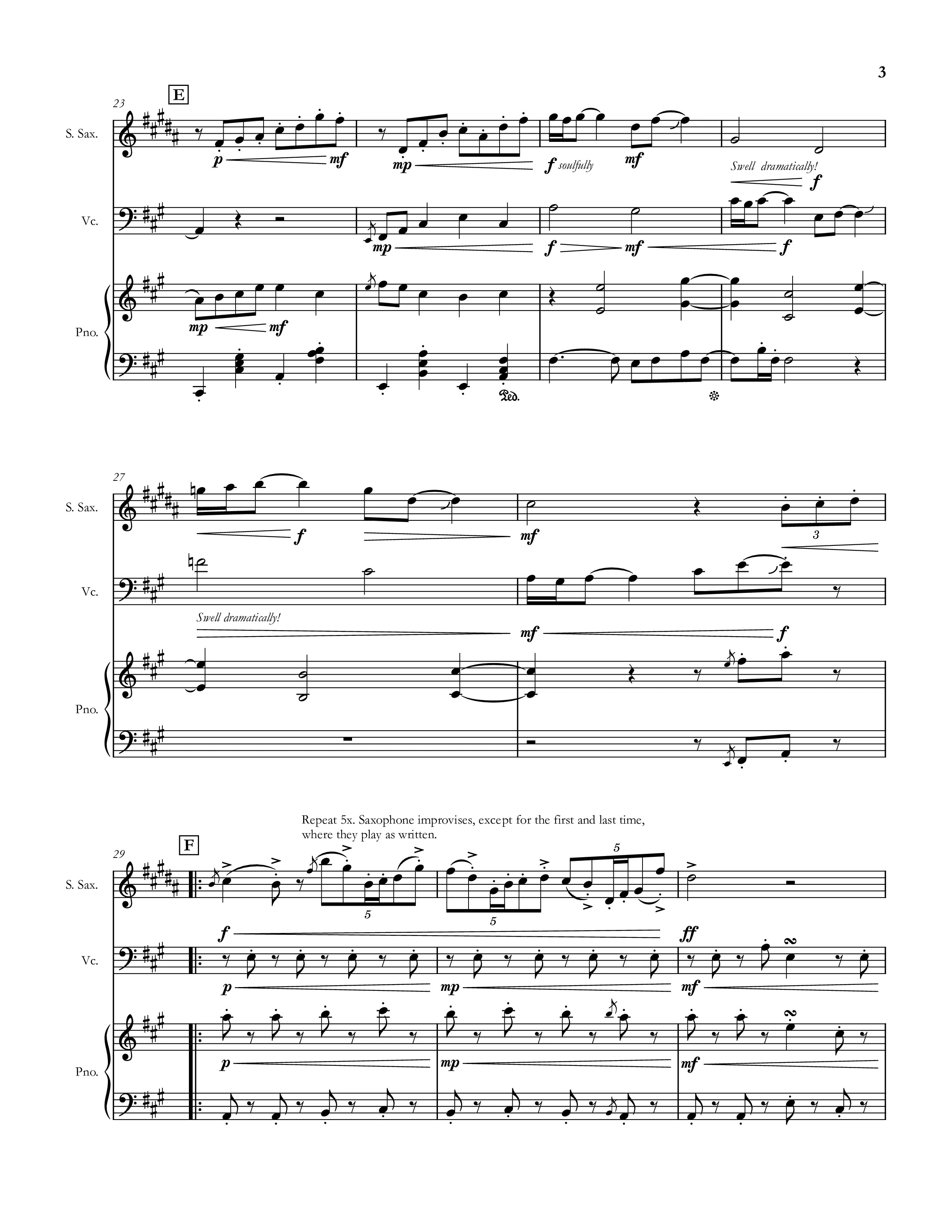
"Dead American Malls" attempts to capture this feeling of nostalgia. The harmonies and structure are simple, repetitive, familiar—and yet all at the same time, excruciatingly hollow. The springful, happy theme occurs numerous times throughout the piece—and yet, it never really develops into anything else. Improvisation occurs throughout the piece—but these moments at miniature, and they return to familiar theme, never changing.
The music expands in dynamic and range—from a static volume to something more dynamic, but the music itself, the architecture itself, stays the same beneath the piece that the rest of the music. As the piece builds up towards the middle it crumbles itself, attempting to introduce some new theme, and the mall resets itself, ever hollow. The piece tries to capture the emptiness of these bastions of consumption—and how that emptiness, itself, can be nostalgic.
- Performer Credits
- New Third Space Ensemble | Hanna Rumora (Cello), Eugene Ryoo (Sax), Matt Mason (Piano)