1 / 60
0:00/0:00
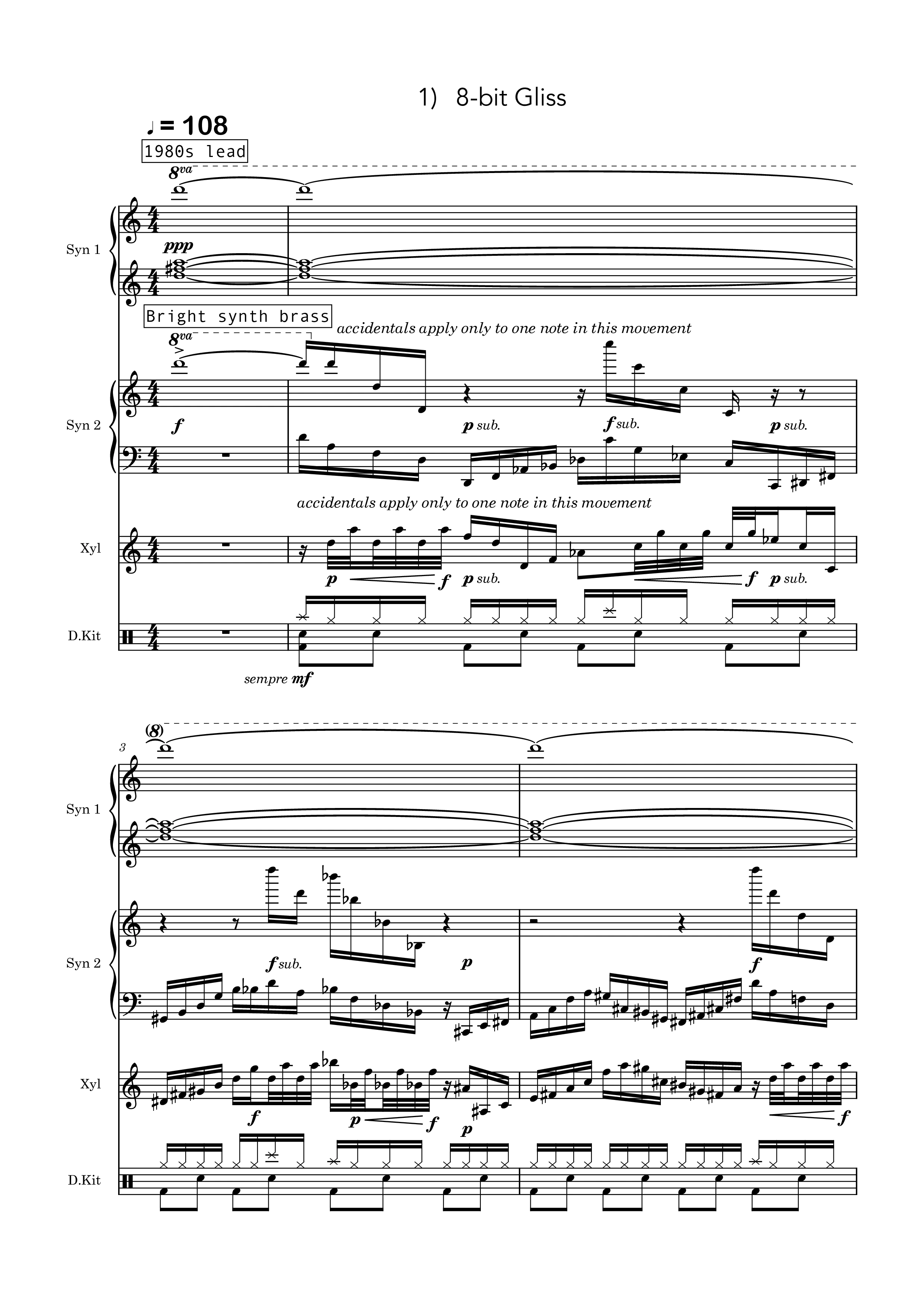
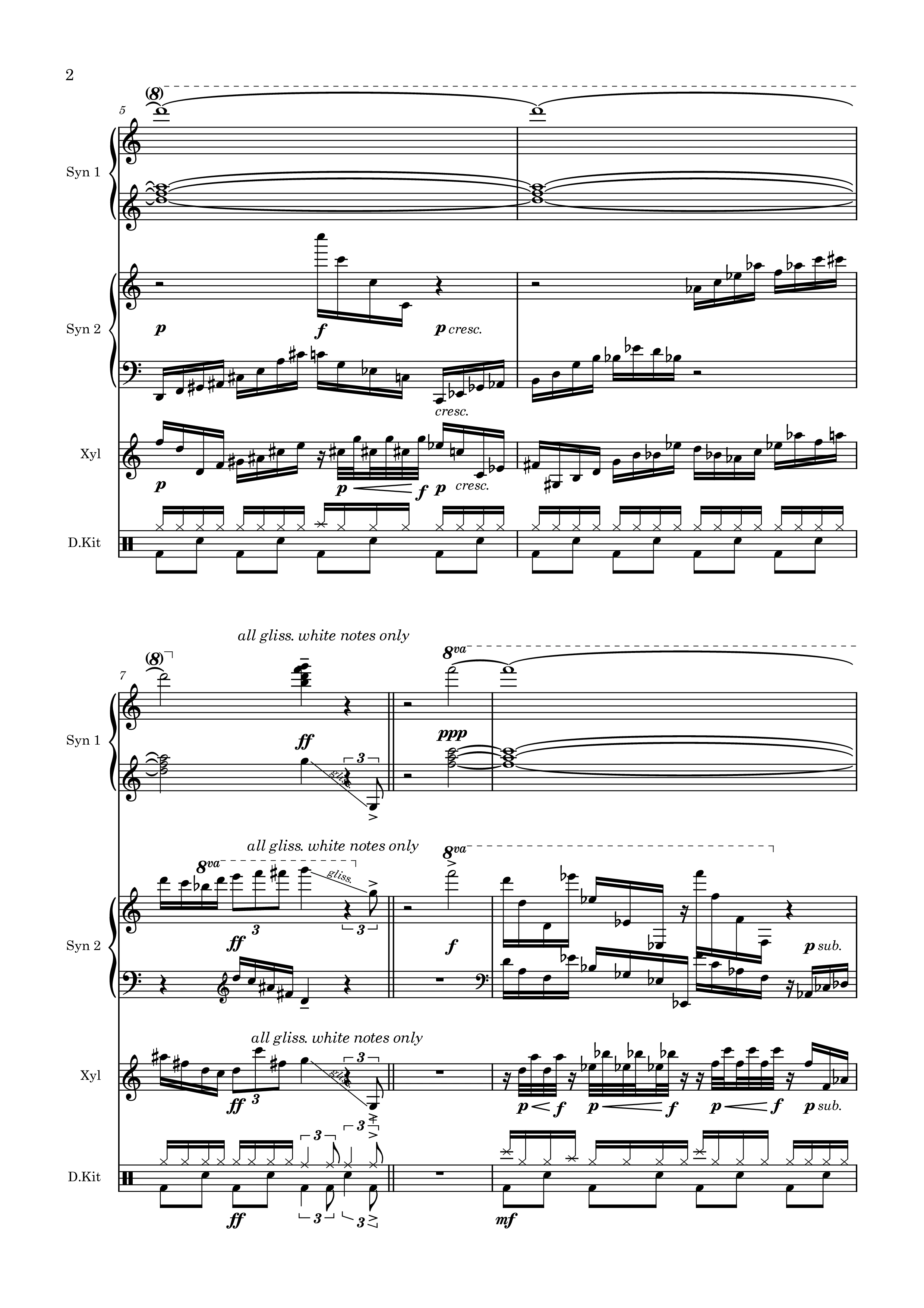
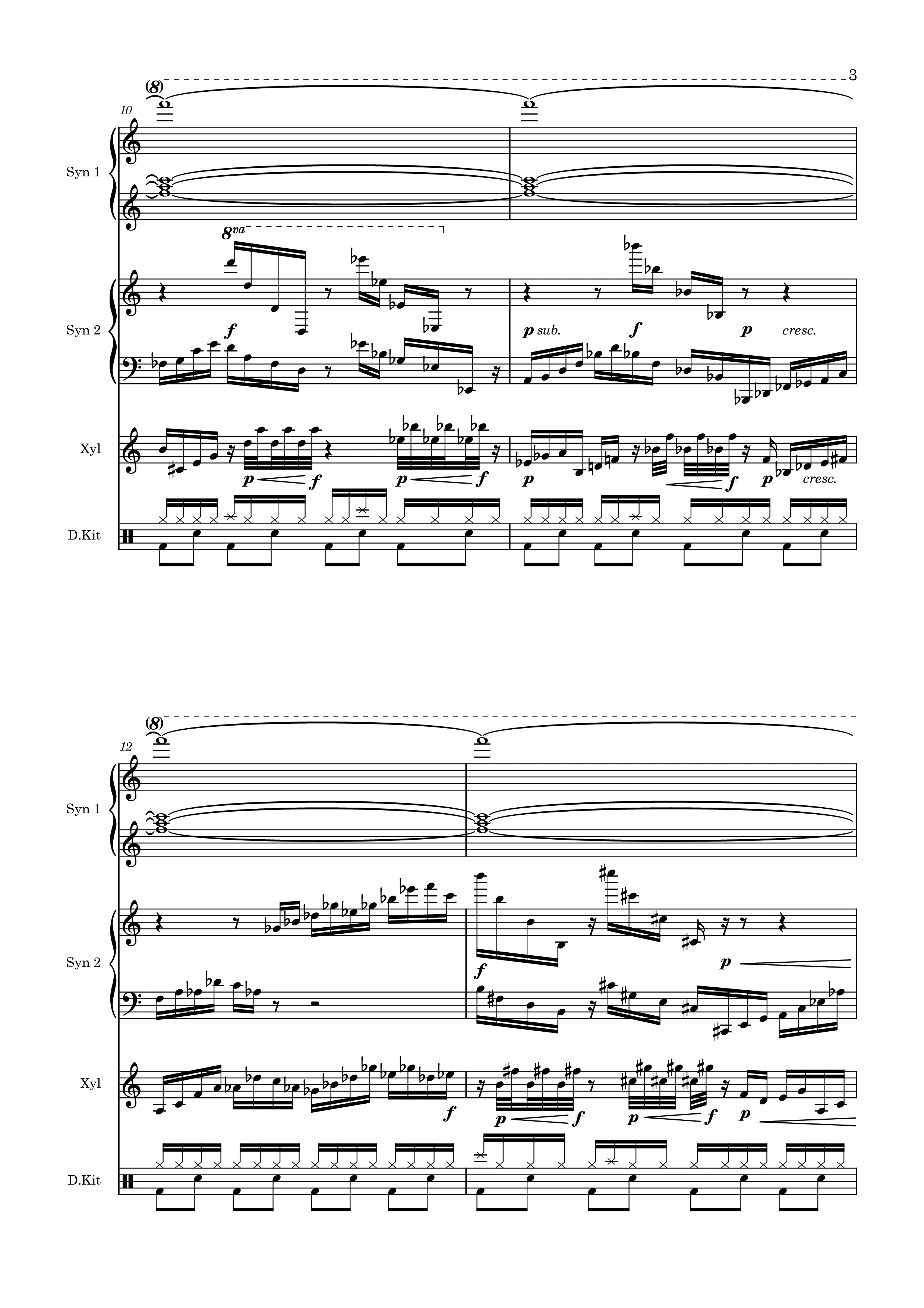
Explorations in Polytonality and Other Musical Wonders, Volume 4. Commissioned by Hochschule der Künste Bern. First performance by Lis Marti, Audrey Mützenberg, Romane Bouffioux and Corentin Barro at Festival Playtime, Bern on 23 January 2023. Duration: 14 minutes. In five movements: 8-bit gliss, Anticipatory funk, Atonal shuttle, Hetero ballad, Lofi not to study to.
Amplification/reverb If possible, amplify and add excessive reverb to xylophone in Hetero Ballad (3-second reverb with 80/20 wet/dry mix).
Accidentals Accidentals apply throughout the bar aside from the first piece where they only apply to one note.
Two keyboardists: The two keyboardists each play on 88-note touch sensitive synthesisers.
Synth 1 requires a pitch wheel, used when playing the ‘crass lead’ sound in Lofi not to study to. It is set to +/- 1 octave (i.e., wheel up = 1 octave above written pitch, wheel down = 1 octave below).
Several synth sounds are used across the work. These are indicated in the score in text boxes. A description of each synth sound is provided below. These descriptions are guiding prompts and are intentionally open-ended. The specific synth sound is left to the player’s creative discretion, who may choose sounds that are different to the one’s suggested below.
Keyboardist 1, description of the sounds:
8-bit gliss
Anticipatory funk
Atonal shuttle
Hetero ballad Lofi not to study to
1980s lead (Bright, Prophet-5 synth analogue quality)
Basic lead: (Casio synth quality) Fuzzy brass Distorted guitar
Orchestral hit Wobbly brass (fast vibrato, tremolo)
Reedy synth (composite sound with bell sonority in attack)
Ahh Choir Crass lead (e.g., Stylophone like)
Keyboardist 2, description of the sounds:
8-bit gliss Anticipatory funk Atonal shuttle
Hetero ballad Not to study to
Bright synth brass Mellow synth brass
Trumpet Wah (trumpet synth with wah-wah) Dirty rock organ (noisy, thin)
Analog portamento lead (mellow) Rhodes piano