1 / 44
0:00/0:00
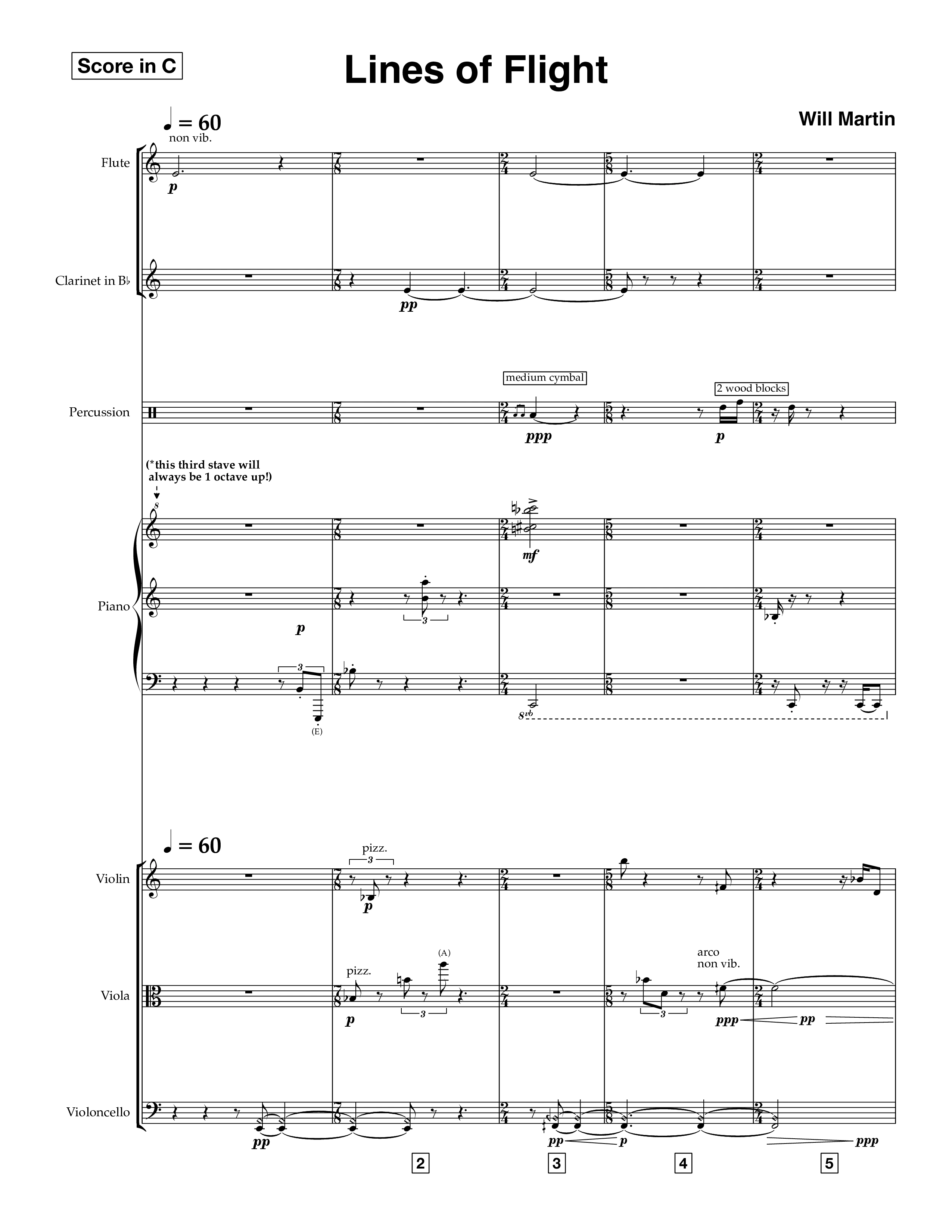
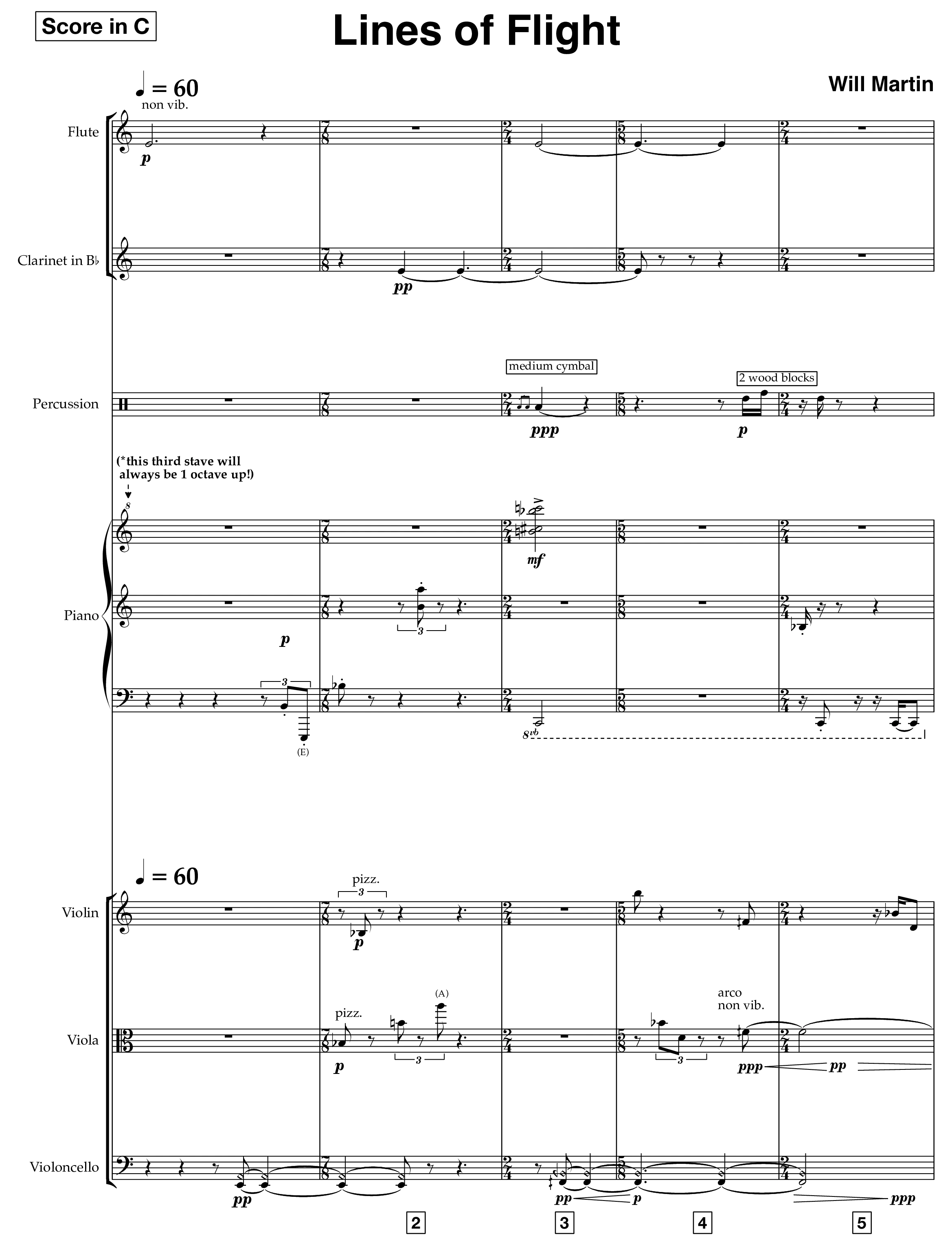
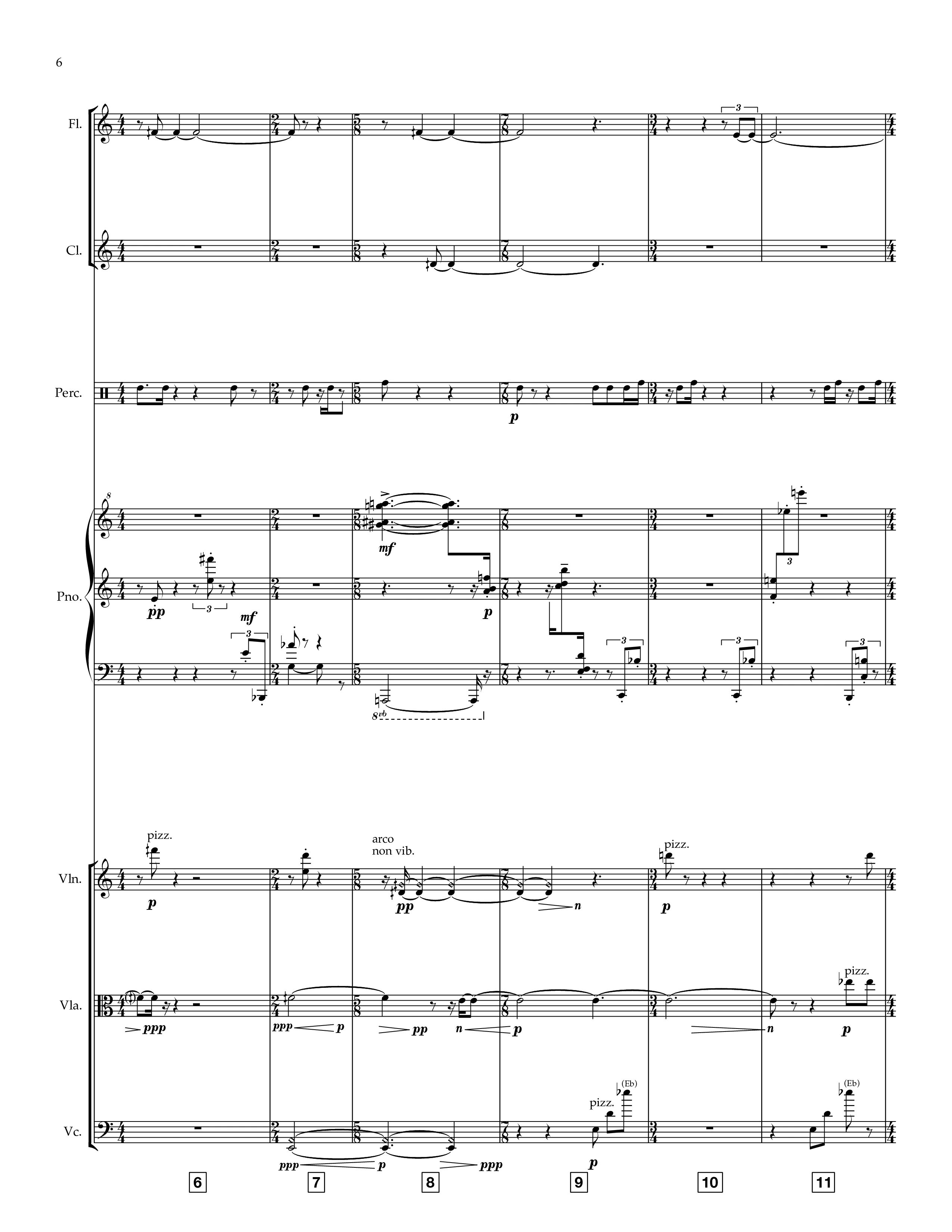
Cycles are part of life. As we age, we start to see patterns emerge in our lives. Patterns of behavior, patterns of habits, patterns of circumstances we find ourselves in. Some patterns are good, some bad, some neutral. If you live long enough you may begin to see these patterns as cycles—or maybe spirals. As things change, they stay the same.
In this piece, much of the musical material is organized in cycles. The music will sometimes become fixated on an idea and spiral out from there. Gestures recur throughout the piece in various guises, on a spectrum ranging from exact repetition to complete transformation. I chose the title, Lines of Flight, because it is evocative of one of the piece’s primary ideas: ascending motion.
I borrow the term “line of flight” (ligne de fuite) from Gilles Deleuze and Félix Guattari’s A Thousand Plateaus (1980). The book’s translator, Brian Massumi, writes, "Fuite covers not only the act of fleeing or eluding but also flowing, leaking, and disappearing into the distance (the vanishing point in a painting is a point de fuite).” In A Thousand Plateaus, the line of flight is linked with creativity, with art, with creative acts. It involves breaking free from a rigid structure and creating new possibilities for existence. Resisting the rigidity of thought that results in fascism. Breaking free of harmful cycles.
Performed by:
Ensemble L'itinéraire
Conducted by Mathieu Romano