1 / 25
0:00/0:00
2024
Horn
- Program Notes
In August 2024, I moved from Maple Ridge, British Columbia, Canada, to Winston-Salem, North Carolina, to begin my music composition studies at the University of North Carolina School of the Arts. One of the first things I noticed after arriving was the all-encompassing chorus of chirping, buzzing, and crackling sounds from the local insects, which I soon learned were cicadas. This year was monumental for these cicadas, as both a 13-year and a 17-year brood emerged simultaneously—an event that hadn’t occurred since 1803, the same year Beethoven composed his famous Symphony No. 3.
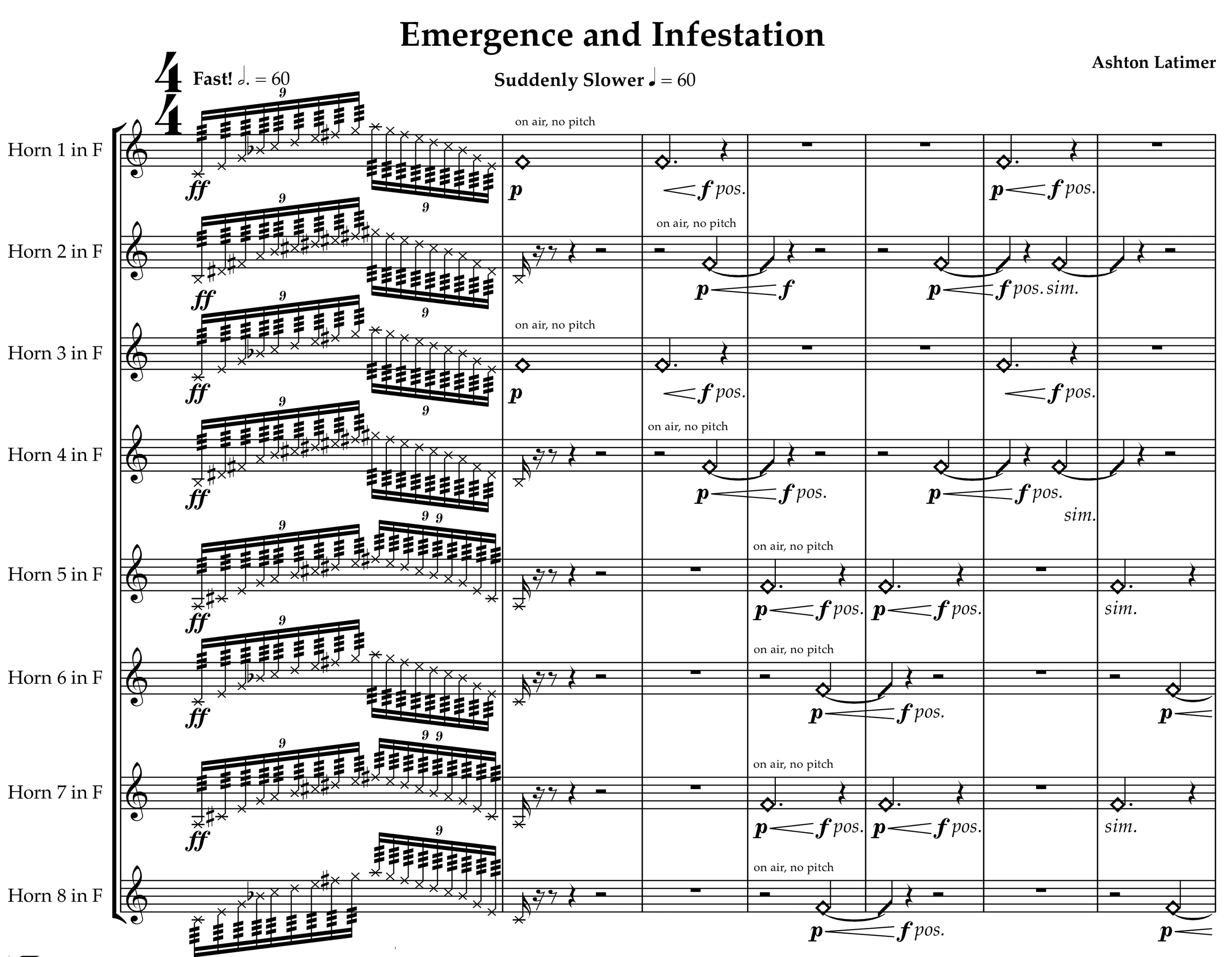
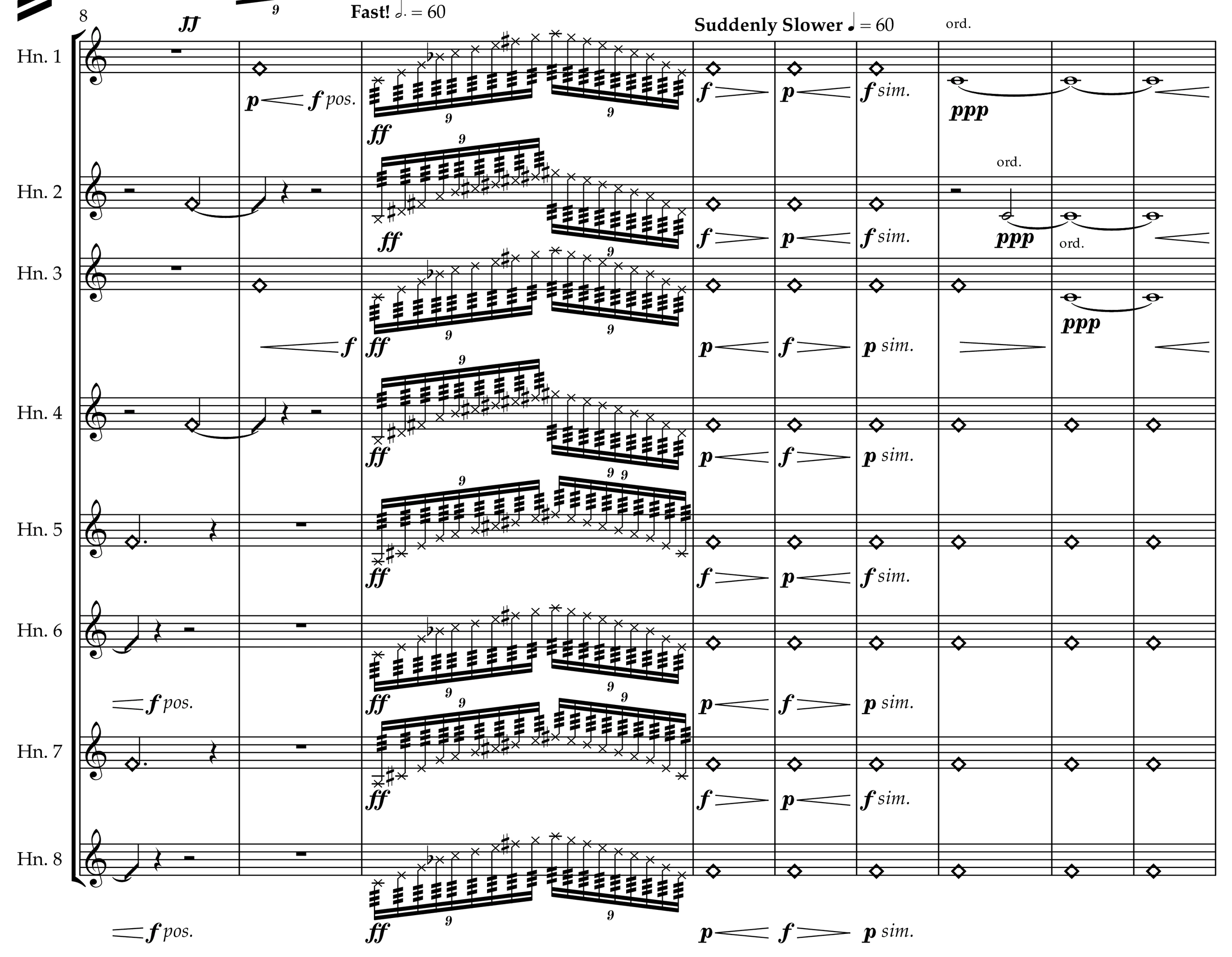
I was immediately drawn to this rare and unique phenomenon. Inspired by the overwhelming sounds of the cicadas, I sought to translate their chaotic yet fascinating noise into music for the UNCSA horn ensemble. The piece begins with a loud glissando that quickly dissipates into the air, giving way to the emergence of a chorale. This chorale gradually becomes more unstable until the fast-paced “infestation” section begins. Here, the ensemble splits between stopped buzzing sounds and the open horn.
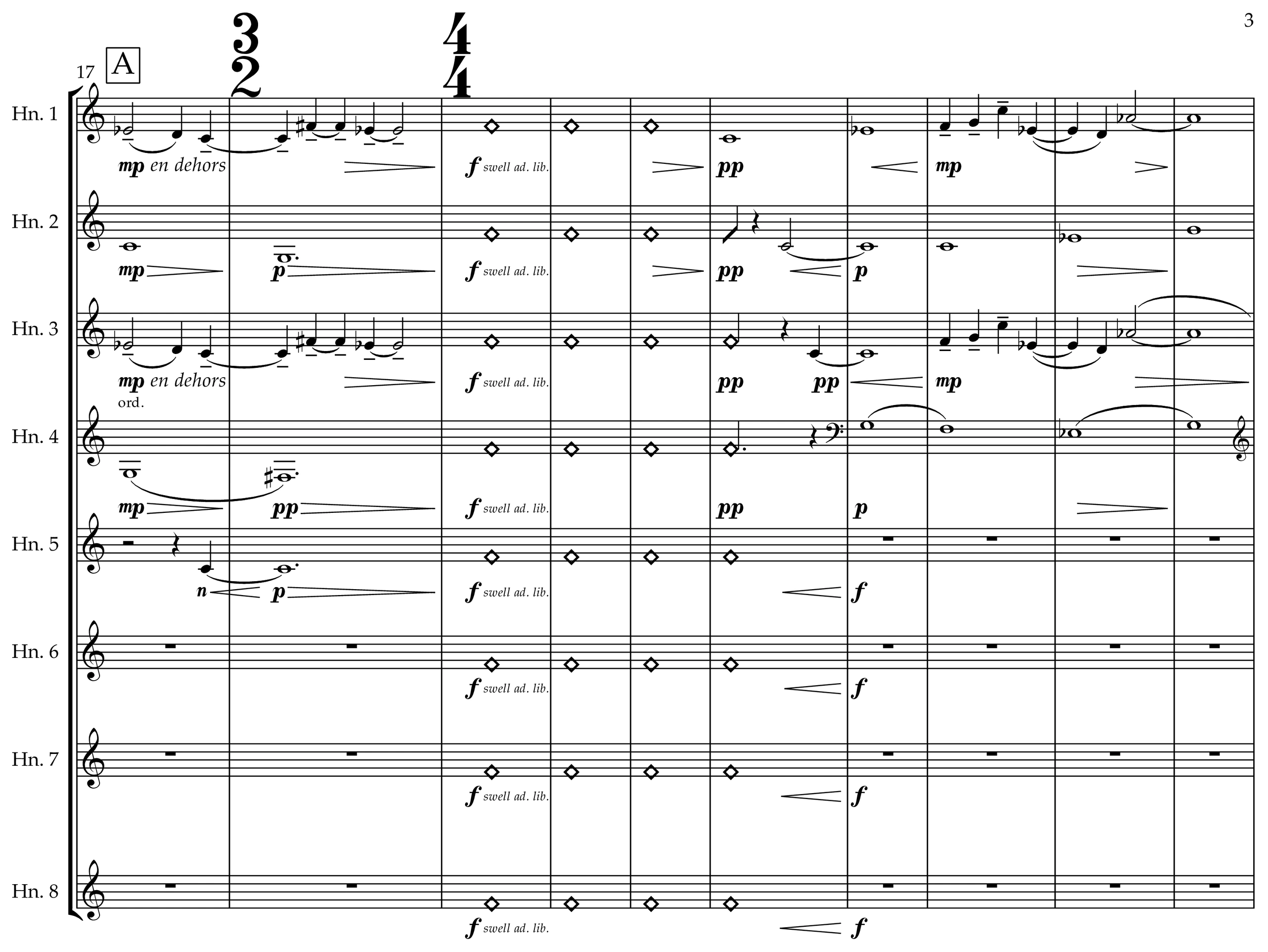
The infestation unfolds into a more reflective and reverent section, revealing the truth of these harmless creatures. Yet, just as the reflection finds its voice, the ensemble grows increasingly contrapuntal, building toward the faster, more chaotic world of the cicadas’ frenzied activity.
- Performer Credits
- UNCSA Horn Ensemble