1 / 34
0:00/0:00
Wind Quintet
2026
Bassoon
Clarinet
Horn
- Program Notes
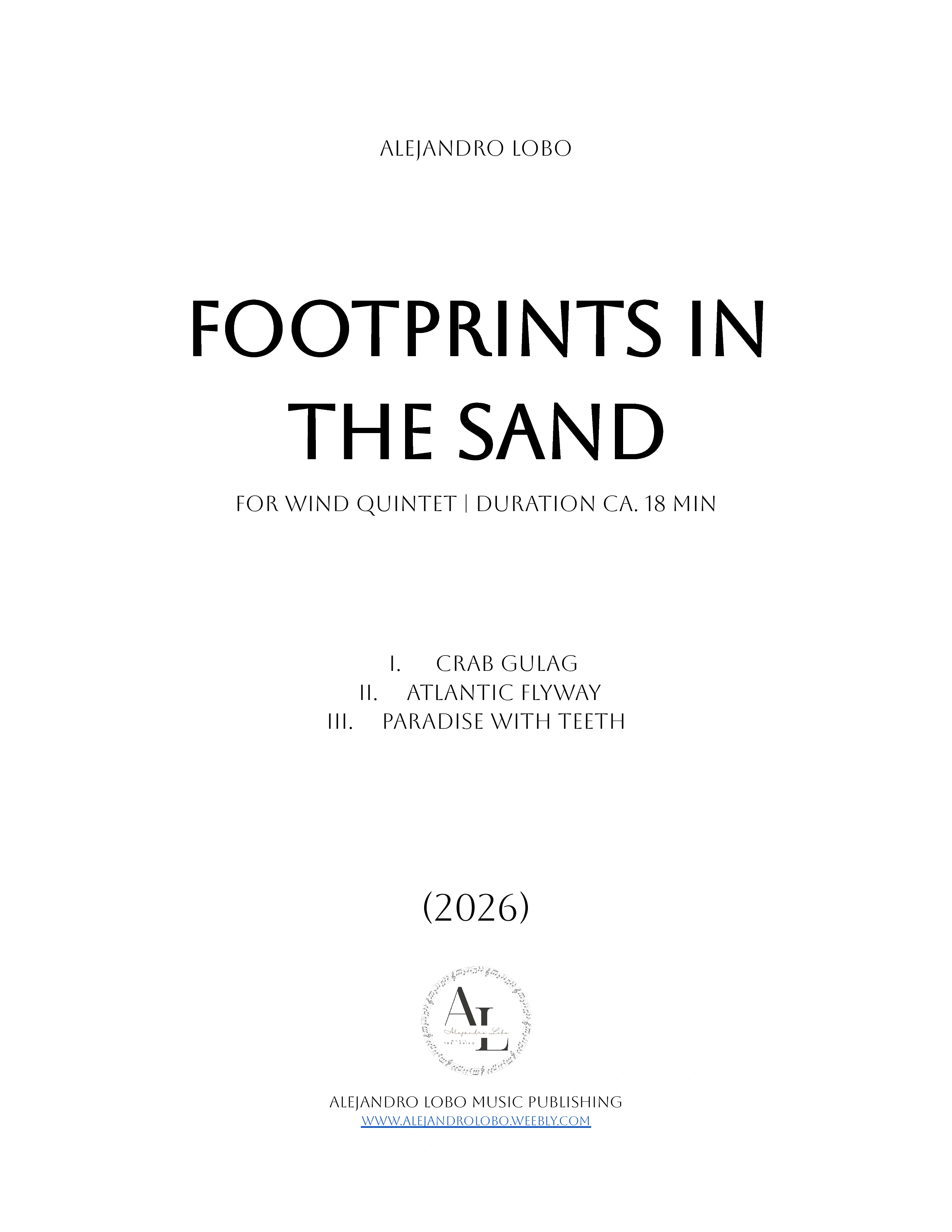
Footprints in the Sand are a set of pieces that revolve around memory loss, geography, and zoology. Each movement is inspired by a beach or set of beaches in the three distinct locations I have lived. My experience in each of these environments has primarily been shaped and sustained by interactions with wildlife and anthropomorphism. Like footprints in the sand, clarity of memory is lost over time as I struggle with remembering the impact and ways I’ve interacted with and been changed by my surroundings throughout my childhood. Pairing my strongest memories of these locations (animals and nature) with the fading status of my memories felt like it overlapped from a metaphorical sense in addition to the literal connection. At a beach, we leave footprints, imperfect molds of our feet and evidence of our life and impact. With time these tracks are washed away, just like memories fading or disappearing over time. The fusion of these environmental and biological inspirations and explorations between the intersection of human and wildlife provide the framework for this quintet.
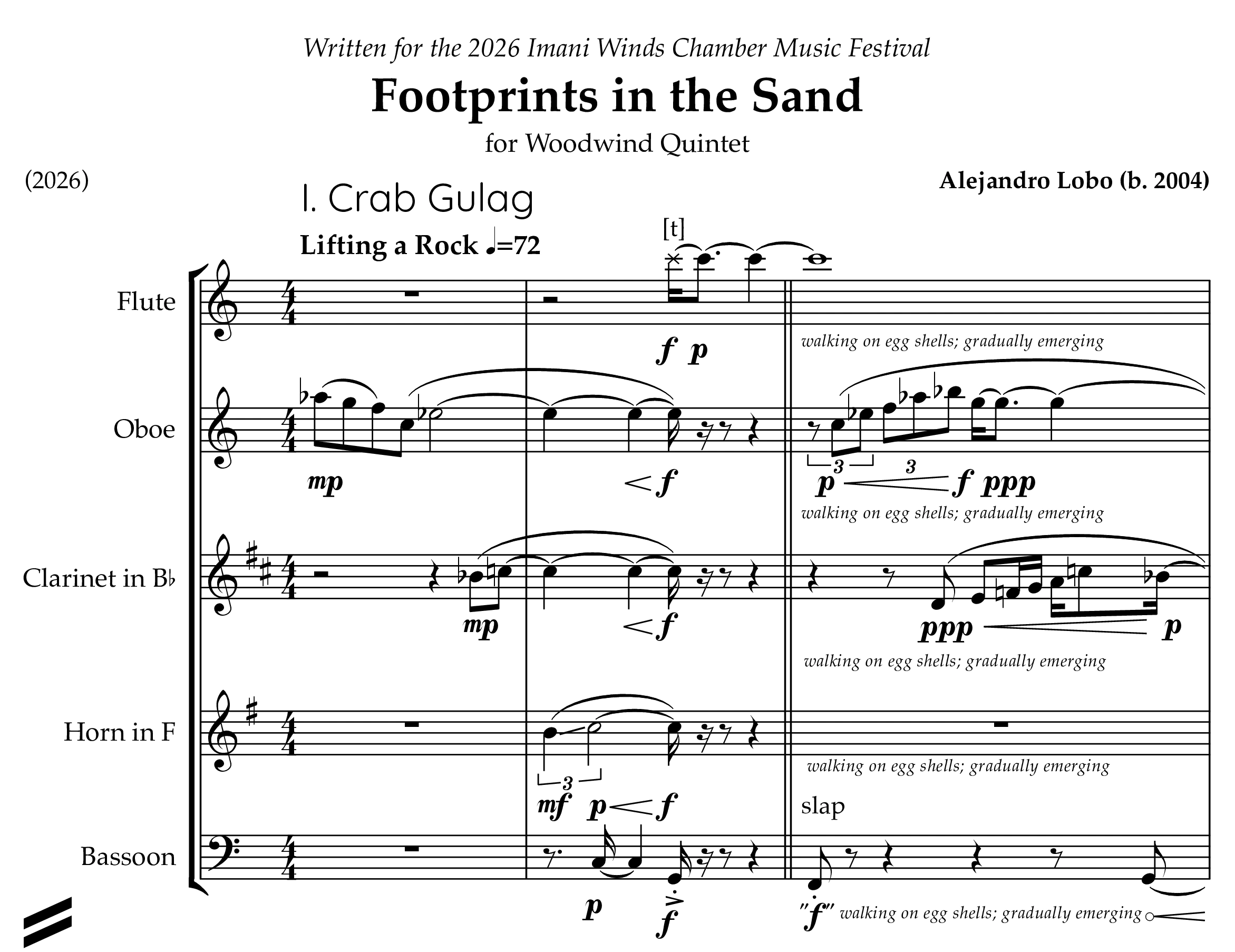
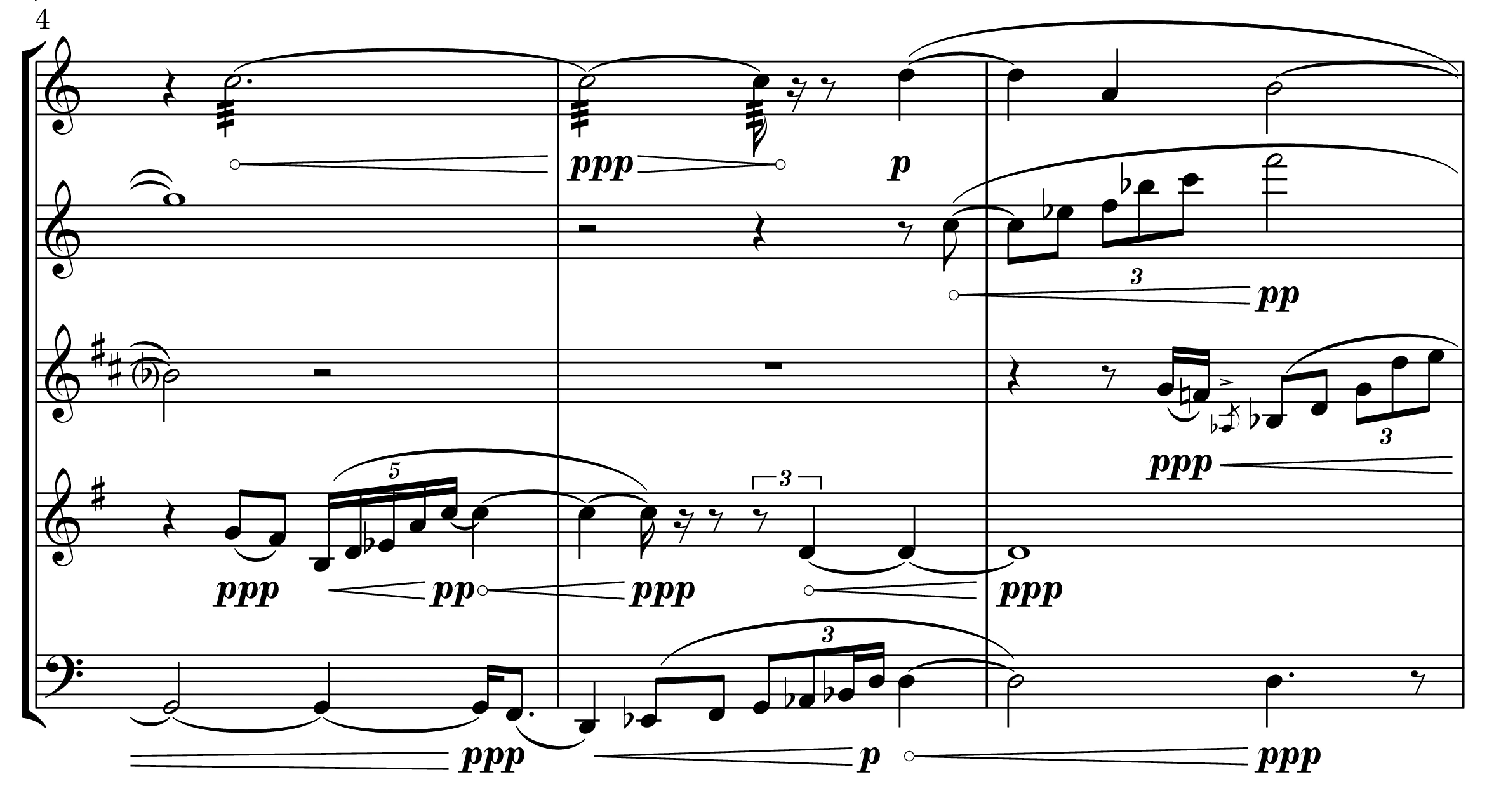
I. Crab Gulag (Berkley, California) juxtaposes two pitch collections representing fight or flight survival instincts (the crabs) and childhood innocence and joy (six year old me). In early elementary school, on the shore of the San Francisco Bay, we’d take class trips to the bay. Lifting jetty rocks would reveal crabs who would fearfully and quickly scuttle away under a nearby rock. We would collect these crabs in buckets and then release them at the end of the period. To me, these experiences were defined by a child’s innocence, fun and curiosity. For the crabs, I imagine it was less enjoyable: a traumatic and seemingly life threatening experience. This particular memory has stuck with me over fading years and the juxtaposition between a child's innocence and joy and the primal survival instinct and fear of an animal in a child's hands presented an intriguing and engaging contrast to explore musically.
II. Atlantic Flyway (Rehoboth, Delaware) is rhythmically ambiguous using stemless and aleatoric notation to evoke the perception of the "controlled" disorder found in nature. About the entire coast of Delaware and the Bay, these locations provide important stops for shore birds migratory patterns and important nesting locations for species like Piping Plovers, American Oystercatchers, and Least Terns. This movement draws inspiration from found sounds and birdcalls at Delaware beaches, contours of migratory flight patterns, and flight mechanics of Atlantic shore birds.
III. Paradise with Teeth (Tivives, Costa Rica). Located in front of a mangrove on the Pacific Shore of Costa Rica sits a small beach with a single road of beach houses parallel to the sea. This place mixes elements of paradise with humidity, heat, and “dangerous” wildlife from the mangrove, like scorpions, monkeys, snakes, crocodiles, mosquitoes, and more. It is yet another unusual juxtaposition. Imagery of crocs in ocean waves, or monkeys coming into houses, or going to bed to find scorpions climbing on the ceiling in such a beautiful and tropical place informed the material for this movement.
- Recording Notes
Recording from Imani Winds Chamber Music Festival - Visionaries: Composers of Now! at the Juilliard School, New York, New York. June 24, 2026.
- Performer Credits
- Aaron Dore, Olivia Leake, Brandon Gordon, Brooks Wisniewski, Nicolas Woodward
- Publisher
- Alejandro Lobo Music Publishing