1 / 11
0:00/0:00
Ensemble
2022
SATB divisi
Soprano sax
sop solo opt
bass solo opt
- Program Notes
A palimpsest is manuscript, typically of papyrus or parchment, that has been written on more than once, with the earlier writing incompletely scraped off or erased and often legible.
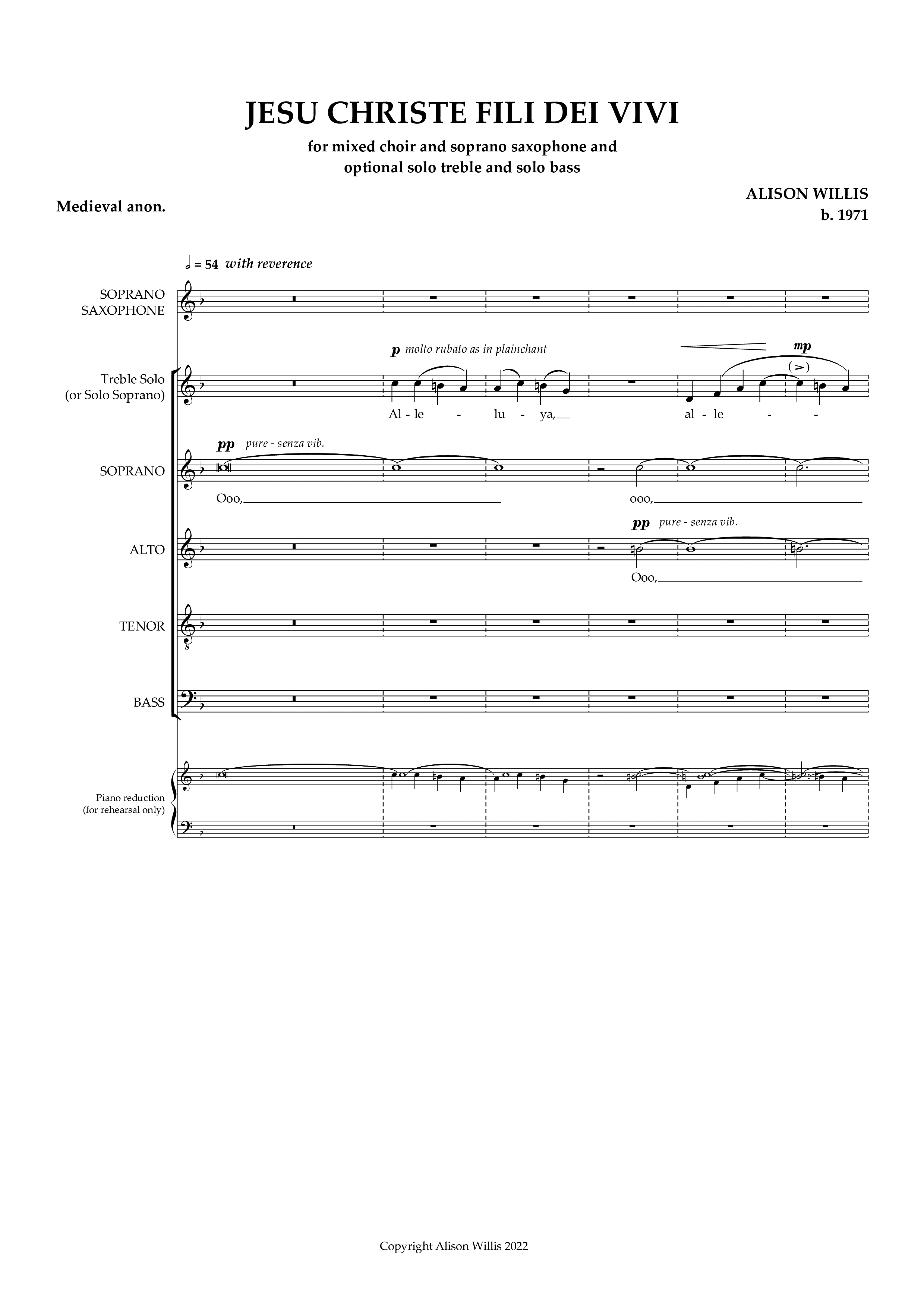
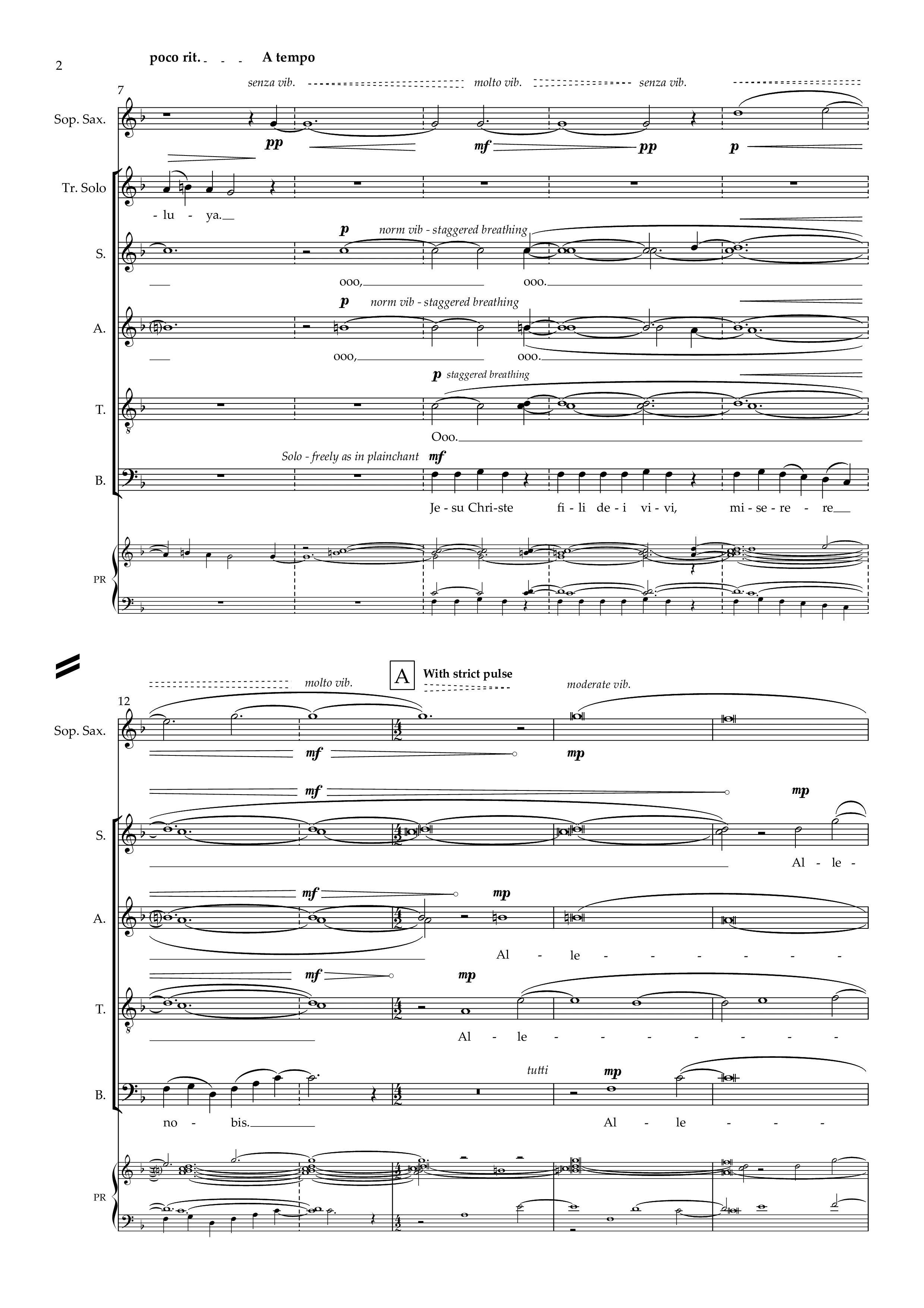
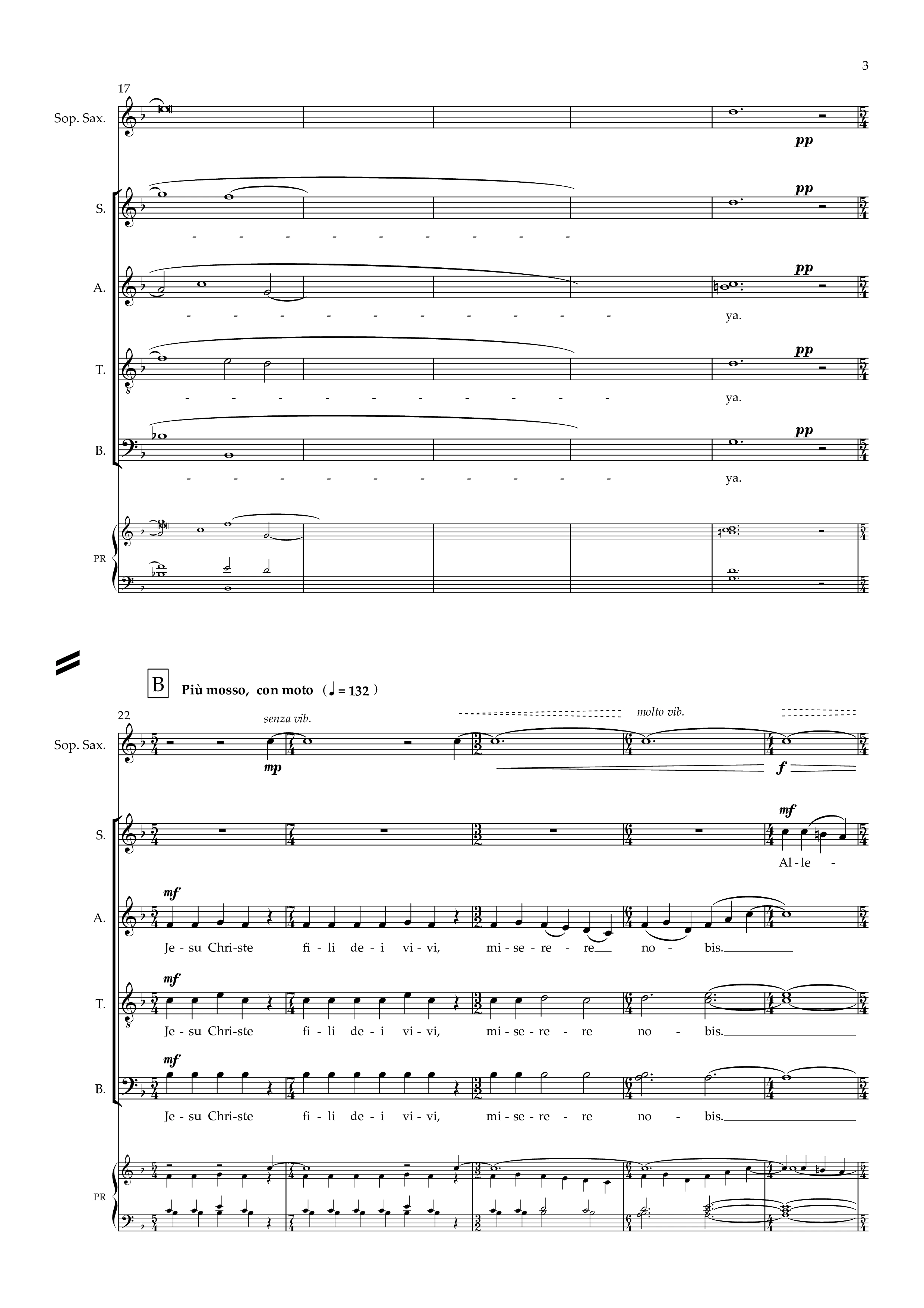
Jesu Christe Fili Dei Vivi is a palimpsest in several ways. It is a re-imagining of a medieval chant of the Easter cycle from a late fifteenth-century plainchant fragment of English origin (CCA- AddMs/128/73) identified during a conservation project in 2018 and held in the Canterbury Cathedral Archives.
This chant was part of a missal probably housed in Christ Church Priory in Canterbury before the Reformation and as a Catholic work it would have been destroyed or recycled, a common practice in an era where writing materials were expensive. The fragment was reused as a protective wrapper for a set of estate accounts dated 1575 with the title of the accounts written towards the top of the folio in a later sixteenth-century hand.
The piece itself is also a re-imagining of Alleluia – Pro Ora Nobis by Tallis, (himself listed as a singer at Canterbury Cathedral in 1540) reflecting the statement of the chant at the start, the cantus firmus and the long melismatic Alleluias.
- Performer Credits
- The Willis Singers
- Publisher
- Alison Willis