1 / 27
0:00/0:00
Duo
2021
Violin
Electric Violin
Electronics
- Program Notes
Chaconne, for electric violin and live electronics (2 players)
(This piece is part of the album released by BIS Records together with the Violin Concerto)
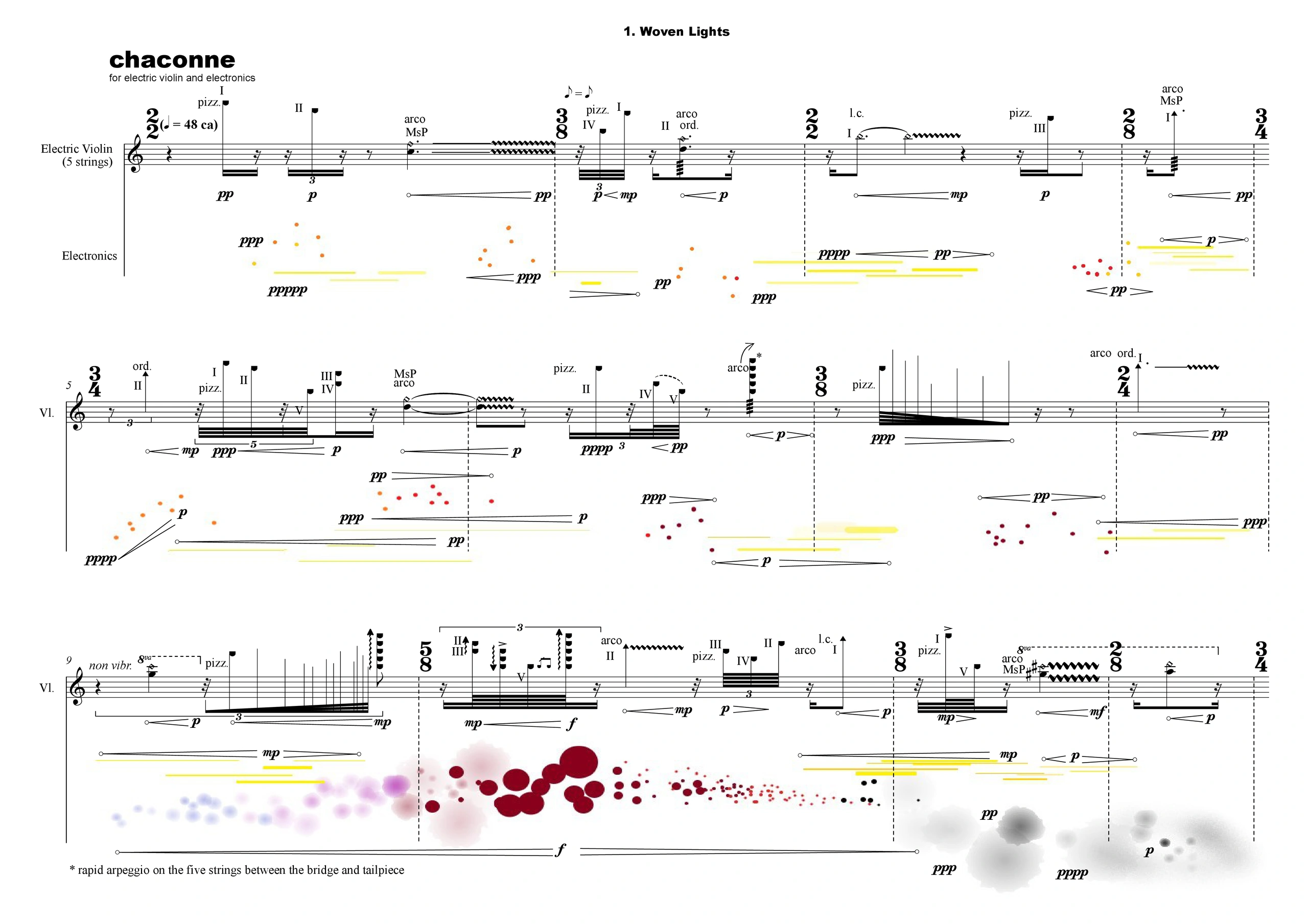
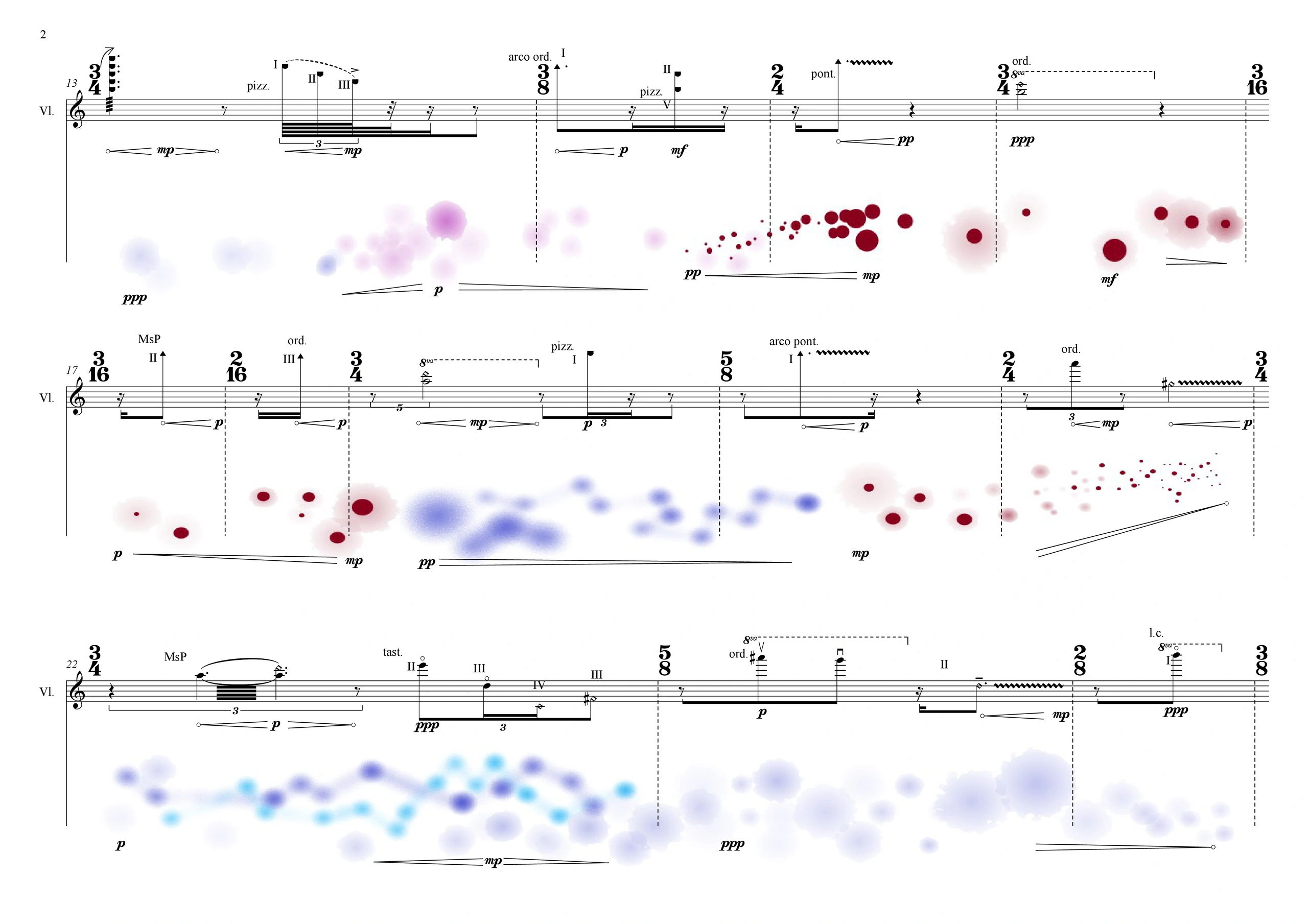
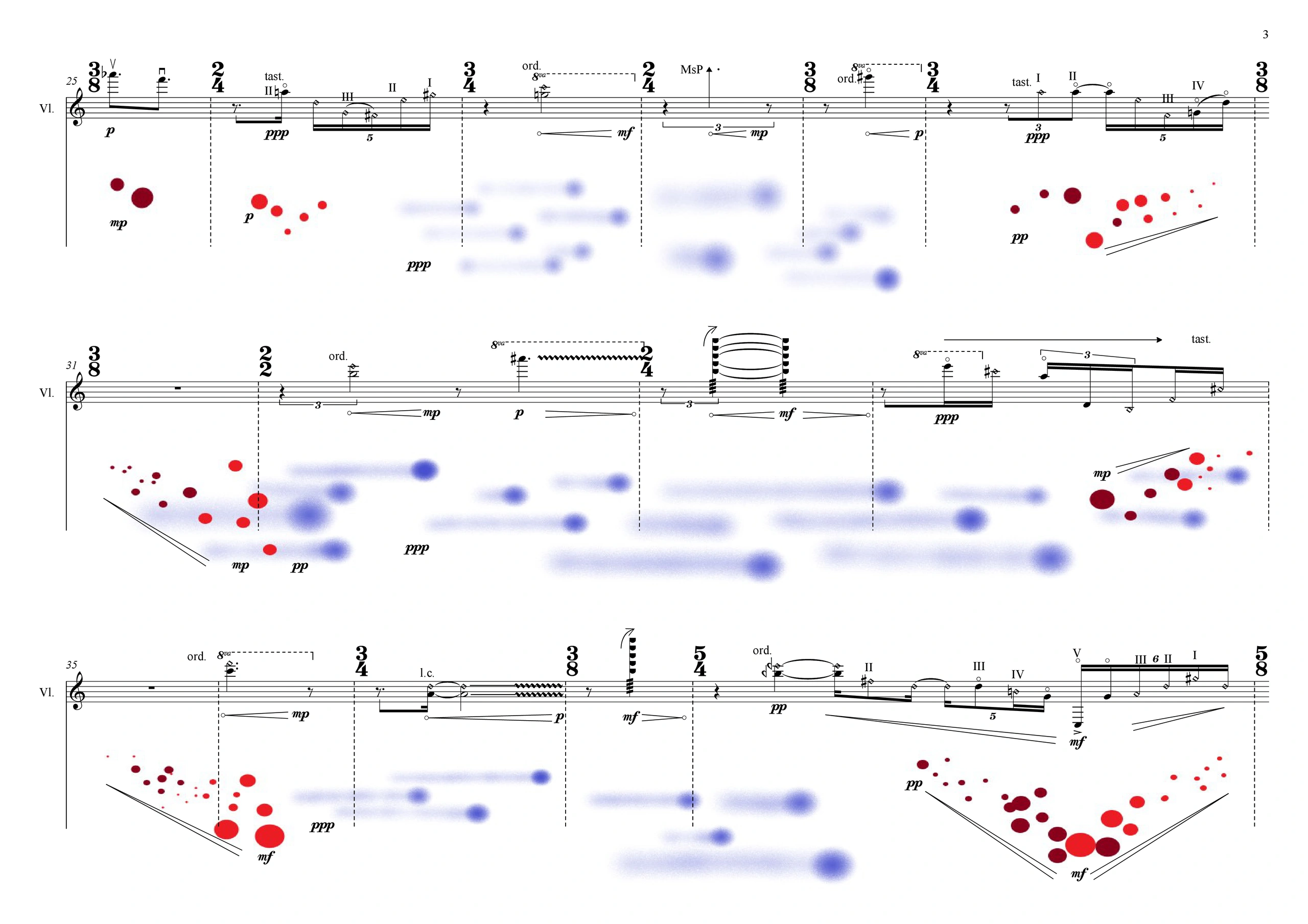
Chaconne, for 5-string electric violin and electronics, with echoes of a past form already present in its title, is consequently a work that elucidates Palumbo’s research and the results he has achieved more recently. The principle of variation, the essence of the chaconne, is retained in the first part of the piece, the 18-minute-long Woven Lights, but it gradually transforms into a dialogue with the initially sparse electronics. Made up of small gestures and hints, the electronic part thickens and acquires density (the computer reworks material from the violin part and presents it, superimposed with sampled glass and metal sounds). Nevertheless, a surprising, almost linear clarity is preserved despite an accumulation and expansion of colors and timbres that feed on themselves and reproduce as in a collective process of carefully programmed parthenogenesis. The score, in fact, carefully indicates the different ways in which the electronics should intertwine with the live electric violin (written in traditional notation). It determines the sound objects created by the computer through a complex graphic representation of shapes, colors, and lines: like a script for a play (in which actions – even those that are not strictly musical – are indicated in coded language and performed as in an actual staging) that is anything but vague. It is clear that the composer’s musical conception is animated by a strong theatrical sense, by a personal harmonic dramaturgy that does not reject explicit emotional gestures, even in the guise of refined timbral and melodic research. Indeed, he voices an aim that is perhaps every composer’s: ‘I want the meaning of my music to be apparent from listening, without the need for verbal justification.’ The final cadenza, which emerges solitary and virtuosic but with its own angular lyricism, leads to the second part (the two sections of the Chaconne can also be performed separately), The Glows in the Dark, in which the violin no longer dialogues through the looking-glass – with the ghosts evoked by the electronics – but with it, in the form of thirty overlapping parts, pre-recorded by the same soloist and with the same instrument.
- Recording Notes
Recorded for a monographic CD by Bis Records which has received more than 20 5-star reviews in major international magazines and an ICMA nomination
- Record Label
- Bis Records
- Performer Credits
- Francesco D'Orazio, electric violin (5 strings); Francesco Abbrescia, live electronics
- External Links