1 / 21
0:00/0:00
Pierrot + Percussion
2025
Bass Clarinet
Cello
Flute
Objects
Piano
Pitched Percussion
Unpitched Percussion
Violin
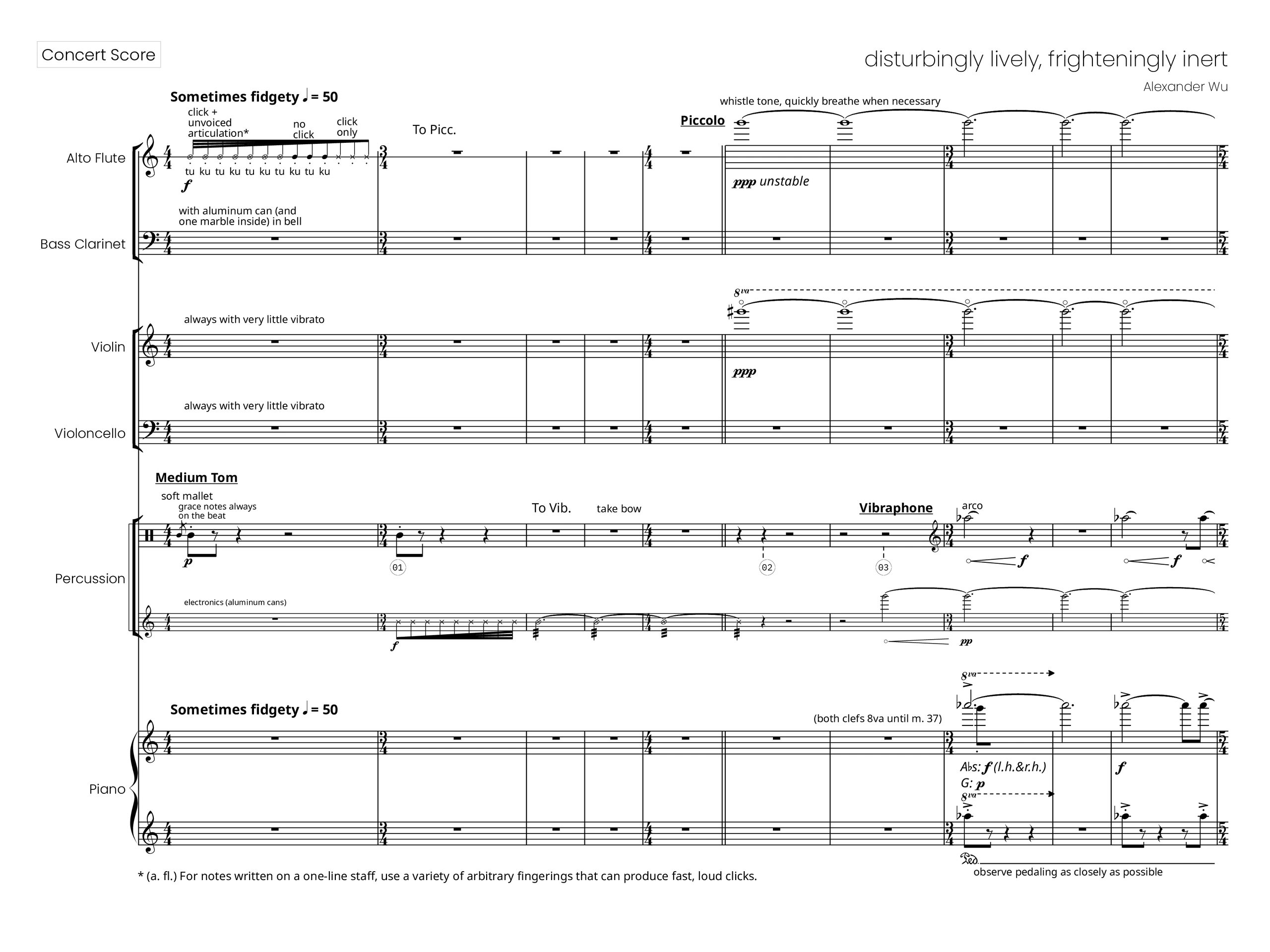
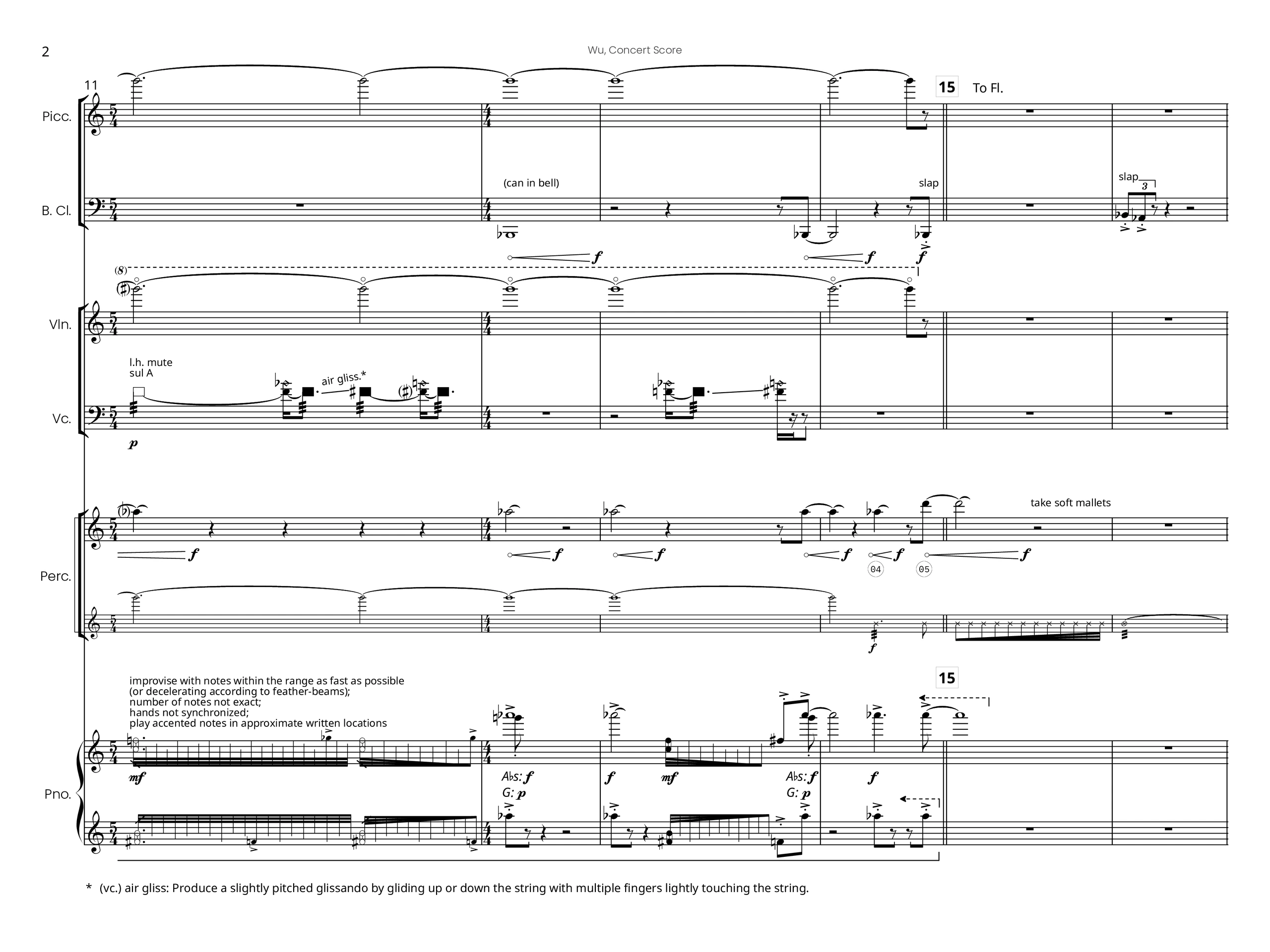
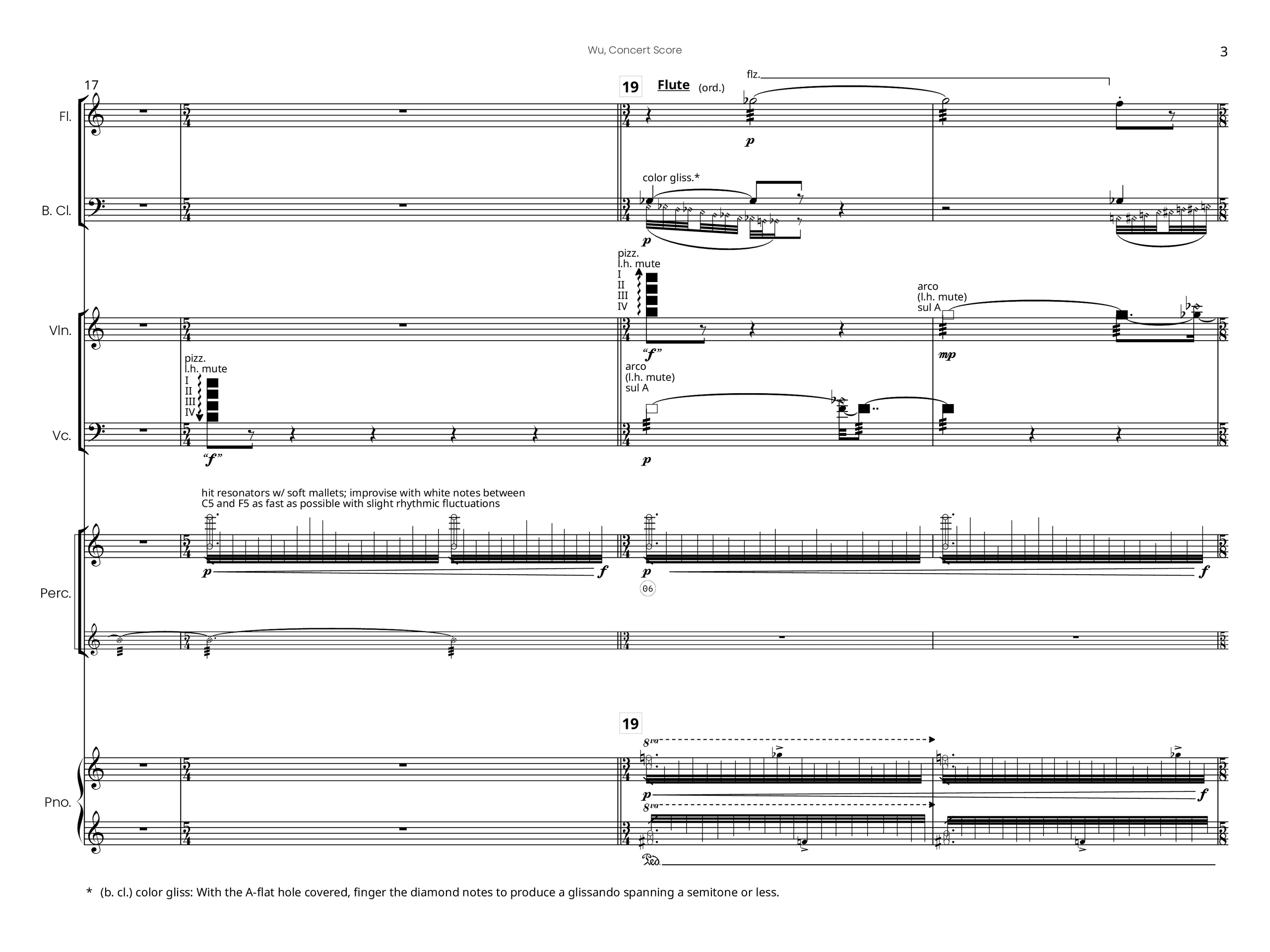
In her seminal work “A Cyborg Manifesto” (1985), Donna Haraway writes of the increasingly ambiguous difference between organism and machine, “Our machines are disturbingly lively, and we ourselves frighteningly inert.” Forty years after its publication, Haraway’s observation has almost become banal. The cyborg is now taken for granted, and we are so irrevocably fused with our machines that we cannot tell our bodies apart from them. Everything is at once disturbingly lively and frighteningly inert, but we still find it difficult to embrace partial, fluid identities, and to dream of kinship between boundaries. In this piece, neither the human performers nor the crushed cans (which act as speakers) hanging in front of them dominate. Instead, each part stubbornly speaks imperfect translations of other parts, reveling in contradictions, false memories, and the strange union of six humans and two crushed cans.