1 / 16
0:00/0:00
Duo
2025
Piano
Violin
- Program Notes
Concerto for Violin and Piano (2025) started as a work exploring my emotional headspace after completing my undergraduate degrees, feeling pride in what I had achieved, but also fatigue and complete uncertainty about what came next. Since that time, I have been both comforted and concerned to find that I am not alone in these struggles. Almost everyone I know my age is also struggling to keep pushing onward while deeply burnt out. Whether it is our collective prospects of facing climate change, fascism, countless other global issues, or simply a personal struggle of affording to live, the challenges to imagining a meaningful future are relentless. Regardless, we keep pushing, keep trying, keep striving— what other choice is there? But what do we do with the exhaustion? What do we do with a future that never offers rest?
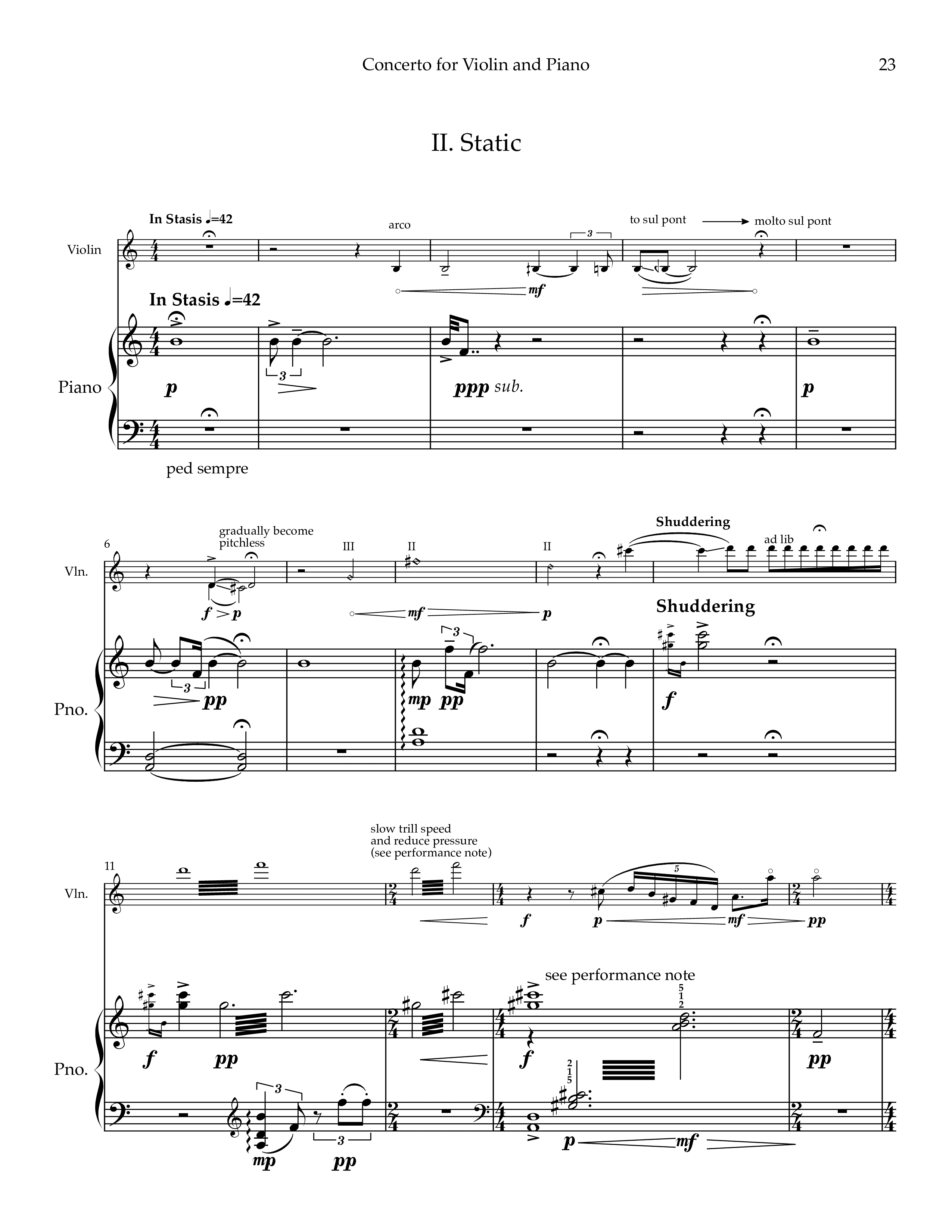
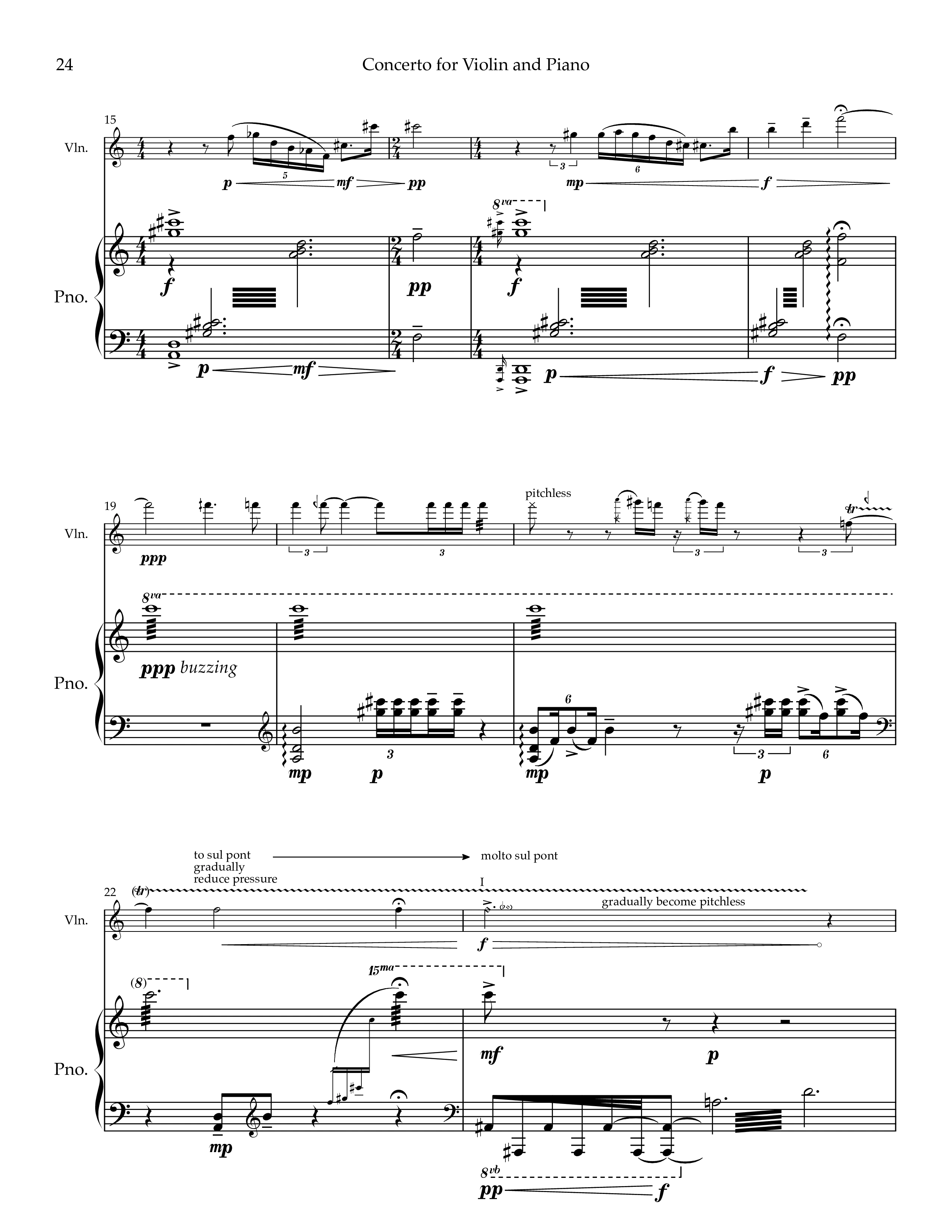
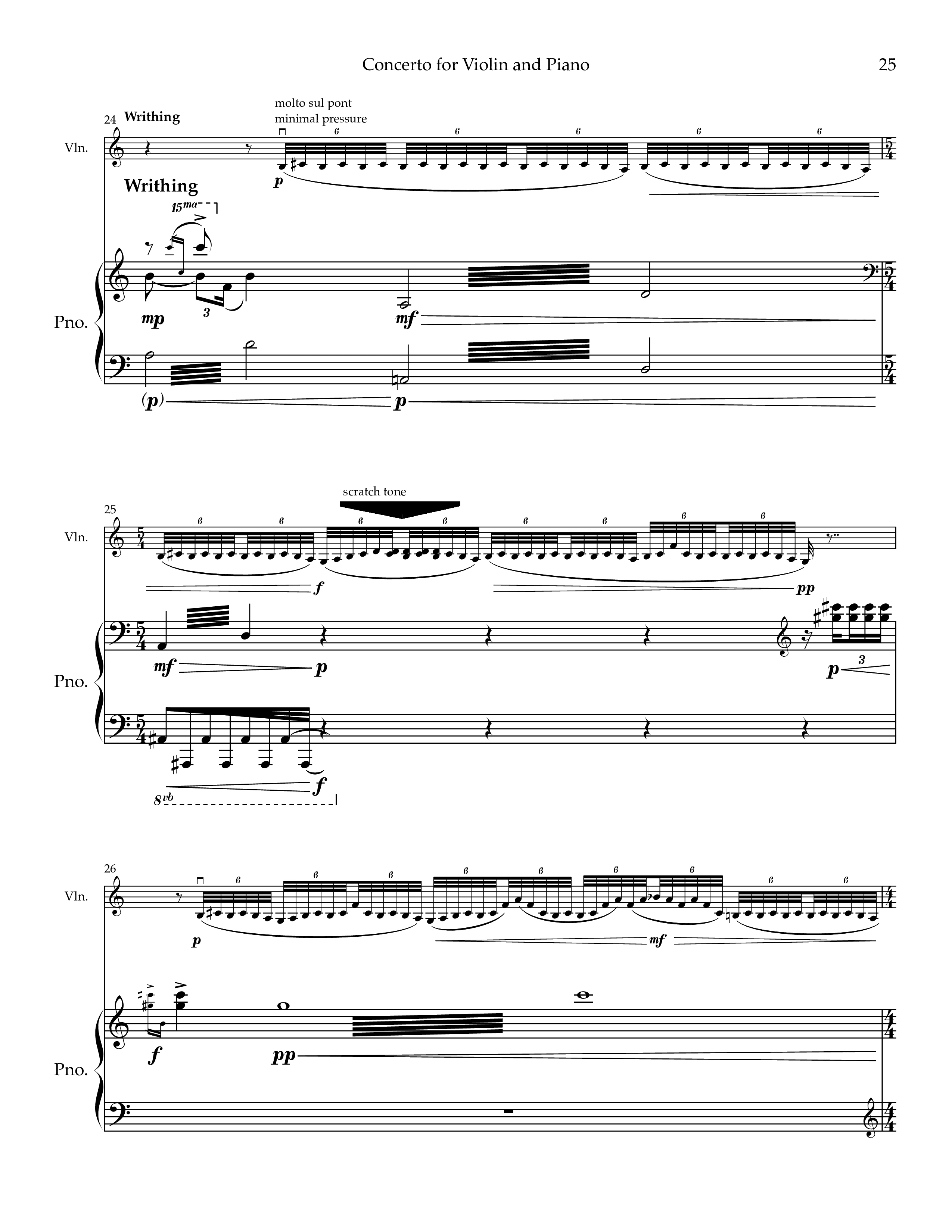
The first movement, Strive, draws from classical sonatas and traditional Irish fiddle music— two traditions that, for all their differences, both have unique ways of evoking constant forward momentum. Whether through harmonic and thematic development or rhythmic impulses, the music is constantly pushed forwards and upwards, until the intensity becomes too much and it collapses under its own weight. The fallout is felt in Static, music that shudders, rocks, bounces, vibrates— motion without direction, stillness without rest. The finale, Strive, Again, sees the return of the character and inspirations from the first movement. Even as the music begins playfully and effortlessly, it must eventually contend with the same inevitable escalation that drove the ending of Strive. This time, there is no promise of another movement, no caveat to the conclusion. The music will end, but the striving must continue— what other choice is there?
- Recording Notes
Performed by Alex Vershinin (violin) and Matthew Osterholzer (piano) at the University of Michigan.
- Performer Credits
- Alex Vershinin, Violin, Matthew Osterholzer, Piano
- External Links