1 / 4
0:00/0:00
Solo
2025
Violin
- Program Notes
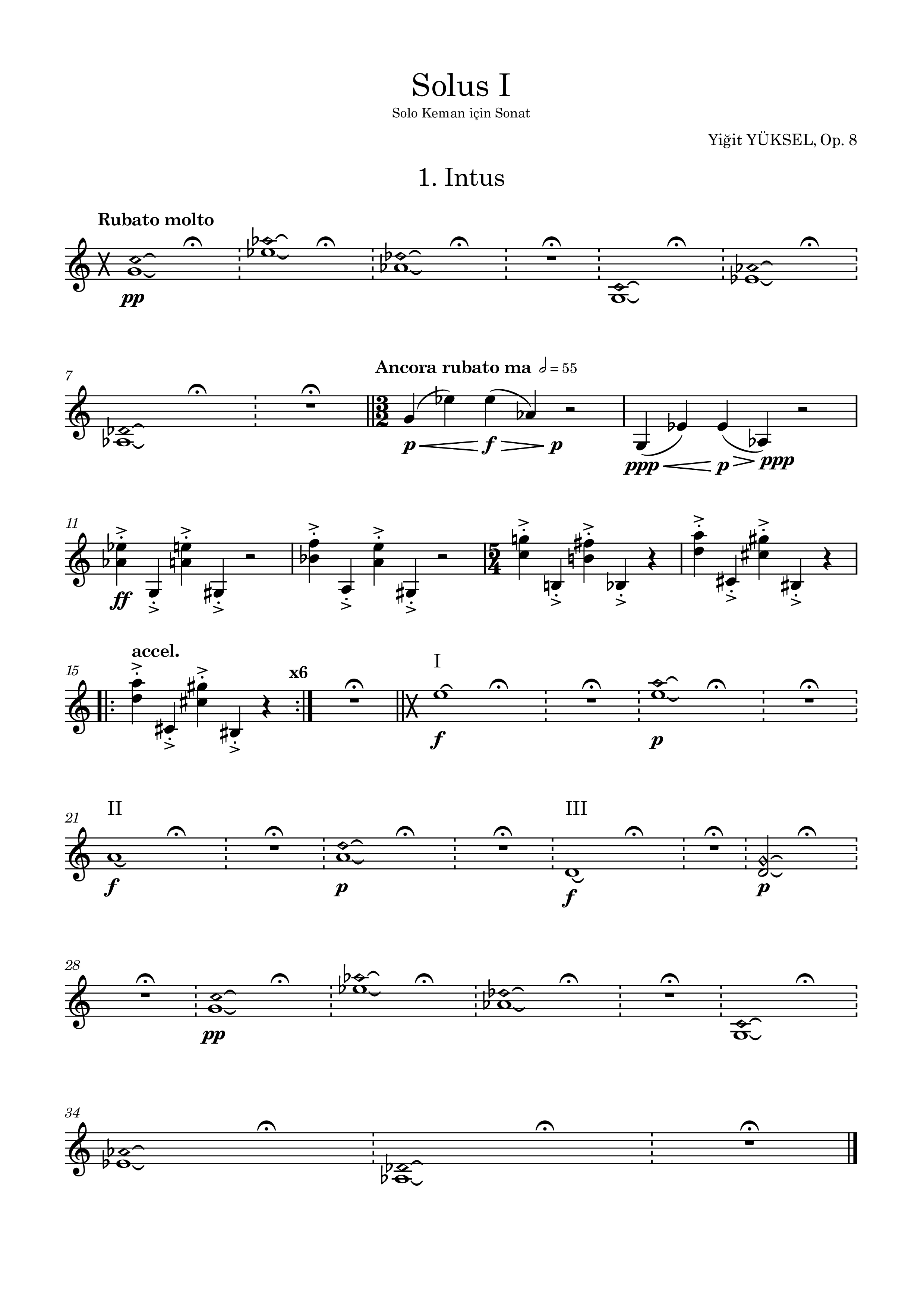
Solus means “solitude” in Latin. This sonata unfolds within a fictional framework that explores the psychological processes of solitude. It consists of four stages, reflecting the composer’s perception of loneliness:
I – Intus (Inward) The opening movement represents a self-contained inner space. Its rubato character allows the music to unfold freely, as if shaped by fleeting thoughts rather than bound to a fixed sense of time. Here, the sounds are less directed and more exploratory; fragmented motifs and sudden pauses suggest an inner world that has not yet fully taken shape.
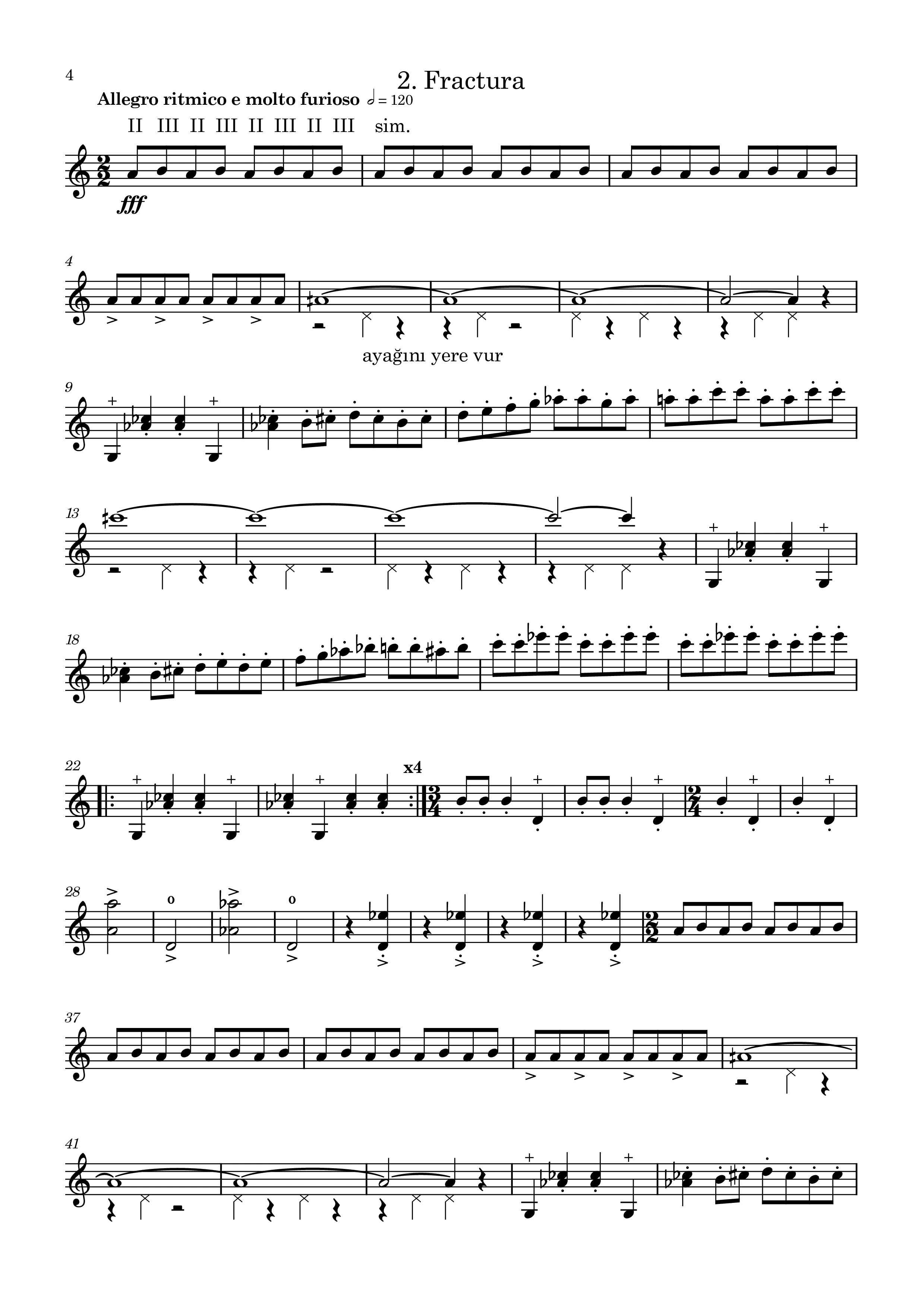
II – Fractura (Fracture) The second movement presents a stark contrast, releasing the inner tension of the first movement outward. Sharp rhythms, repetitive figures, and a dense motoric structure create a sense of almost uncontrollable energy. The violin is no longer merely a melodic instrument but also a percussive one; physical gestures and rhythmic accents become integral to the music. This movement can be heard as the eruption of internal pressure.
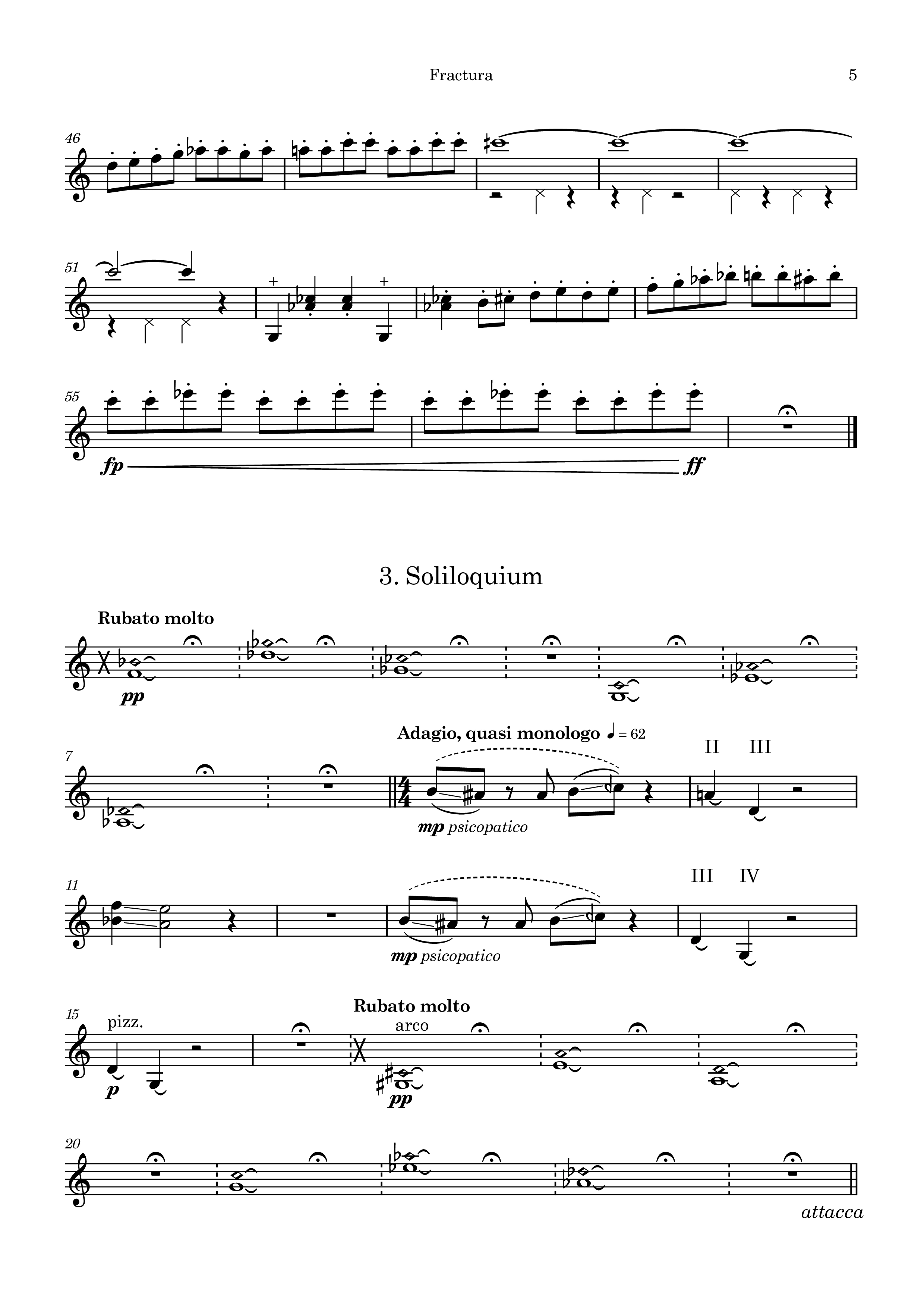
III – Soliloquium (Inner Monologue) As the title suggests, the third movement is a “speaking to oneself.” Following the intensity of the previous movement, the music retreats into a slower, more fragile space. Single-line textures, silences, and subtle shifts in color turn the violin into a voice resonating within itself. Occasional harsh expressions hint that this inner dialogue is not entirely at peace.
IV – Solus (Solitude) The final movement serves as a conclusion that carries traces of the previous ones. A balance is established between the introspection of the opening and the explosive energy of the second movement. The music is now neither entirely inward nor outward; instead, it creates a space where both states coexist. In this sense, Solus concludes by suggesting that solitude is not merely an absence, but a multilayered state of being.
- Performer Credits
- Ahmet Selim Yağlı - Violin