1 / 54
0:00/0:00
Solo
2024
Organ
- Program Notes
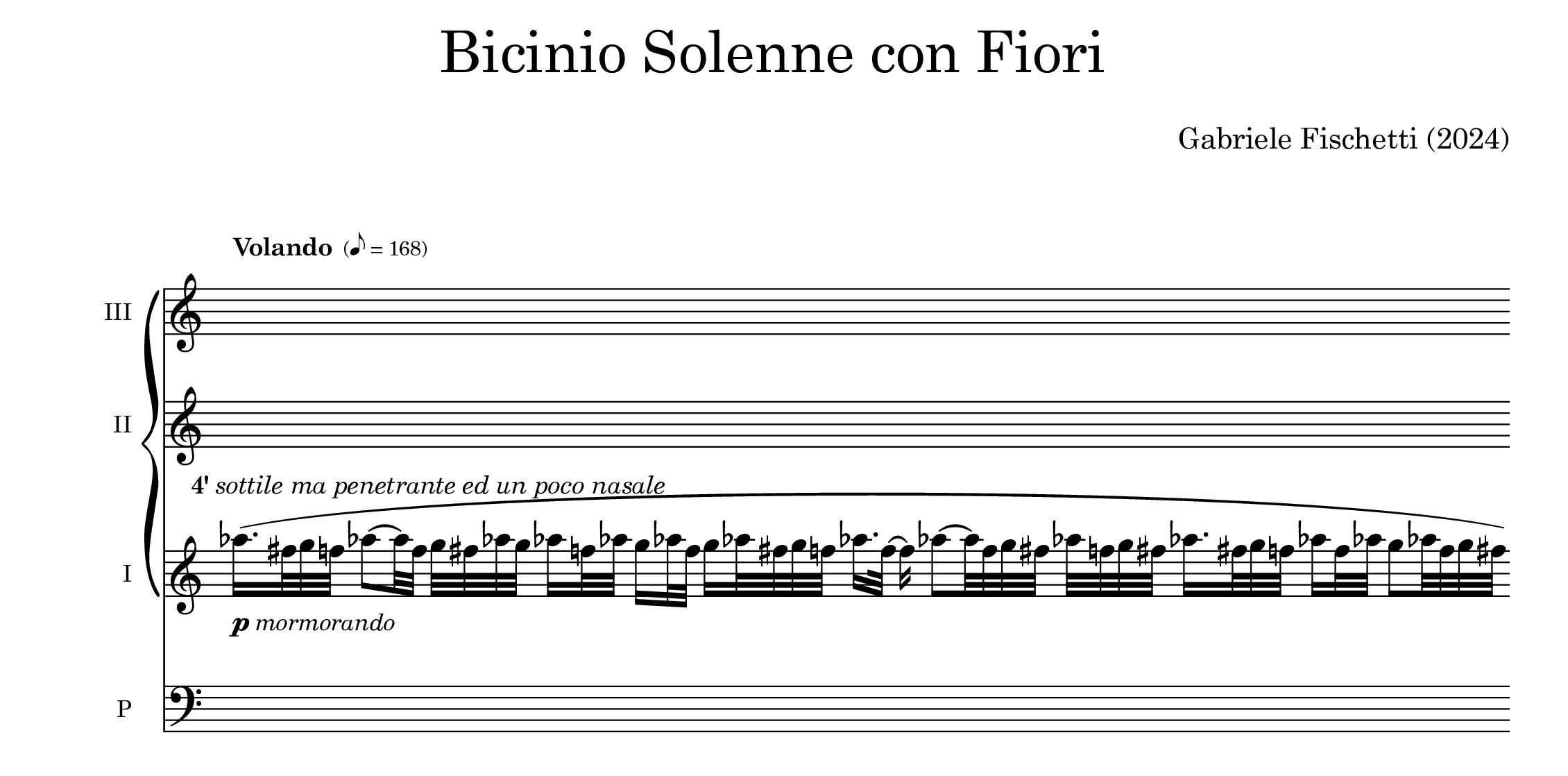
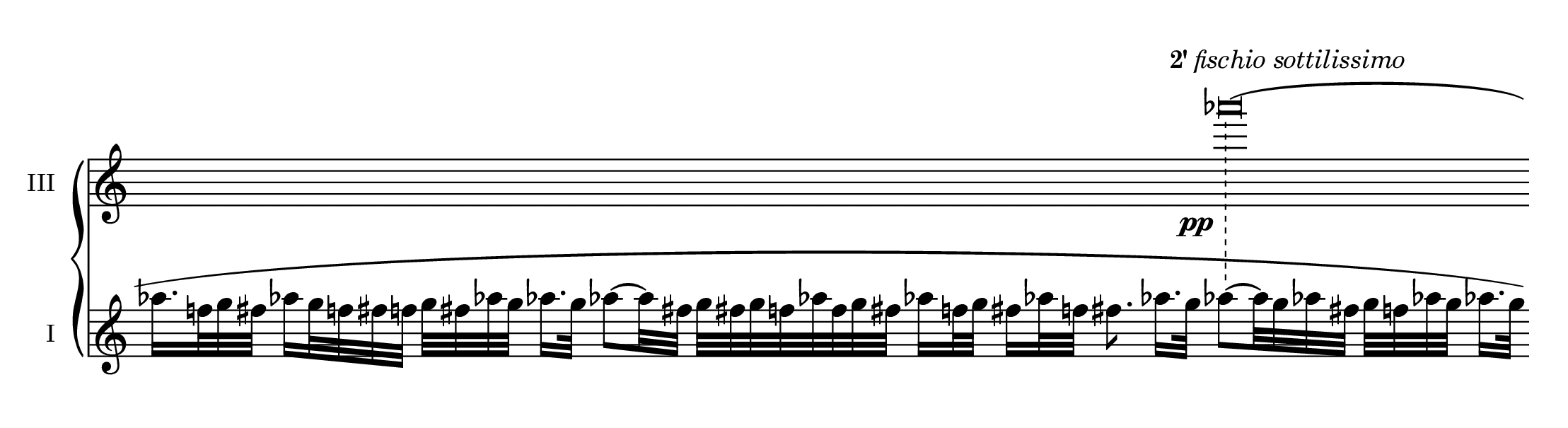
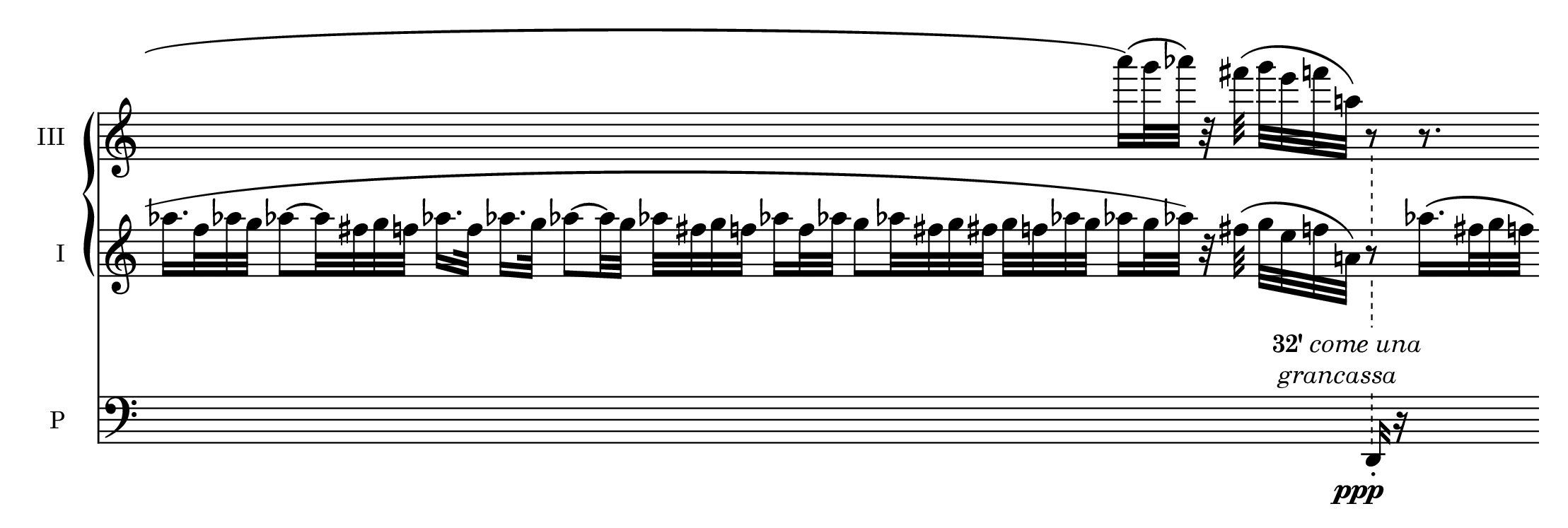
Writing this piece I tried to use all those empty, bare, elusive sonorities, as far as possible from that fullness of registers to which as listeners we have been accustomed since Baroque music. Not, however, by going so far as to recreate the sweet fragility of a flute chorale, but by arriving through the rapidity of the gesture to make the reed barely speak, interrupting the sound before it can resonate and reach its natural fullness and characteristic solidity. The organ thus becomes no longer the mighty instrument of the divine, or at any rate of the celestial, the sublime, but through the elusiveness of the gesture, acquires the fragility of the human, the earthiness of the living thing.
One should not give too much weight to the title, since first and foremost it is an evocative, one might say “musical” title, which rather than referring to something specific and rational, aims to elicit a subconscious reaction to whatever these words recall. That said, avoiding even a vague reference to ancient forms seems especially difficult when writing for organ. Calling the piece Bicinio is therefore a choice that was derived in part from this sentiment and in part from the observation that indeed in much of the piece two voices are present, although very often they move monophonically or homorhythmically, and in general are not treated polyphonically at all. So one should not go looking for any reference to tradition in this regard. As for the adjective Solemn, I leave it to the listeners to judge in what key it should be read. Flowers are scattered throughout the piece; they are the arabesques that cover and give life and color to an otherwise bare structure.
- Recording Notes
Recorded in the Großer Konzertsaal of the Hochschule für Musik und Theater München.
9/07/2025
- Performer Credits
- Vittorio Vanini