1 / 24
0:00/0:00
Ensemble
2024
Double Bass
- Program Notes
The Dark Beauty of Flor Nocturna
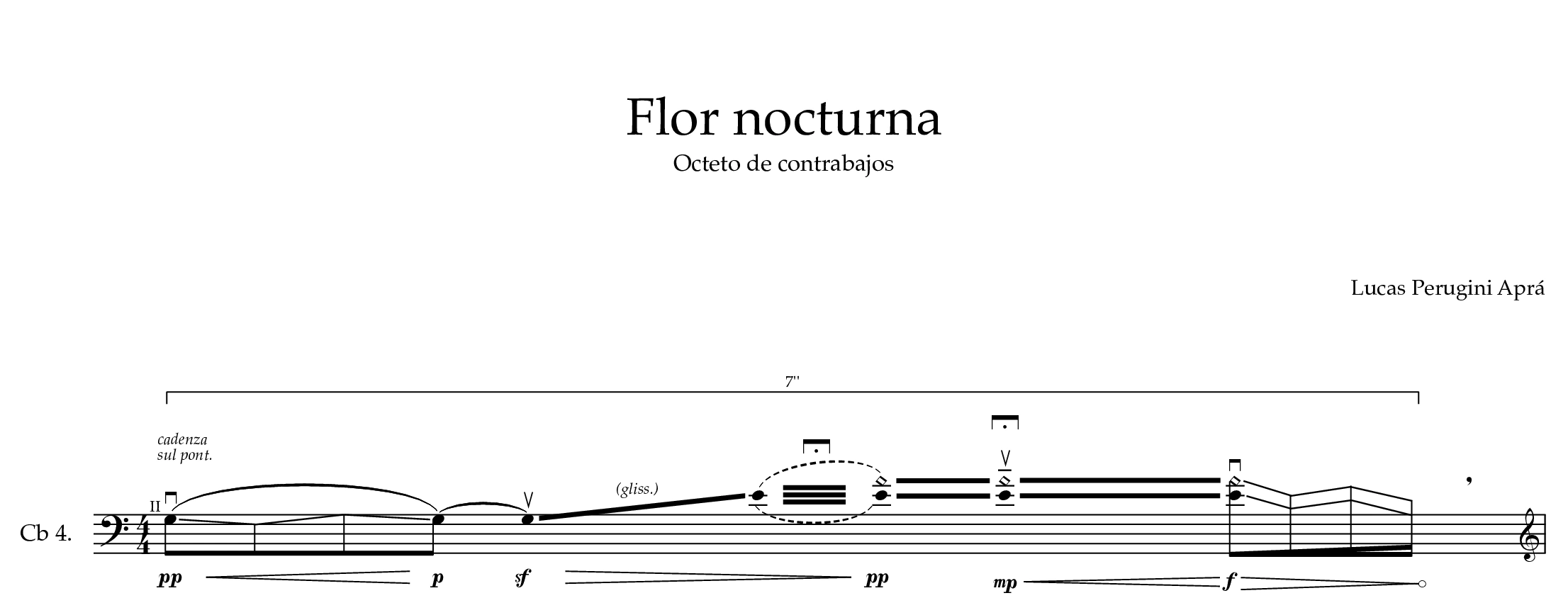
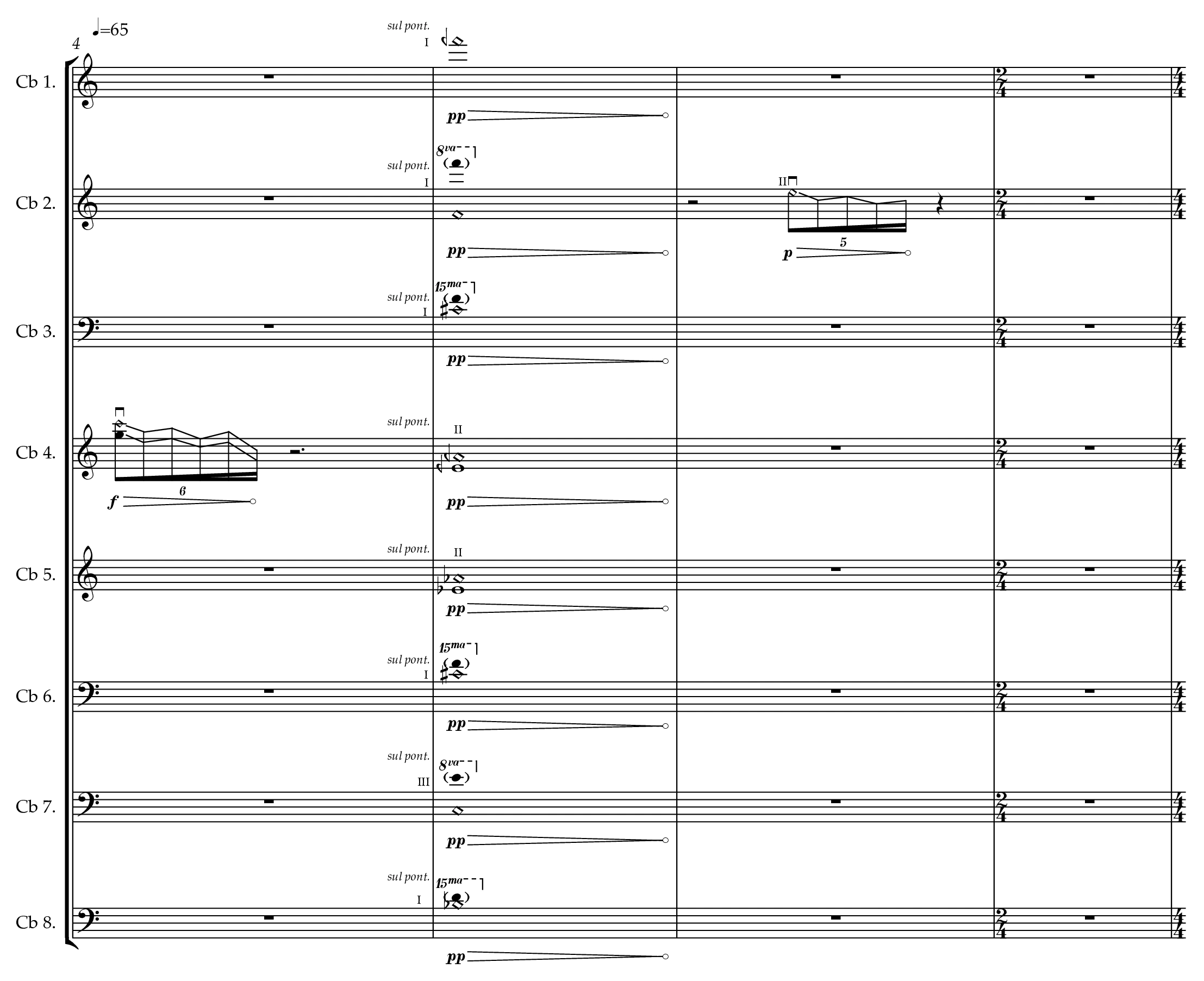
It is night in the forest. Sunlight has filtered through the leaves of the trees. When everything sleeps, one body is ready to live. The nocturnal flower unfolds its beauty in the darkness, generating an ambiguous atmosphere. This idea permeates the octet for double basses by Lucas Perugini Aprá (1992), in which he explores the sonic and expressive possibilities of the instrument. With his work, he invites us to immerse ourselves in a deep and enveloping world, where each voice contributes to the recreation of a forest that seeks to become a kind of expansive and emotional tableau. This musical canvas begins to resonate from the center of the ensemble, from where the main theme emerges as an introduction. The rest of the performers join the lushness of the scene with a murmuring pianissimo chord built from natural and artificial harmonics. The confusion of the night has permeated this soundscape.
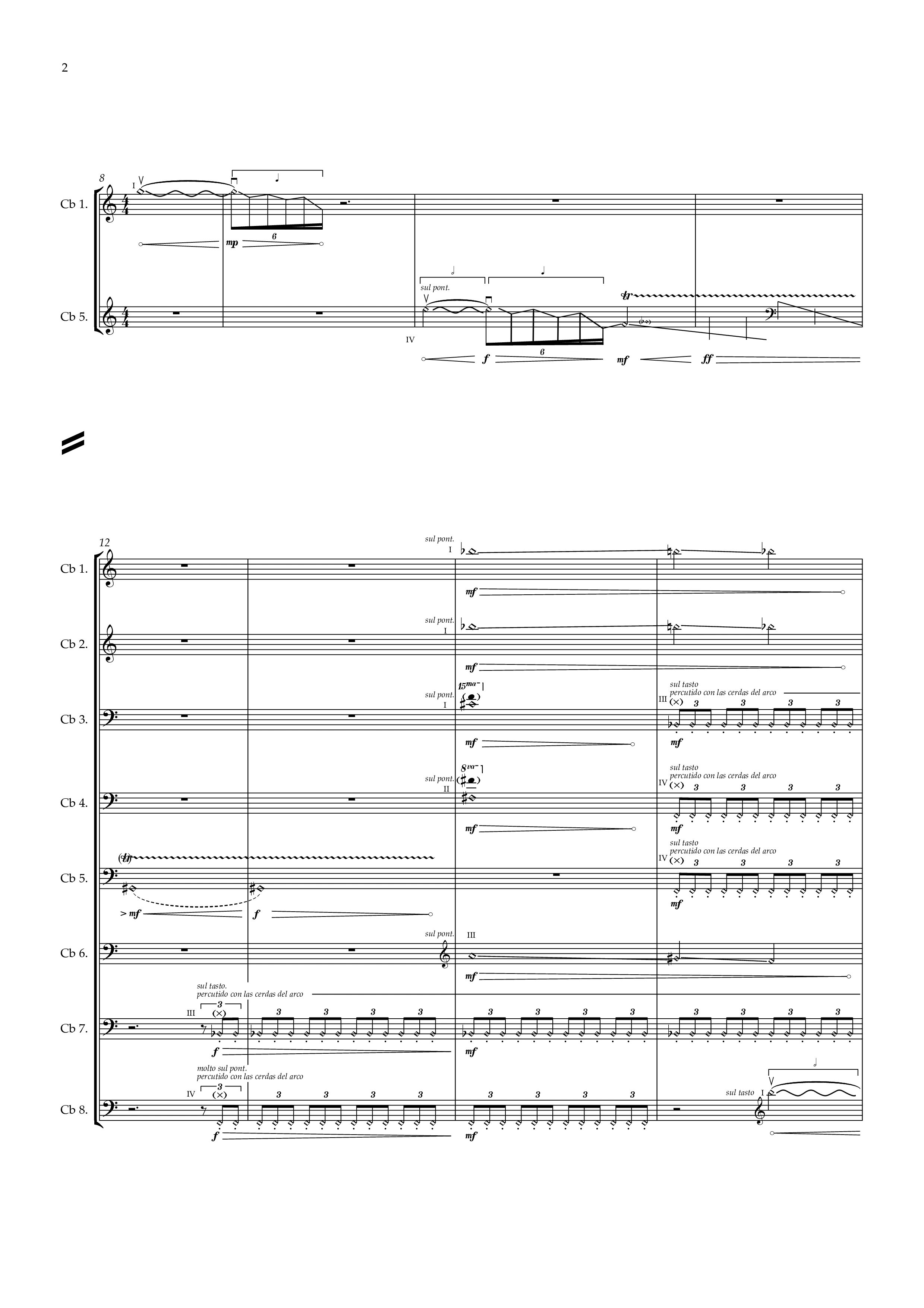
An ostinato characterized by a broken and percussive sound will carve out its path from the right edge of the stage, moving toward the rest of the voices. In this way, the composer plays with the spatial distribution of sound, which emanates from different points until it spreads to the entirety of the instruments. At the same time, various polyrhythms can be perceived, further clouding this mixture of shadowy howls from which, on occasion, the memory of the main theme emerges, mirroring the beauty of that nocturnal flower.
As a final culmination, a last section rises over a series of whispering trills that reverberate as if in a painting by Paul Klee. The colors—the sounds—form a tapestry of reflections that play with their different intensities. Little by little, senza tempo, all the recreated images begin to fade, and that initial theme born from the heart of the forest bids farewell to the dark night with a slow and distant echo...
- Performer Credits
- Lucía Elias Montero, Roberto Carlo Leal Rivero, Nicolás Cabello Alonso, Jairo García Miguélez, Samuel González Pérez, Ernesto García Pascual, Ariel Ortega Fernández, Julia Llorente Fernández,
- External Links