1 / 11
0:00/0:00
- Program Notes
Concert program
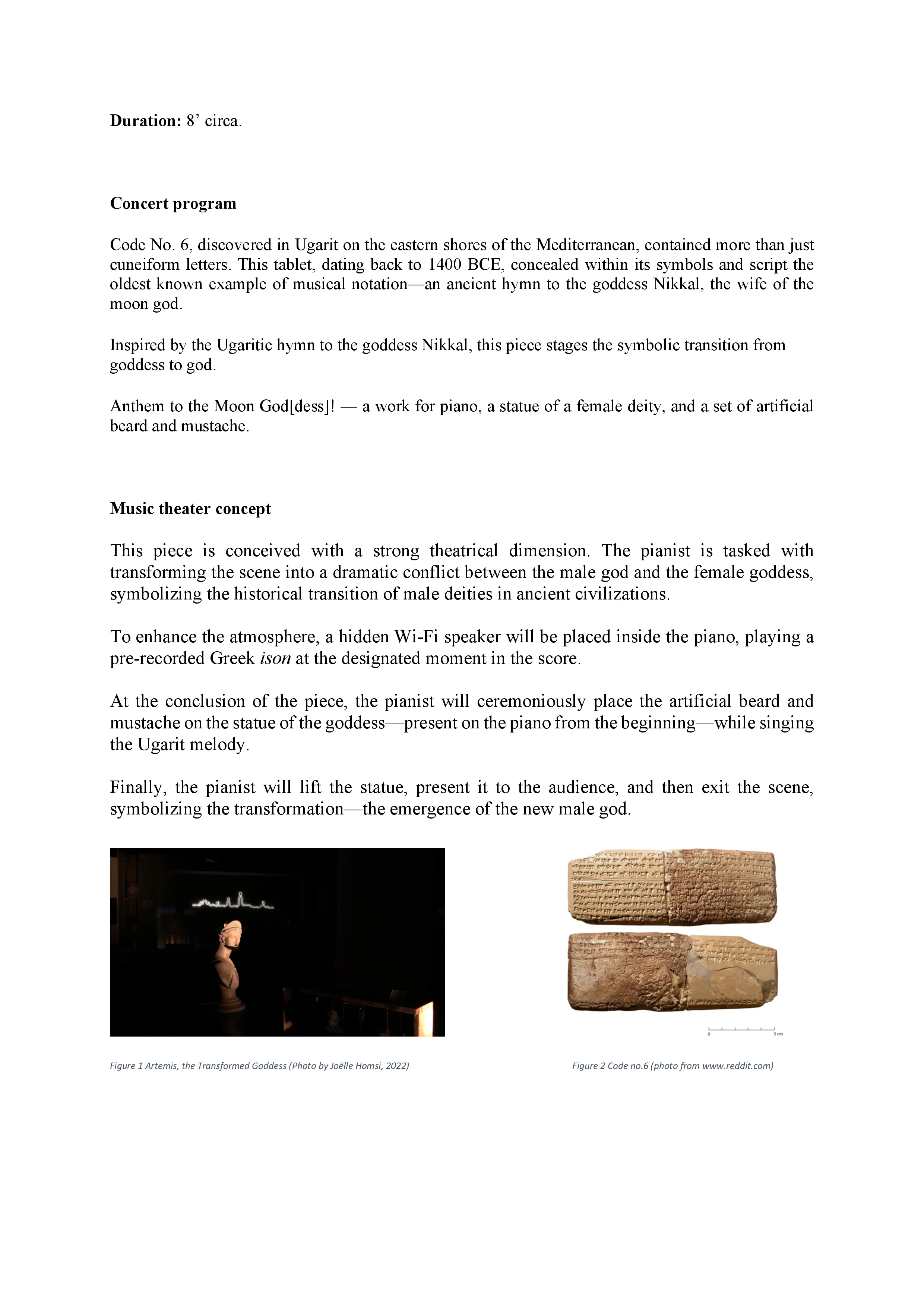
Code No. 6, discovered in Ugarit on the eastern shores of the Mediterranean, contained more than just
cuneiform letters. This tablet, dating back to 1400 BCE, concealed within its symbols and script the
oldest known example of musical notation—an ancient hymn to the goddess Nikkal, the wife of the
moon god.
Inspired by the Ugaritic hymn to the goddess Nikkal, this piece stages the symbolic transition from
goddess to god.
Anthem to the Moon God[dess]! — a work for piano, a statue of a female deity, and a set of artificial
beard and mustache.
- Recording Notes
Music theater concept
This piece is conceived with a strong theatrical dimension. The pianist is tasked with
transforming the scene into a dramatic conflict between the male god and the female goddess,
symbolizing the historical transition of male deities in ancient civilizations.
To enhance the atmosphere, a hidden Wi-Fi speaker will be placed inside the piano, playing a
pre-recorded Greek ison at the designated moment in the score.
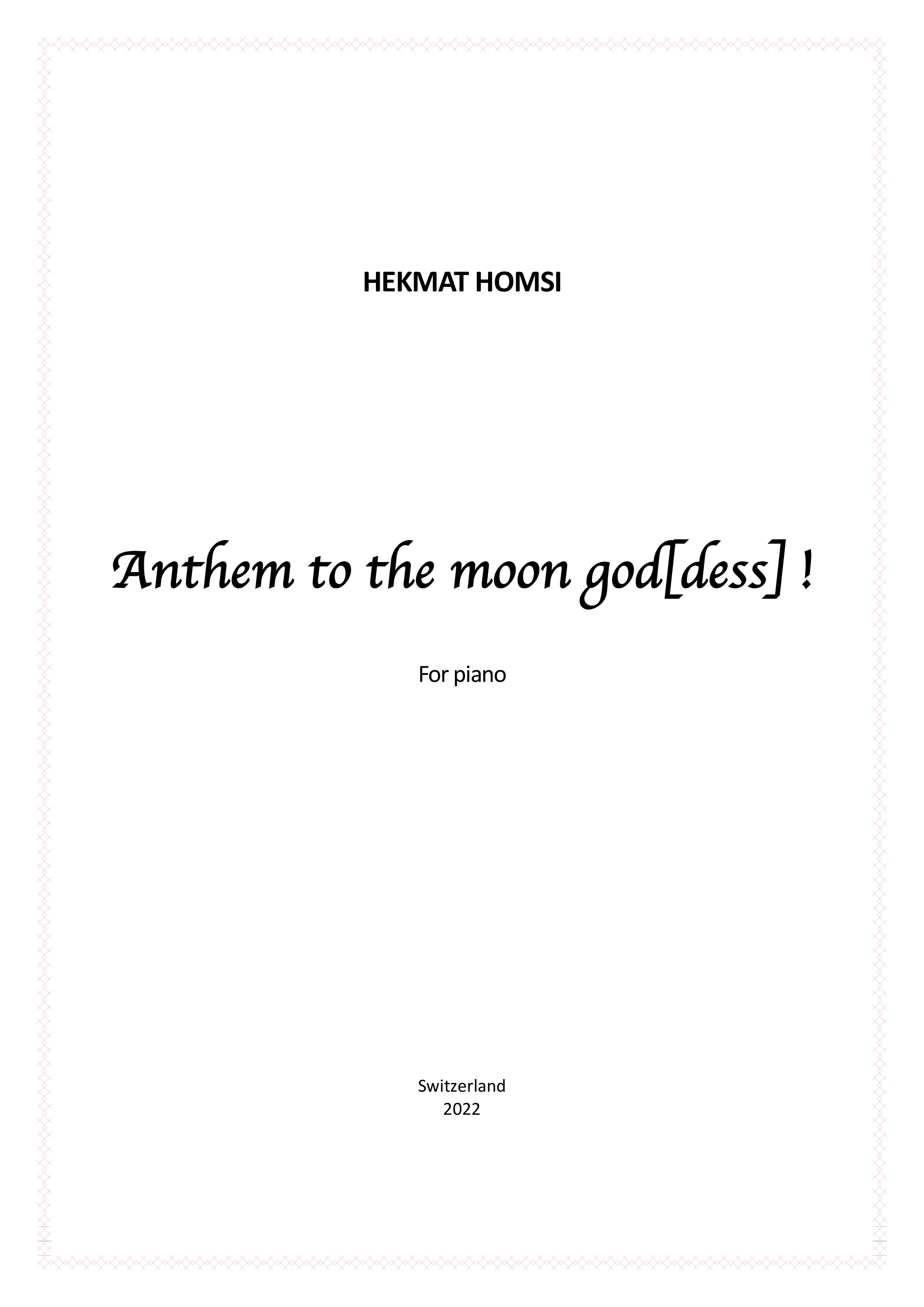
At the conclusion of the piece, the pianist will ceremoniously place the artificial beard and
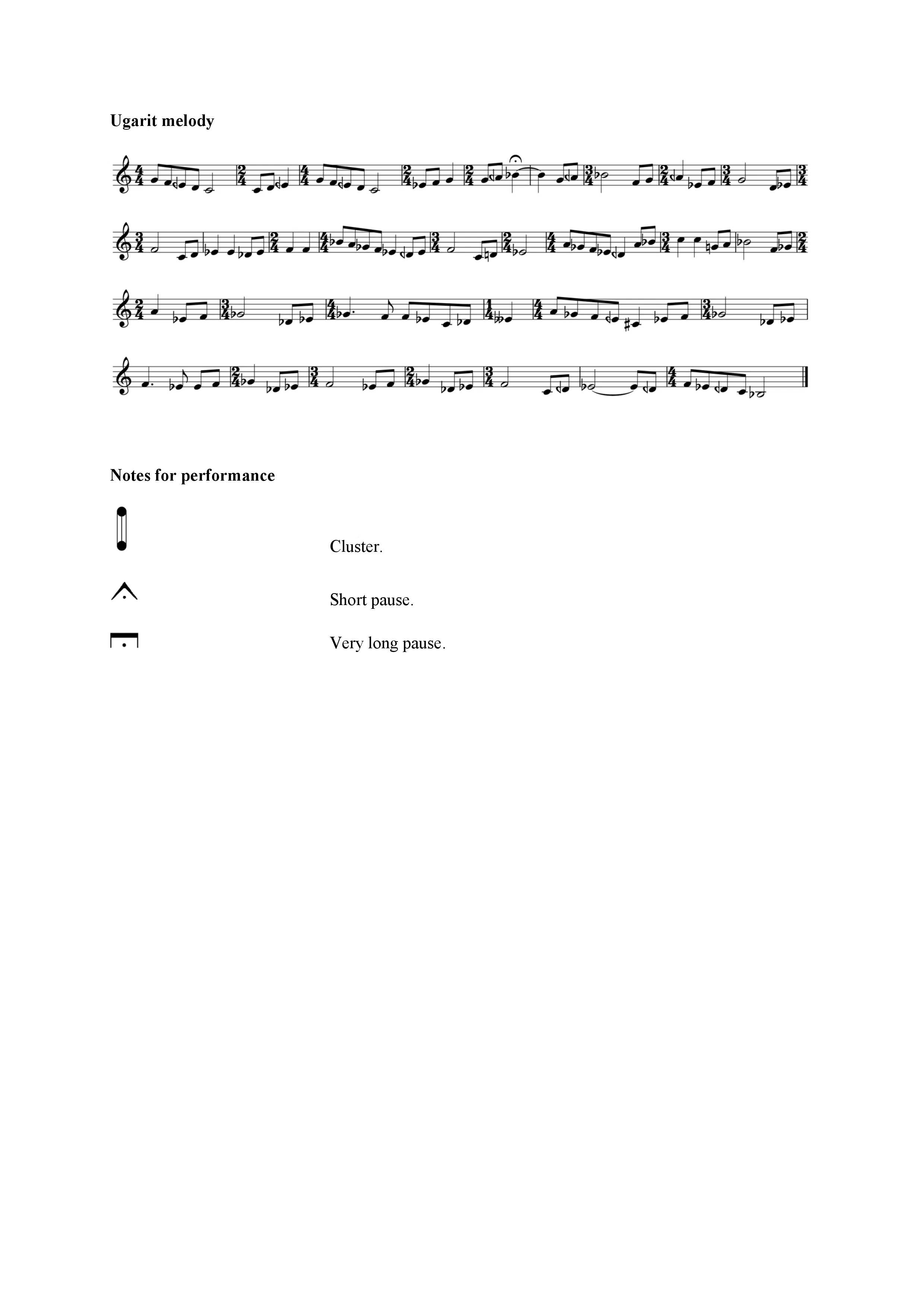
mustache on the statue of the goddess—present on the piano from the beginning—while singing
the Ugarit melody.
Finally, the pianist will lift the statue, present it to the audience, and then exit the scene,
symbolizing the transformation—the emergence of the new male god.
- External Links