1 / 7
0:00/0:00
Solo
2025
Piano
- Program Notes
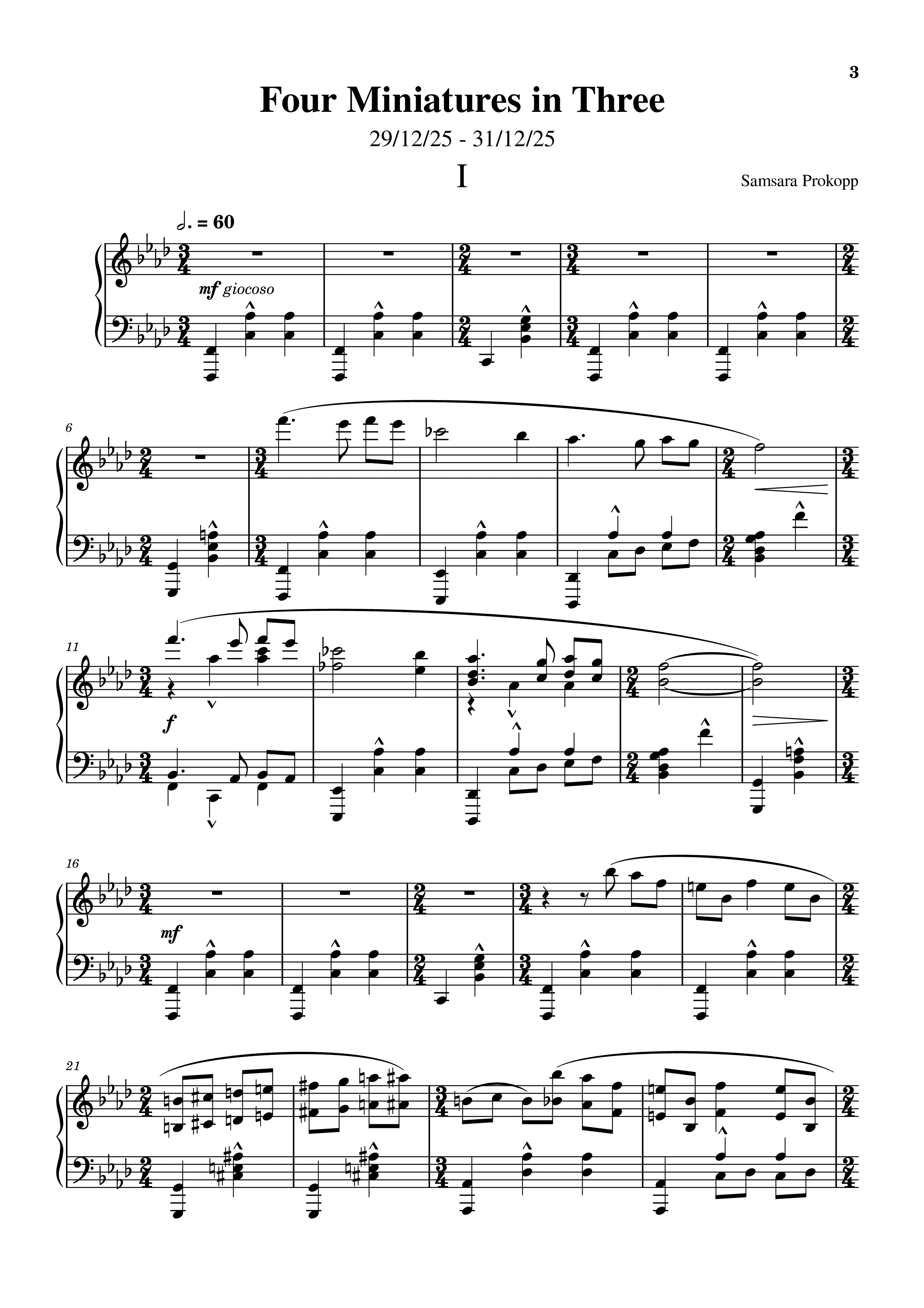
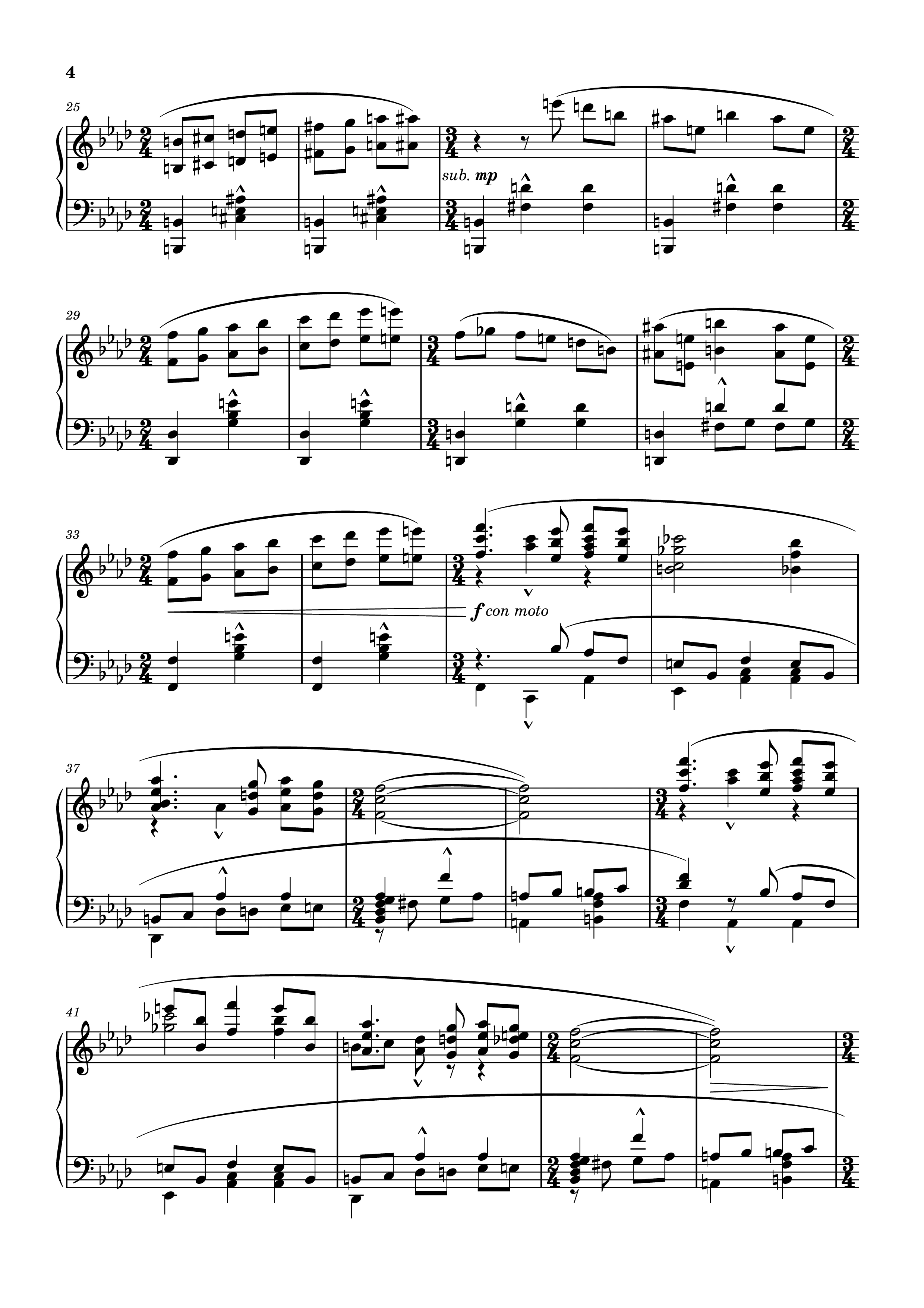
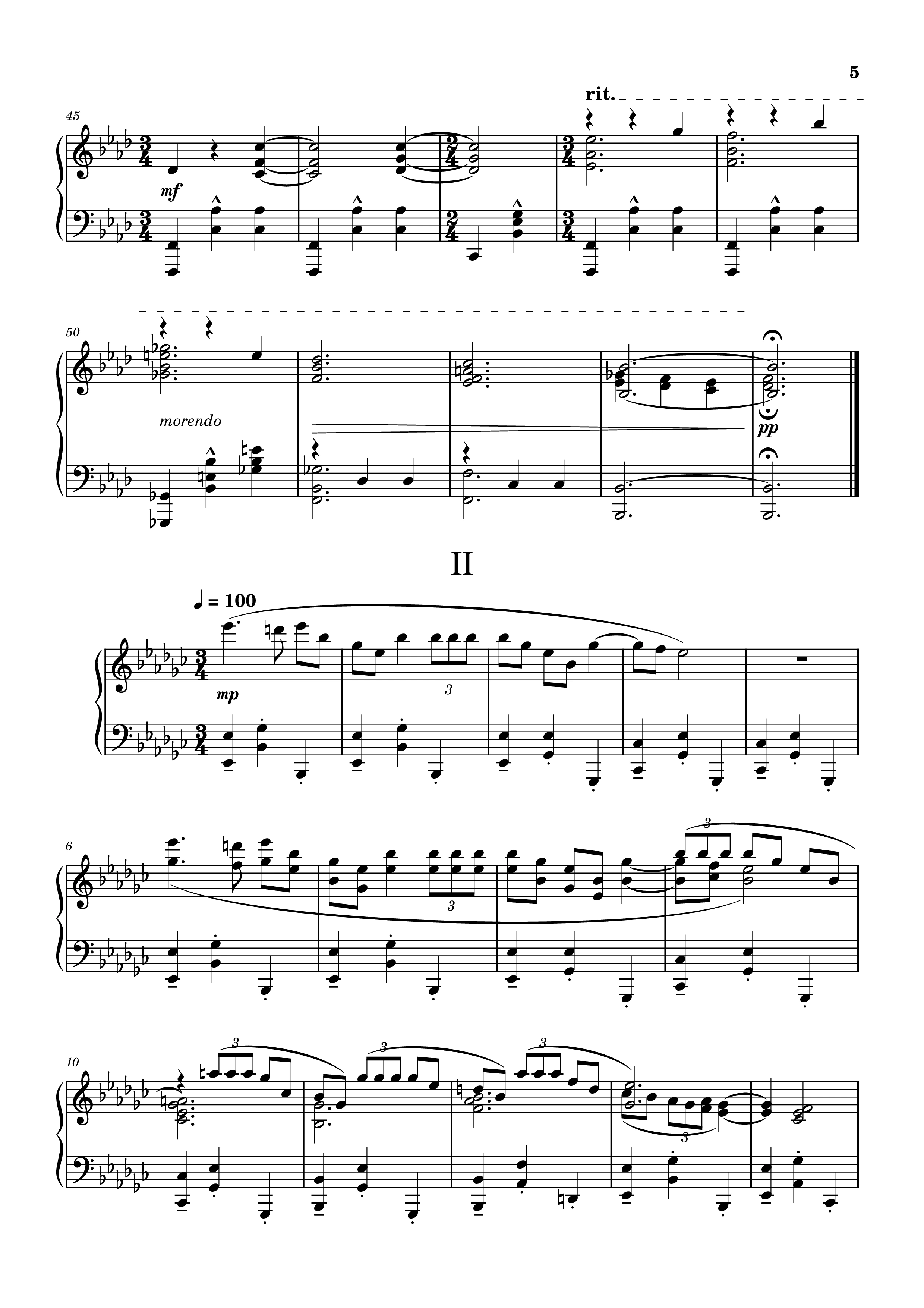
Four Miniatures in Three is a short set of piano pieces exploring different ways of disrupting the familiar character of the waltz. Although each movement is written in triple metre, the music deliberately unsettles traditional expectations of harmony, rhythm and texture. The set also represents an exploration of a more experimental compositional approach. Rather than following conventional tonal practice, the piece makes use of unusual key relationships, displaced accents, and fragmented keyboard textures. Each movement focuses on a different type of instability, while still retaining the underlying pulse and character or a dance.
I - The first miniature presents a restless and energetic waltz that deliberately disrupts tonal conventions while remaining recognisably dance-like. The harmonic language is intentionally unstable, featuring parallel fifths, cross relations, and dense accidentals. The metre is occasionally interrupted by bars of 2/4 and the traditional waltz accent is displaced onto the second beat. The movement also shifts between distant tonal regions, most notably from F minor to B minor, a tritone. Despite these apparent theoretical "errors," the music maintains a fluid character, creating a contrast between the visual complexity of the notation and the audible continuity of the dance.
II - The second miniature adopts a lighter, more playful yet dark character while retaining the triple metre of the set. Compared with the turbulence of the opening movement, its gestures are more relaxed and understated. However, tonal expectations remain subtly unsettled: the music moves through its material without clearly preparing its final destination, ultimately arriving in Ab minor with little conventional justification, quietly undermining traditional tonal direction.
III - The third miniature contrasts with the others through its brevity and delicacy. Although the music remains organised in groups of three, the downbeat is deliberately obsured, creating a floating rhythmic character. Tonal clarity is similarly uncertain, with the music hovering between C minor and F minor. The piece ends with an imperfect cadence: a minor dominant in first inversion arriving on the second beat of the bar, denying both harmonic and metric resolution.
IV - The final miniature restores the intensity of the opening movement while disrupting the traditional waltz texture through spatial distribution across the keyboard. The pulse is divided into three registral layers: a low bass in the left hand, sharp high offbeats in the right hand, and the melody and harmony unfolding in the middle register between hands. This seperation fragments the accompaniment and stretches the dance across the full range of the piano while preserving its triple pulse.