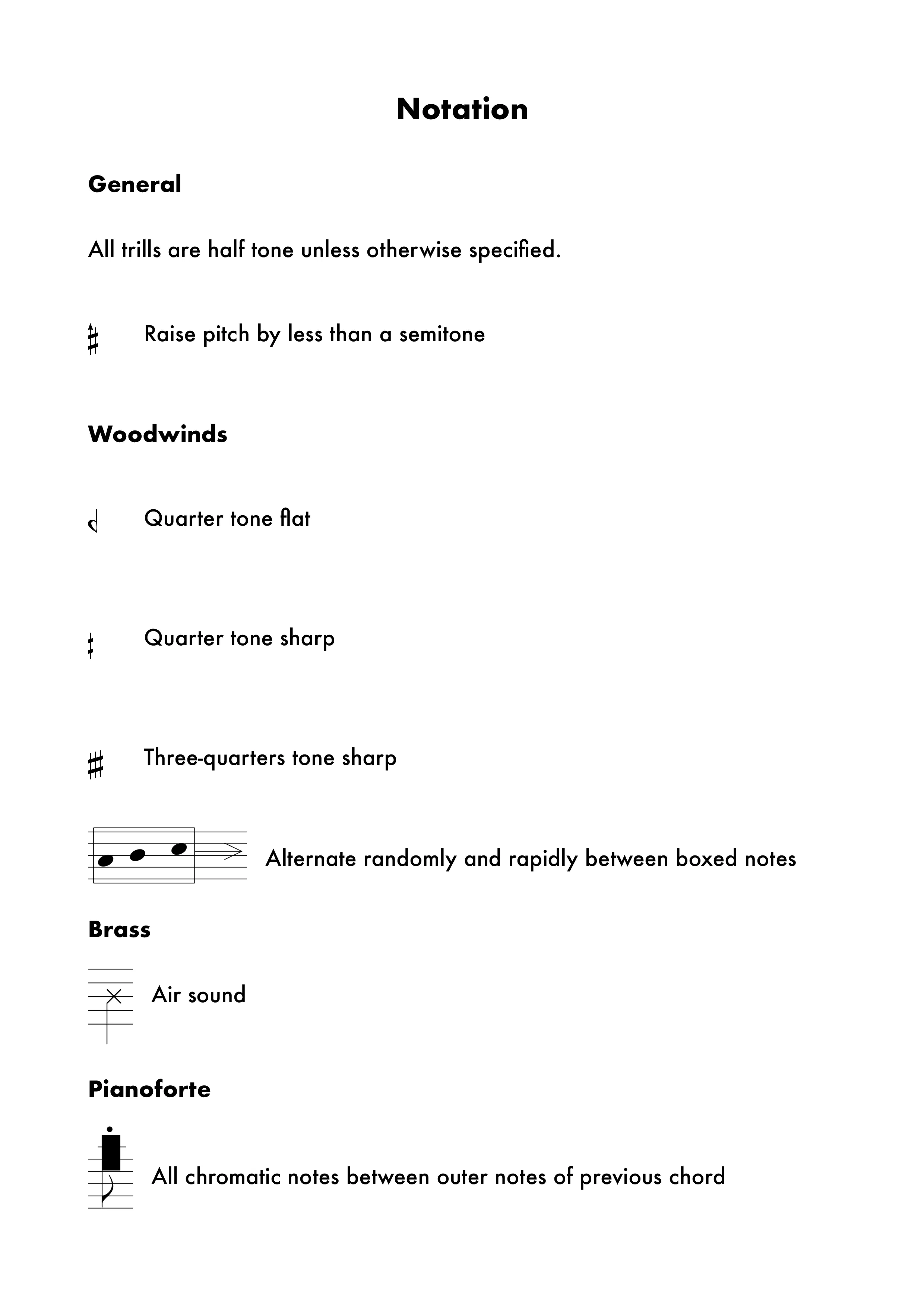
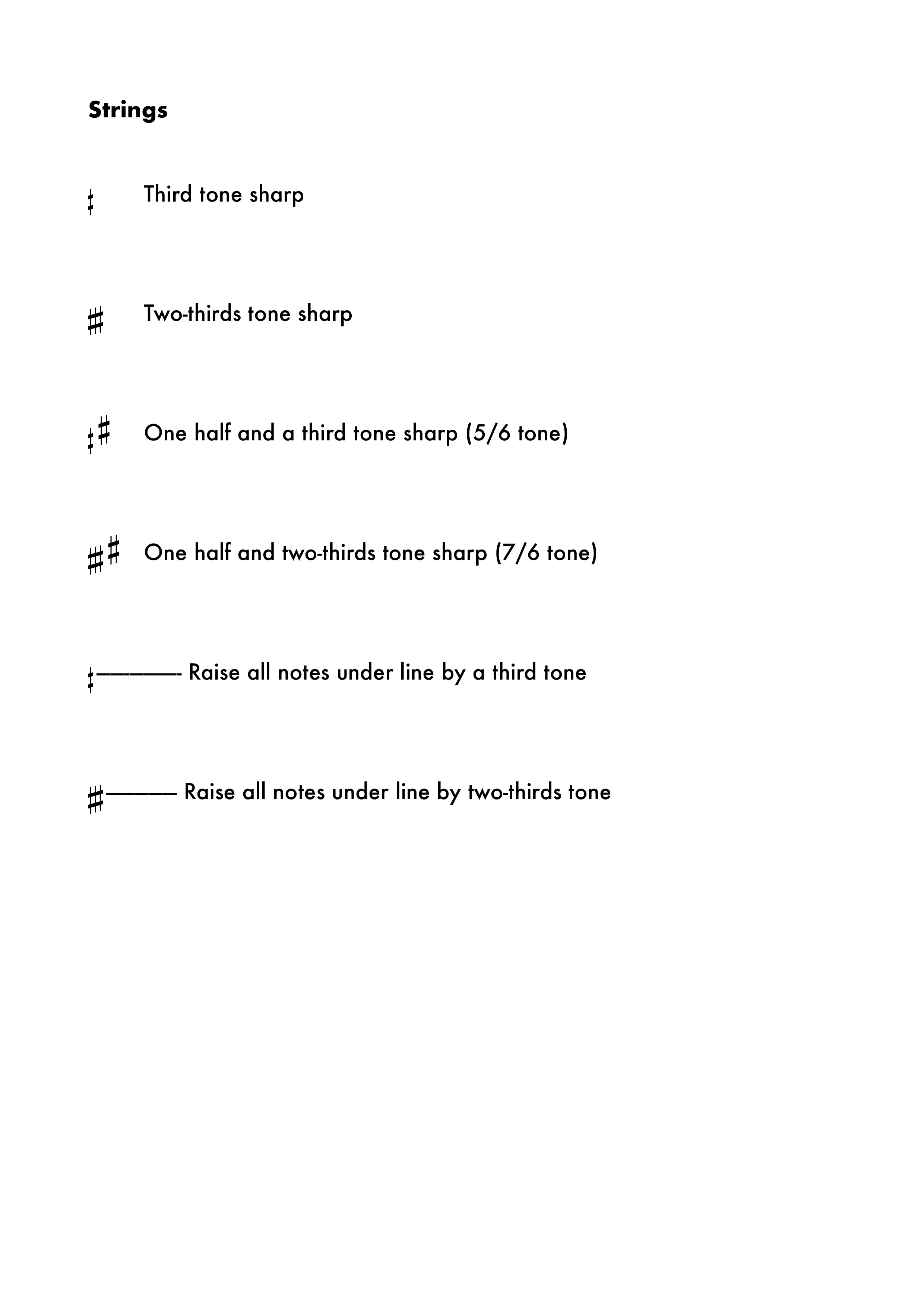
"Two forces rule the universe: light and gravity." - Simone Weil"Because there is a law such as gravity, the universe can and will create itself from nothing" - Stephen HawkingThe force of Gravity is one of the defining properties of existence, and has astounding dramatic and lyric implications. This piece musically develops historical conceptions of the phenomenon, and relates it to both musical note-to-note attraction and their relations to tonal or atonal bases, as well as to its wider implications towards attraction, inter-body relations and existence within our cosmos.The opening Prologue presents visceral pre-gravitational, outer-space harmonies and textures using third-tones in the strings.The second movement, The Aristotelian, explores Gravity as it relates to the natural elements: Earth, Water, Air, Fire, and the Godly element Ether, which according to the Aristotelian notion of Gravity, are ordered in that way from bottom to top, and each thing, being primarily of one of these elements, is drawn to its place in that hierarchy. In the first half of this movement, The Lesson, the players act as students, learning and playing with the different elements (with the piano playing the role of the teacher). In the second half of the movement, The Learning, the elements are embodied in the music. They begin in chaos, going further into disarray before finally, by cause of their innermost properties and internal forces - seemingly even against their knowledge or will - they converge upon order.The third and final movement, The Cartesian, concerns Cartesian vortex theory, according to which Gravity and other celestial phenomena are explained by the planets being situated in vortices - large circling bands of material particles, and these vortices interlocking to form the universe. According to a planet's centrifugal tendency, it may be locked into a ring or vortex band when its centrifugal tendency is balanced by an equal one in the particles forming the vortex. Thus according to a planet's centrifugal tendency, it might also move from vortex to vortex. In this way an object's Gravity is determined by its movement and inertial force and not inherent physical qualities, as was in Aristotle. Similarly, the music of the movement revolves around these fields, created by a murmur of minute musical particles, induced through pizzicato in the piano, key clicks and breath noises in the winds, among other techniques. The movement traverses through the force and energetic worlds of different vortices of sound, acting as a planet caught in motion between them. In the implosion and explosion of differently coloured tonal and atonal worlds, each marked by their modes and techniques, the movement travels between these hypothetical vortices of the universe.GRAVITY won third place in the Buchmann-Mehta School of Music's 2024 Composition Competition and was premiered in the Winner's Concert on June 25, 2024 by the Israel Contemporary Players, conducted by Zsolt Nagy.
Recording Notes
Buchmann-Mehta School of Music Composition Prize Winners’ Concert, world premiere performance