1 / 26
0:00/0:00
Solo
2018
Flute
- Program Notes
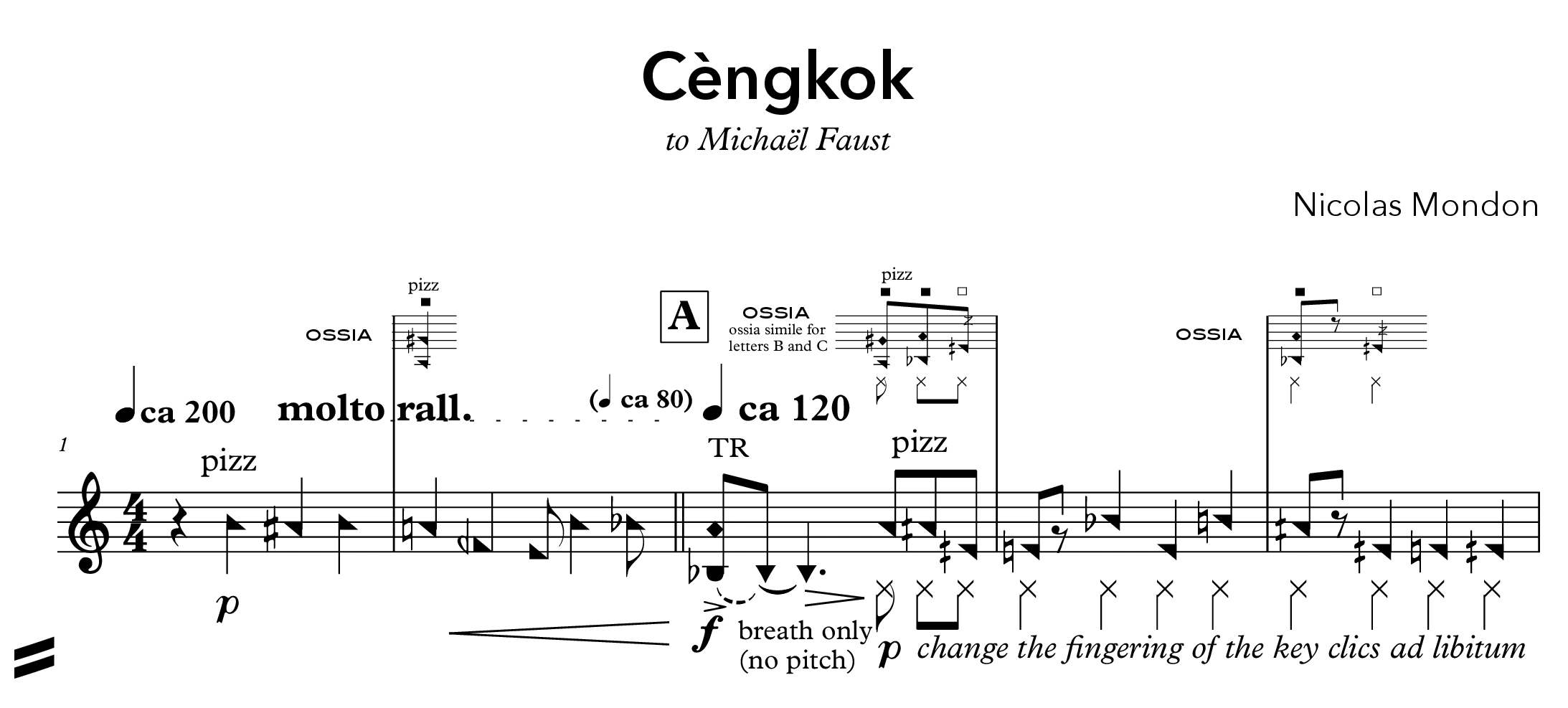
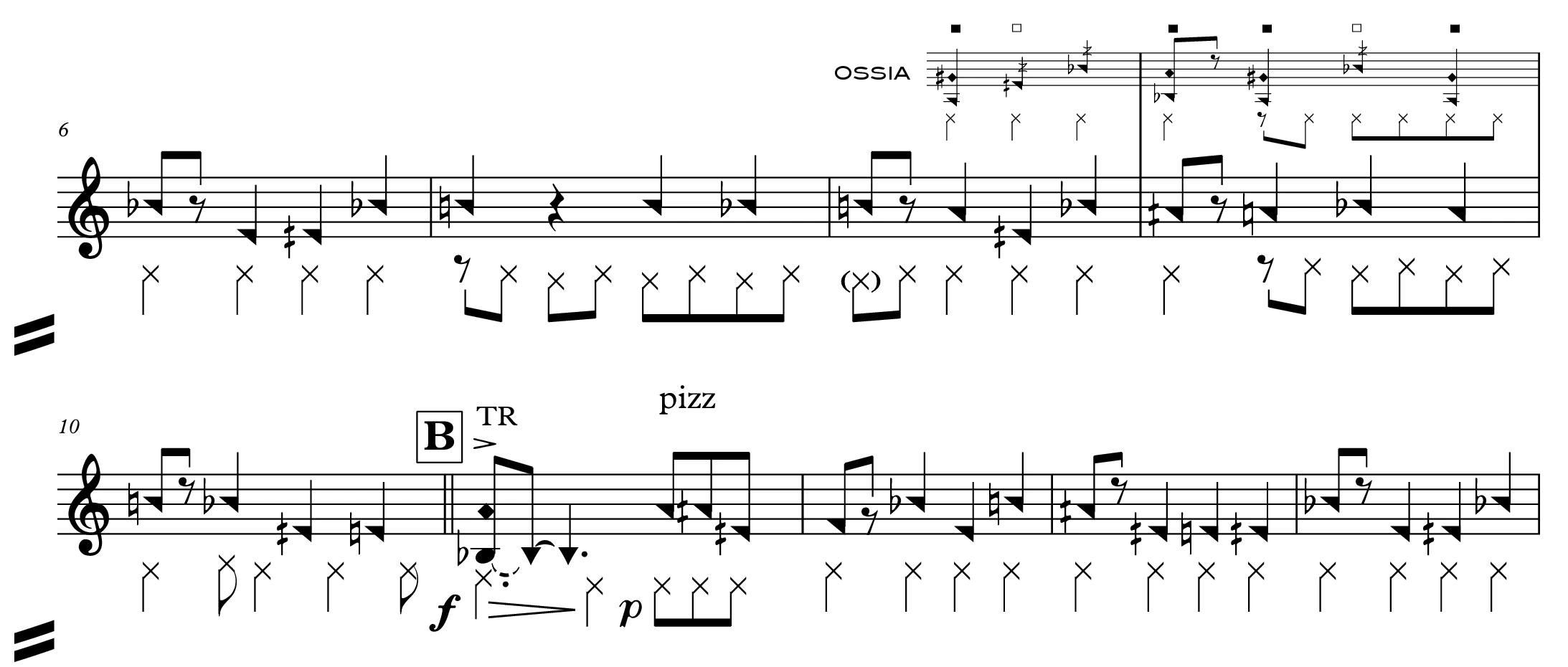
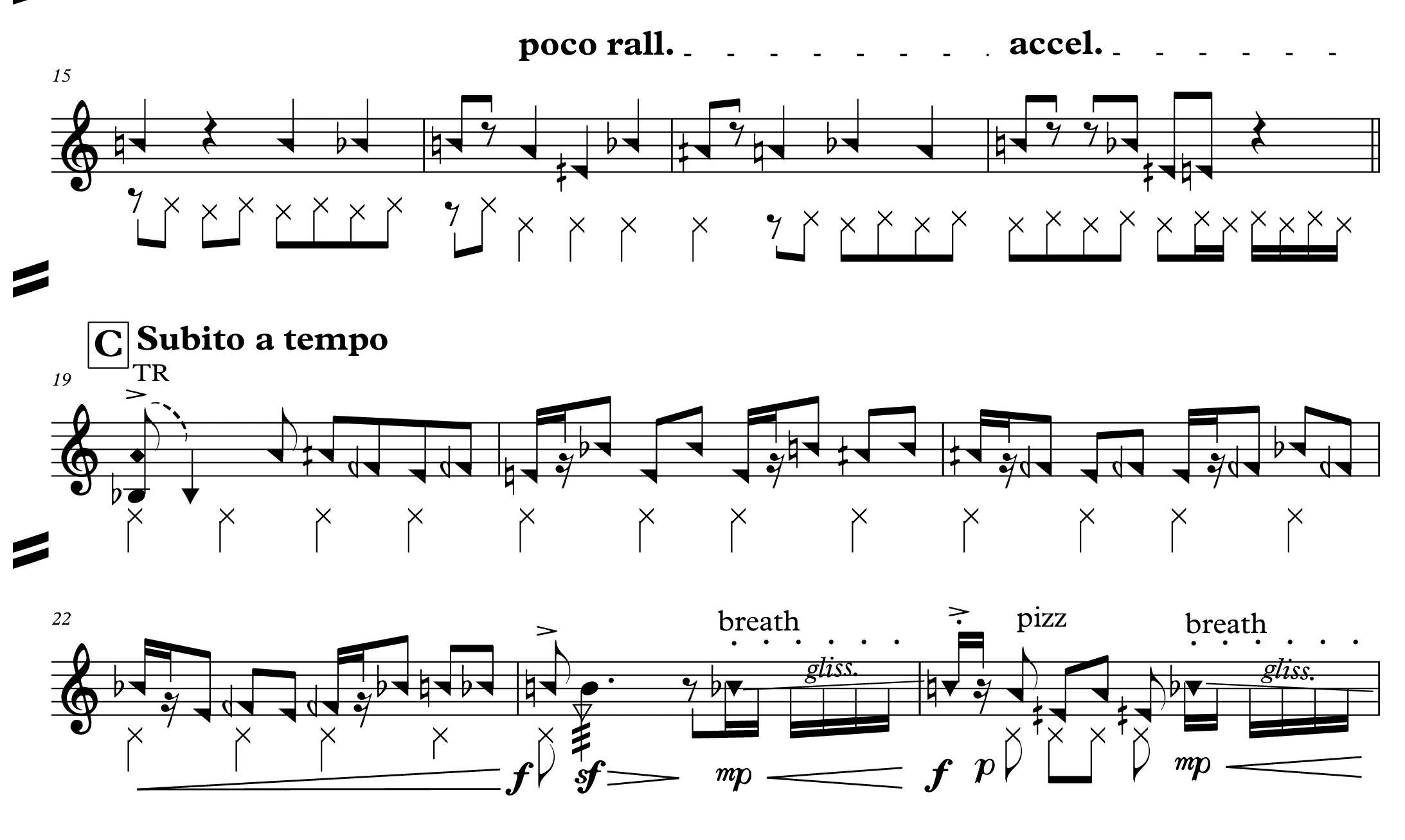
Cèngkok is a piece for solo flute, the form of which describes a spiral: a melody, initially played using percussive sounds not very evocative of the flute, and repeated throughout the piece, but more and more slowly, until each of its notes, at first played very fast and flowing on in a connected way, is separated by several seconds. Each time the space between the notes grows, this period of silence is filled with a new phrase. The notes of the original fast melody thus become the simple end notes of the phrase.
Moreover, these target notes sometimes arrive slightly earlier or later than the periodicity would suggest. Each time, the added formulas appear with a new flute timbre, closer and closer to the customary timbre, until it overtakes it in resonant, and sometimes saturated, ‘multiple sounds’. The last of the six cycles thus presents a complex entanglement of timbres and melodic formulas directed towards the same pole notes, as if several di erent flute models were playing together.
Cèngkok is the name given to these caden- tial melodic formulas (i.e., oriented towards an end) which constitute the repertoire of the solo instruments of gamelan orchestras (rebab, voice, flute, etc.), and, more gene- rally, to the art of melodic organisation.
The piece is composed for and dedicated to the great flautist Michaël Faust, whom I met while participating in the Gargonza Arts residency in 2014 and whose constant support is essential and inspiring.
- Recording Notes
Recording made from September 30 to October 4, 2019 by the audiovisual department, and published by the publishing department of the Paris Conservatory (CNSMDP) with the support of the Meyer Foundation for Cultural and Artistic Development.
Sound and mixing prize: Jean-Christophe Messonnier
Artistic direction and editing: Nicolas Widmer, student in Higher Education in Sound Professions (FSMS) assisted by Céline Grangey.
- Record Label
- Initiale
- Performer Credits
- Samuel Bricault (ensemble InSoliTus)
- Publisher
- BabelScore
- External Links