1 / 4
0:00/0:00
Solo
2023
Bass Flute
Electronics
- Program Notes
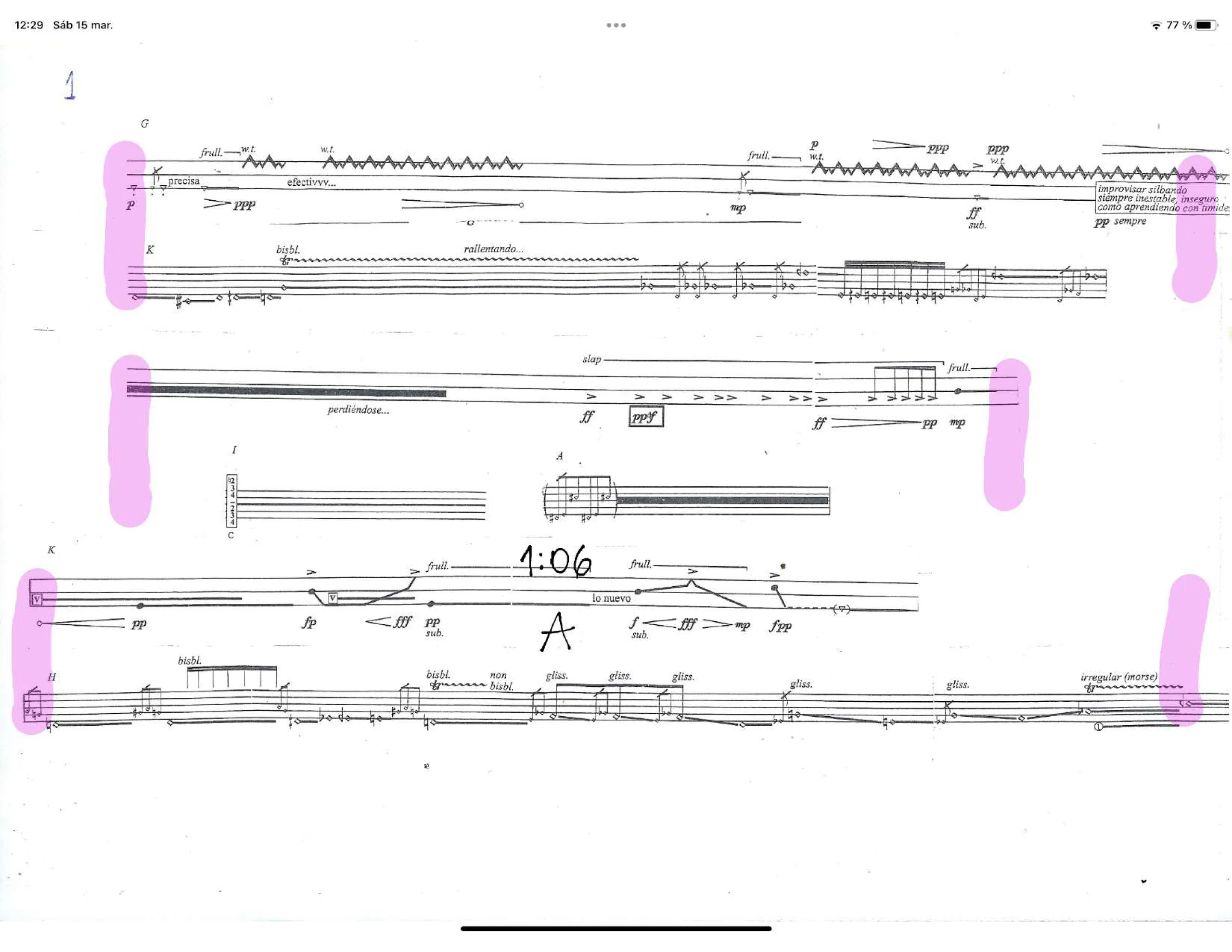
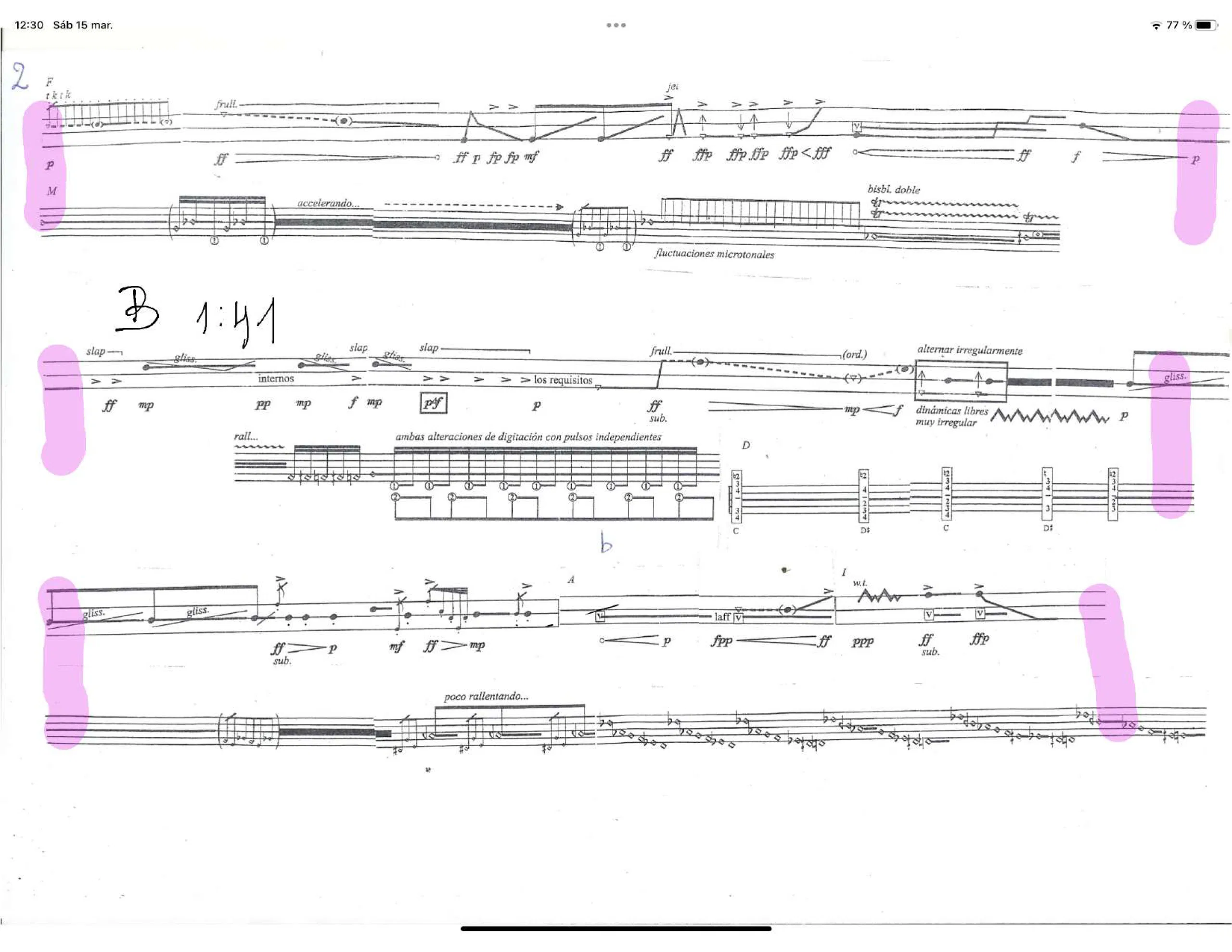
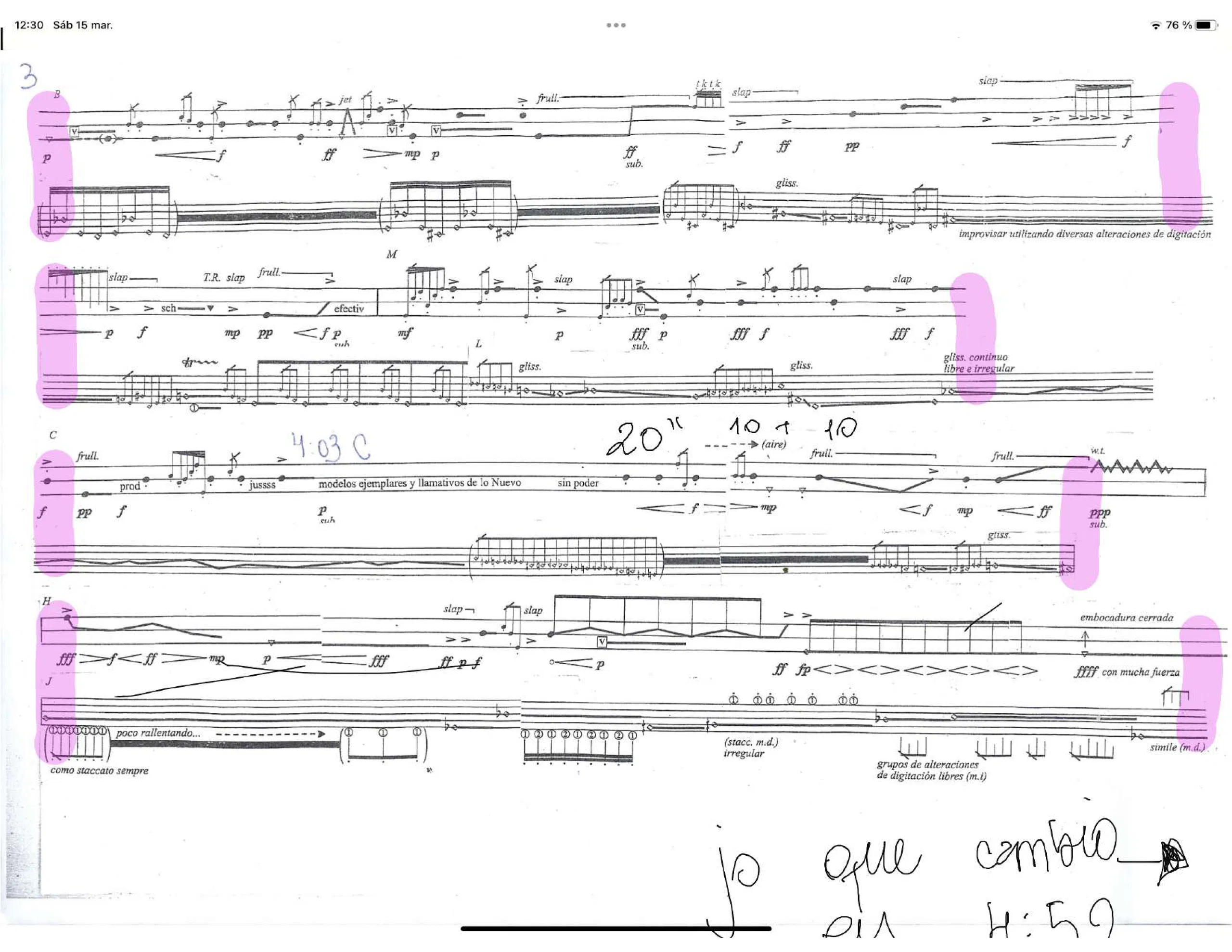
Didascalia is a composition in constant evolution, redefined with each performance through collaboration between composer and performer. Initiated in 2013, its structure remains open-ended, accumulating traces of previous versions while gradually dissolving its original musical coherence and identity.
Each iteration begins with two independent scores—one for the fingers and another for the mouth—divided into 14 fragments without a predefined order. The process of combining these fragments fosters the development of distinct local gestures, which are then organized into a final score. Although highly detailed in terms of actions, the notation remains temporally ambiguous, allowing for adaptations that inevitably intertwine with improvisation at every moment, without predetermining how this interaction will unfold.
The latest version was created by Andrea Escobar for bass flute and electronics. The electronic part was constructed from the instrumental recording, generating eight overlapping variations distributed across four channels. These layers further shape the performance by placing it within shifting polyphonic contexts.
- Recording Notes
Recorded, mixed, and mastered by Gonzalo Manco at Estudio Libres, Buenos Aires, Argentina.
- Record Label
- Elektramusic
- Performer Credits
- Andrea Escobar (bass flute)
- External Links