1 / 30
0:00/0:00
Piano Trio
2023
Cello
Piano
Violin
- Program Notes
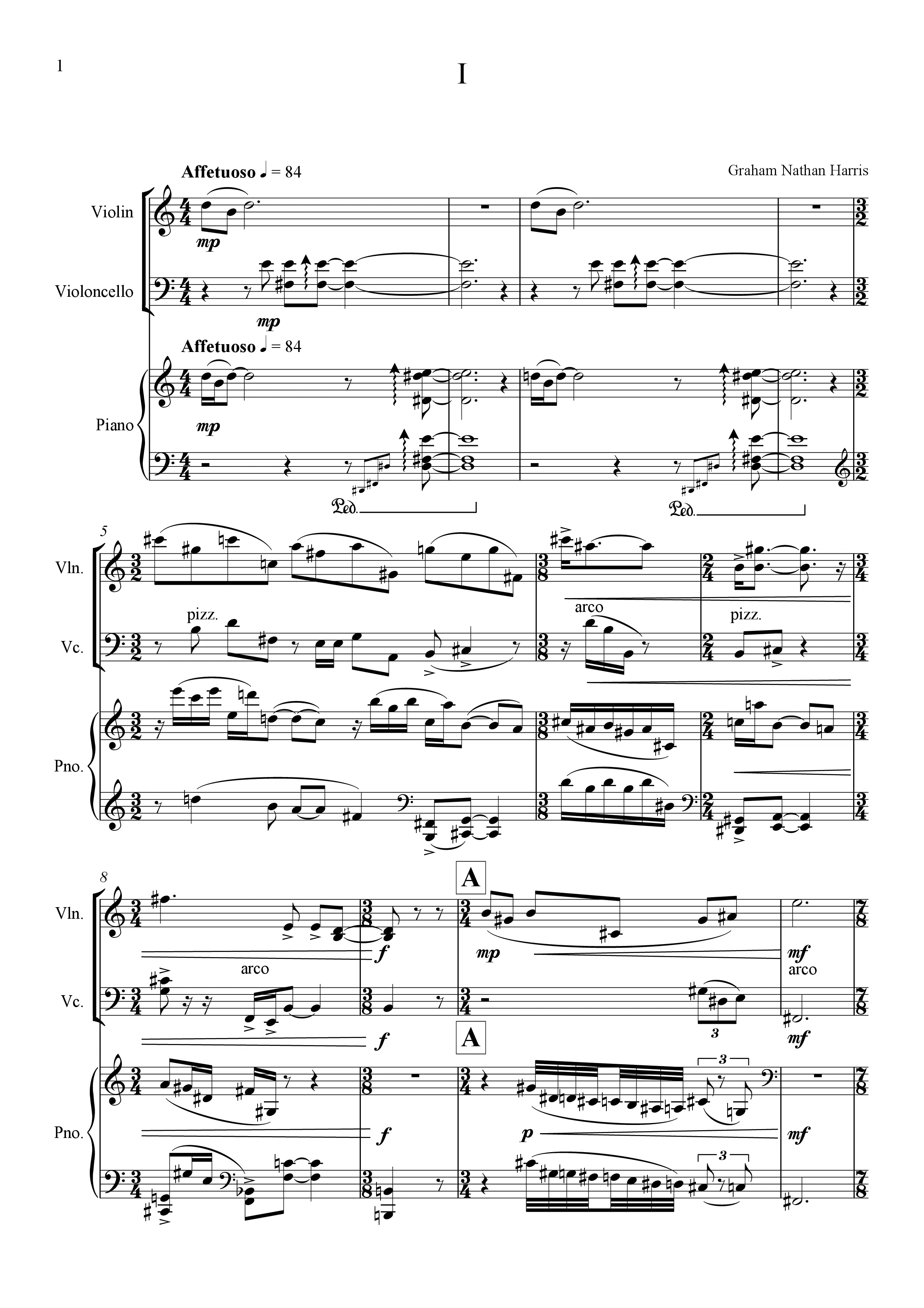
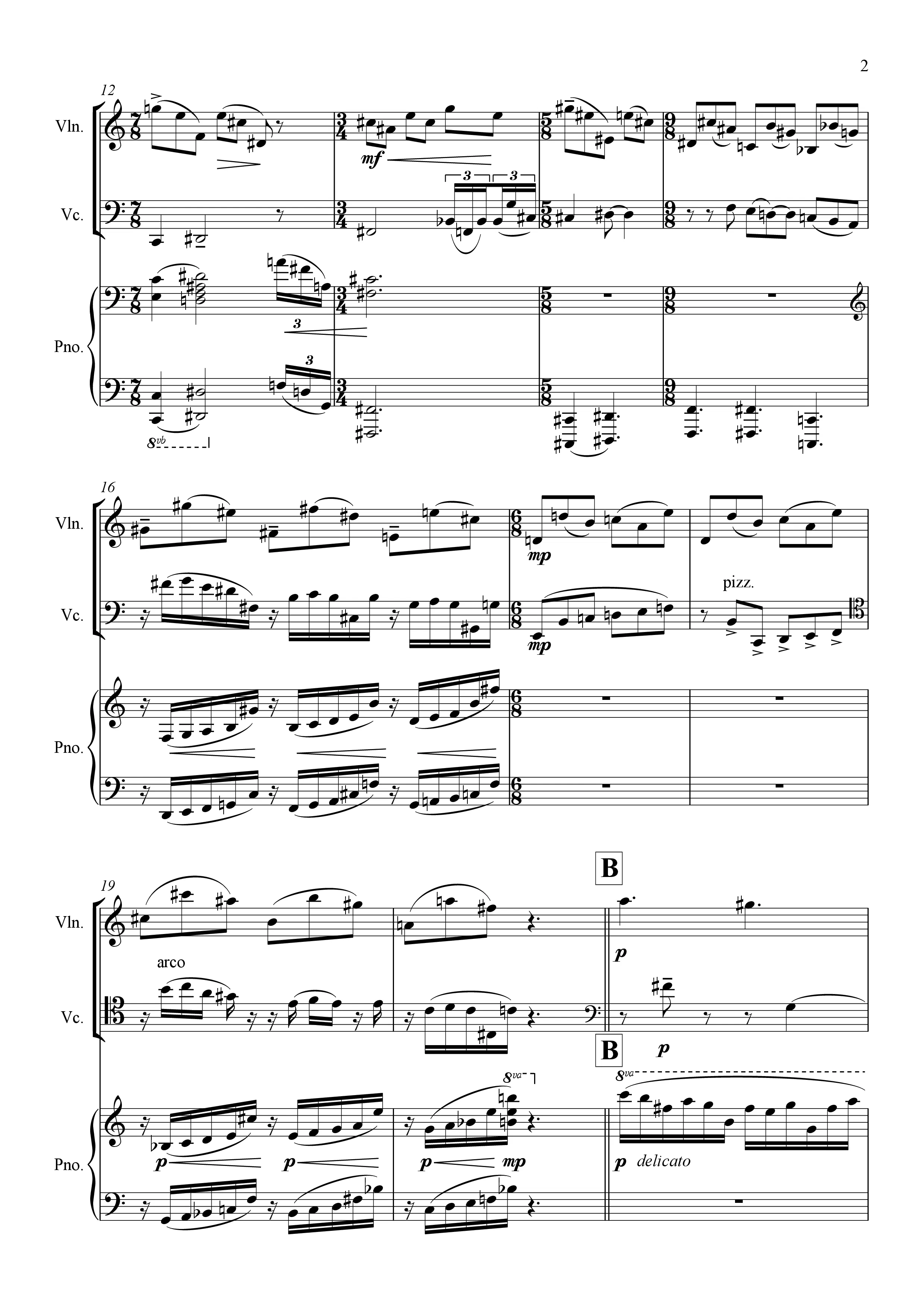
The first movement is a reflective, nostalgic and often elegiac movement. For this movement the composer initially had a vision of an abandoned house at the time of the American Civil War with the rocking chair still on the porch, as well as the abandoned ghost towns of the American West, while writing the movement. Some of these towns sprung up during the gold and silver rushes, then were abandoned to nature. The movement opens with a short plaintive introductory minor 3rd motive stated in the violin part, which gradually becomes more expansively lyrical. This leads to various episodes including a slightly ghostly one texturally with high violin, sparse lyrical textures with just strings, and episodes that have a more direct, epic and affirmative lyrical nature. Themes of optimism, hardship, nostalgia, and memory pervade the movement.
The second movement begins as an exuberant dance-like movement with a fast athletic moving piano accompaniment. Over this enters a breezy but angular theme on the violin. The theme is slightly folksong-like melodically, but also what the composer re-imagines as ‘Old West’ saloon music.
The work is adapted from the composer's trio 'American Wests'.
- Recording Notes
Live recording at St. Mary's Church, Perivale, London UK 6/2024.
- Performer Credits
- Paddington Trio: Tuulia Hero - violin Patrick Moriarty - cello Stephanie Tang - piano
- External Links