1 / 19
0:00/0:00
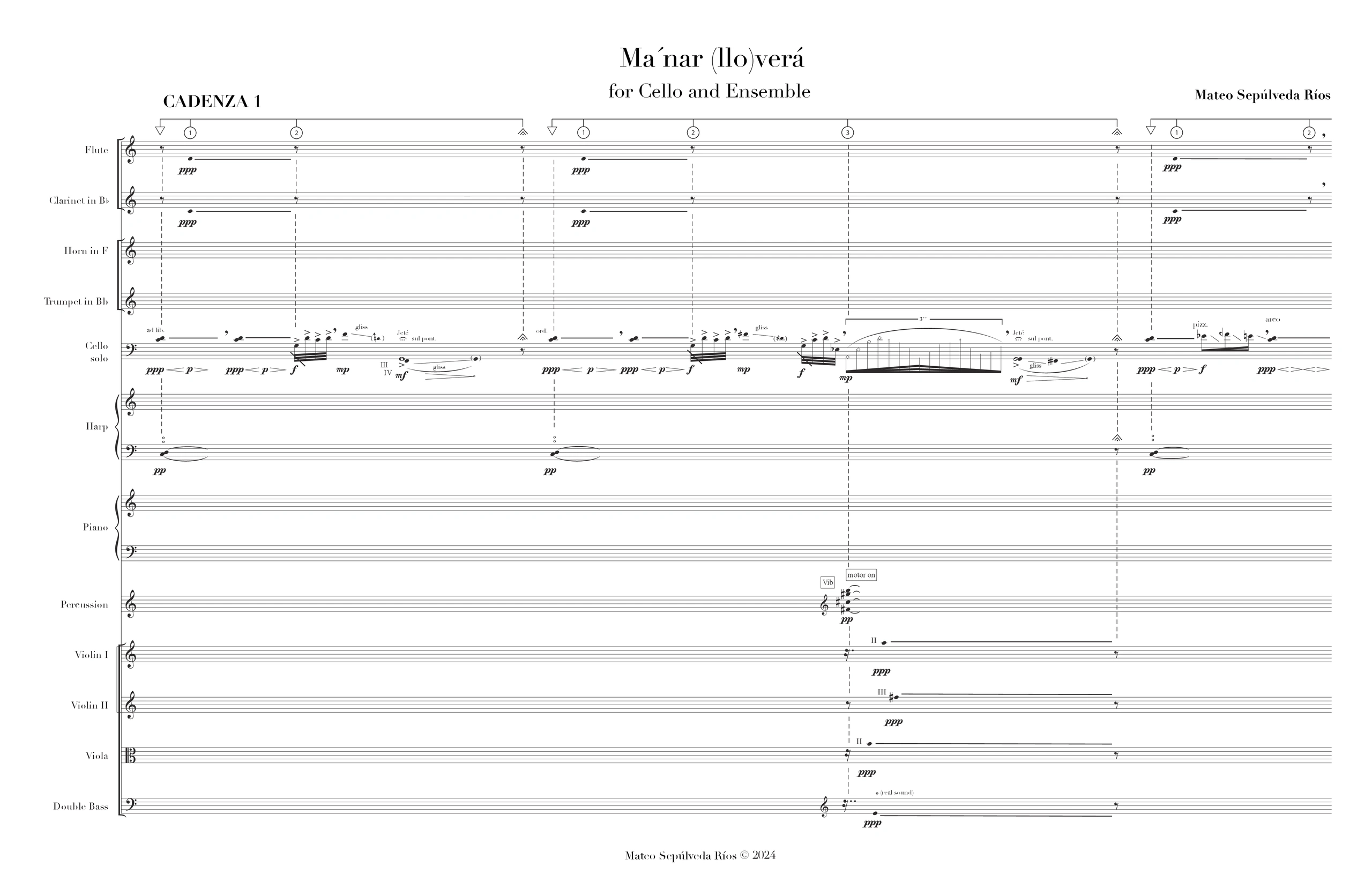
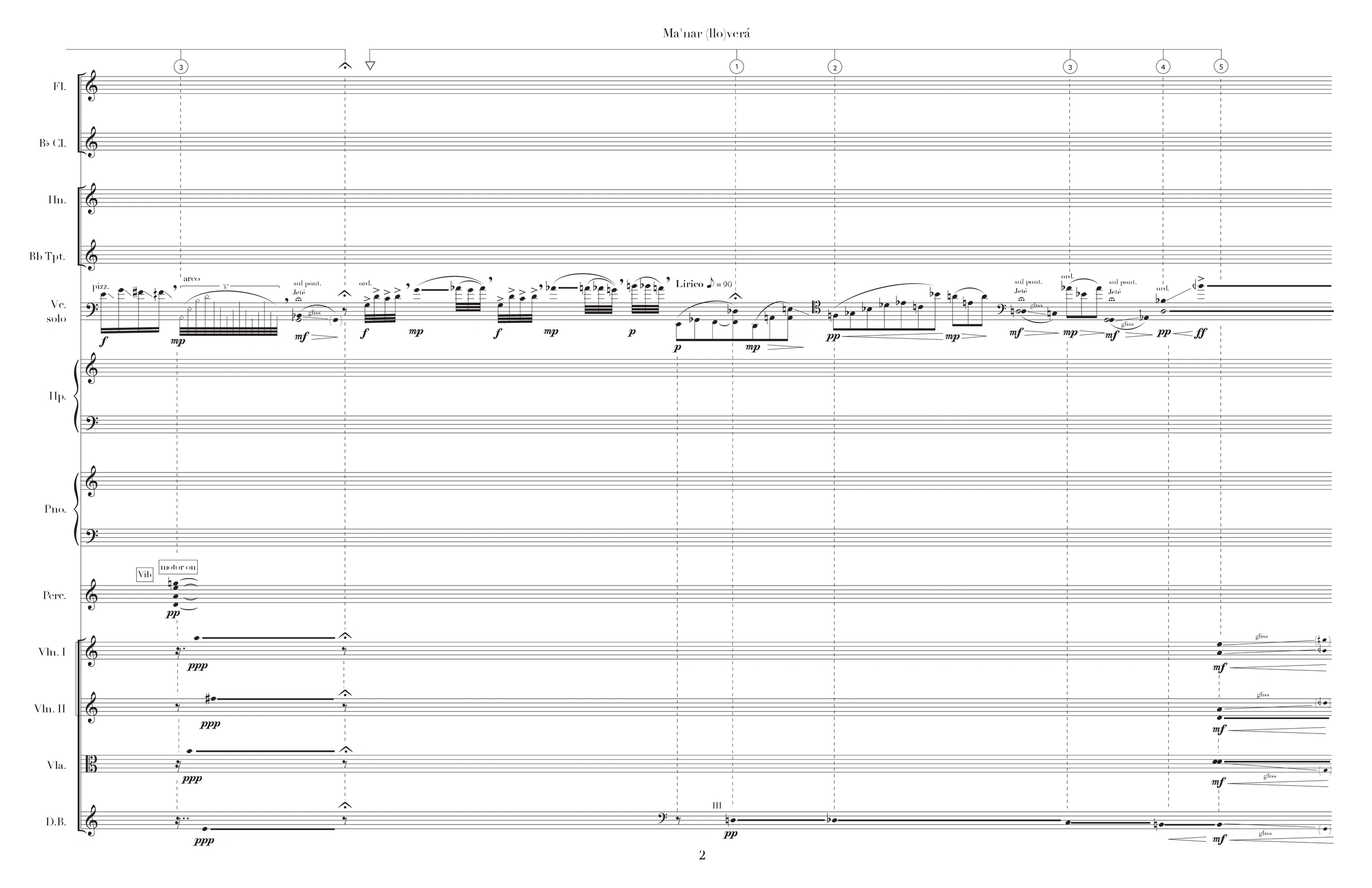
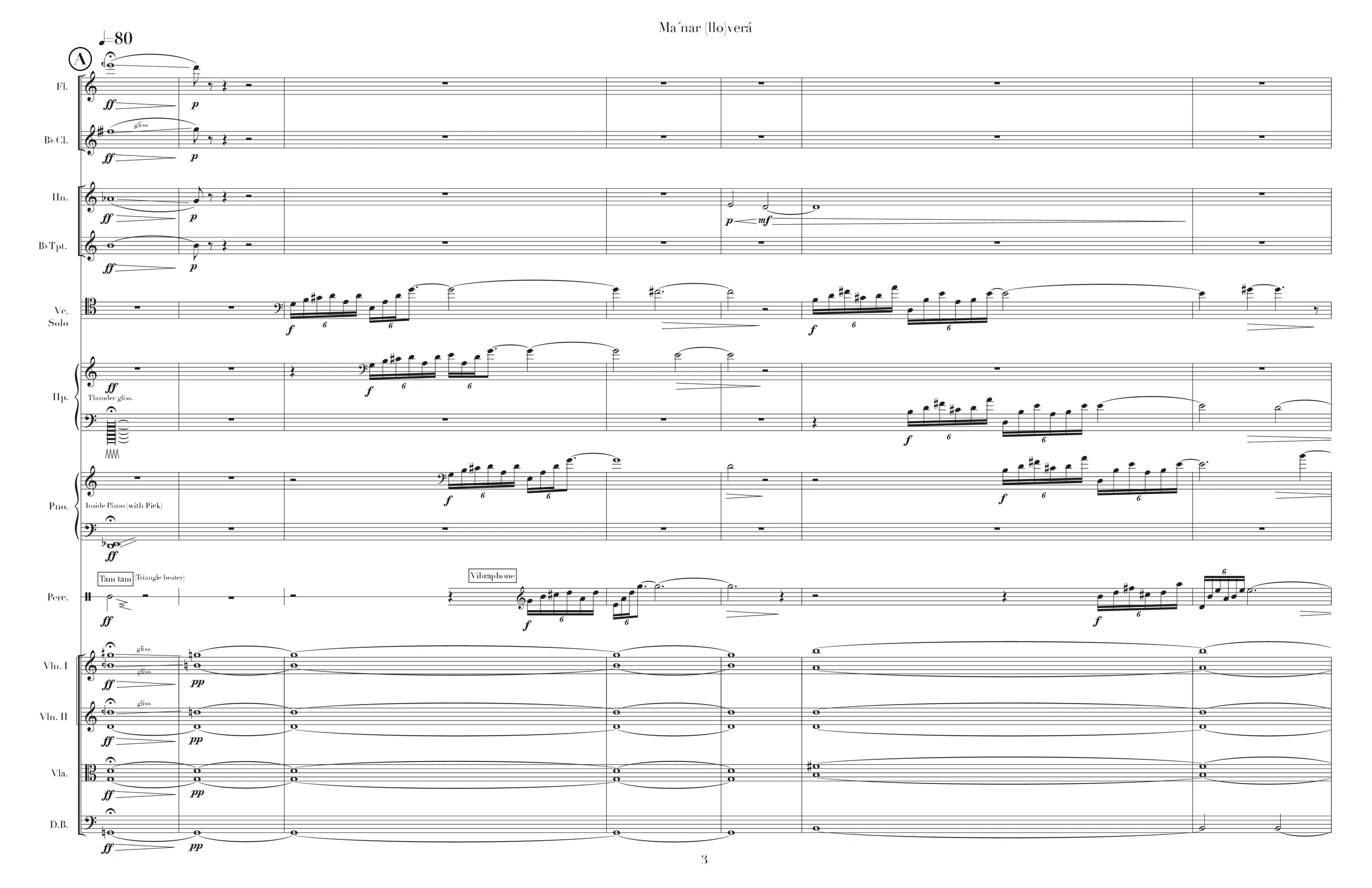
The piece stems, on a musical level, from the idea of representing the genesis of the composer's meditative experience and his search for answers through his artistic work, amidst difficult contexts and environments, such as that of his country.
The title, Ma’nar (llo)verá, is a play on words that encapsulates a deep longing of the composer: the desire to overcome the difficult historical circumstances of violence that have marked not only his country but also his own family. "Ma’nar" comes from "manna," the spiritual food that quenched hunger in sacred texts, while (llo)verá comes from "lloverá," the future tense of the verb "to rain." The words are fragmented to open new possibilities for interpretation, such as "Ma" (which means "but" in Italian) and "(llo)," which phonetically evokes the pronoun "yo" ("I") in Spanish. Collectively, the title can be understood as: "But I will see how the manna will rain."
The work is thus presented as a sonic and symbolic meditation on hope: a deep and active hope that regeneration—like the "manna" falling from the sky—can finally come to a land marked by violence, injustice, and oblivion.
The version presented was recorded in the Fabio Lozano Auditorium at the Universidad Jorge Tadeo Lozano, as part of the research project led by the composer himself, titled "Practical and Theoretical Approach to Contemporary Music through the Integration of Traditional Instruments from the Cundinamarca Region."
The ensemble is made up of professional musicians who have collaborated closely with the composer for several years.
The recording was engineered, edited, and mastered by sound engineer Luca Gardani.
The soloist is Juan Sebastián Forero.