- Program Notes
- I grew up on the Texas Gulf Coast, between Nassau Bay and Galveston Island. The water is muddy-brown, the sand is coarse and sticky, and the beach annually houses miles of washed-up seaweed that smells terrible and attracts flies. About once or twice a year growing up, I would go through these phases of romanticizing the beach and satisfy the urge by letting my feet sink into the shore until I nearly step on a syringe and remember why my family doesn’t go to the beach that much. Why are people so obsessed with the beach? Like, why is this such a hub of American culture? Why do songs about the beach dominate the pop music industry? The beach sucks! —all thoughts that crossed my mind. My first year living in Southern California, I went to Santa Monica on a class field trip and instantly realized, oh, this is why people are so obsessed with the beach.
California beaches are oases in which locals and visitors alike want to live, breathe, and bleed. But what does Galveston have that none of these paradises have? The Seawall Boulevard. Galveston is a barrier island, a natural (albeit pretty ineffective) defense against hurricanes. The Seawall lives up to its name— it’s a man-made enhancement to the barrier structure; a 17-foot concrete wall emerging from the beachfront, with Galveston’s busiest tourist hotspot resting atop it. The Seawall and its beaches have been home to countless memories of my lifetime, from birthdays, to graduation parties, to senior prom, to an escape from the early days of the COVID-19 pandemic, to public family arguments in a busy seafood restaurant, to Mardi Gras parades, to the annual Santa Run holiday marathon, to crucial moments in my relationships that shaped me into the person I am today.
Don’t get me wrong, the Seawall is not some kind of cheeky diamond in the rough. One of the things it’s most known for is “The World’s Best Rainforest Café”, which houses a water-raft animatronic jungle ride that looks like Hurricane Ike swept through it and the management just decided to leave it like that. I wouldn’t even say the Seawall has a subtle charm. It’s mundane.
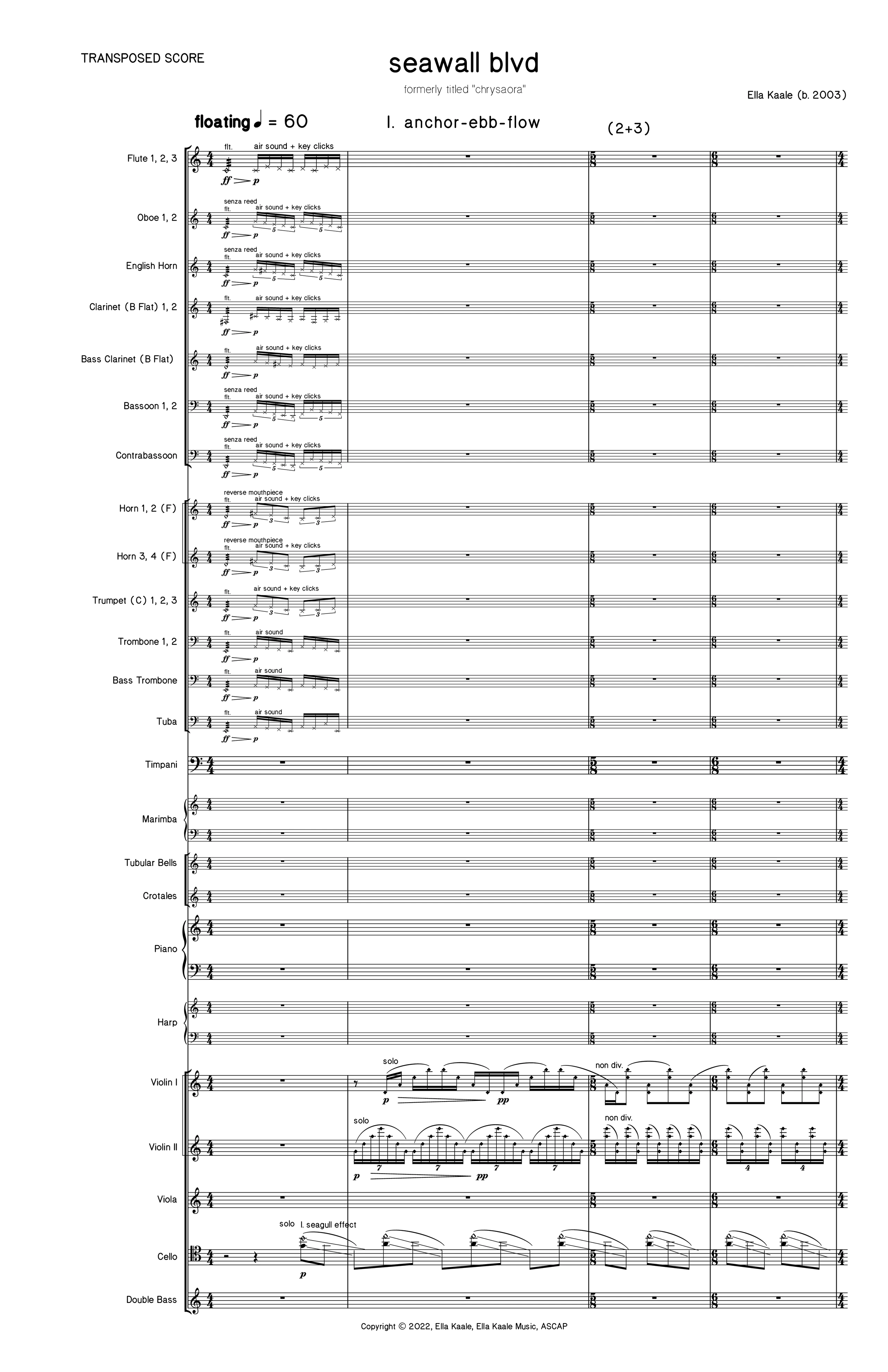
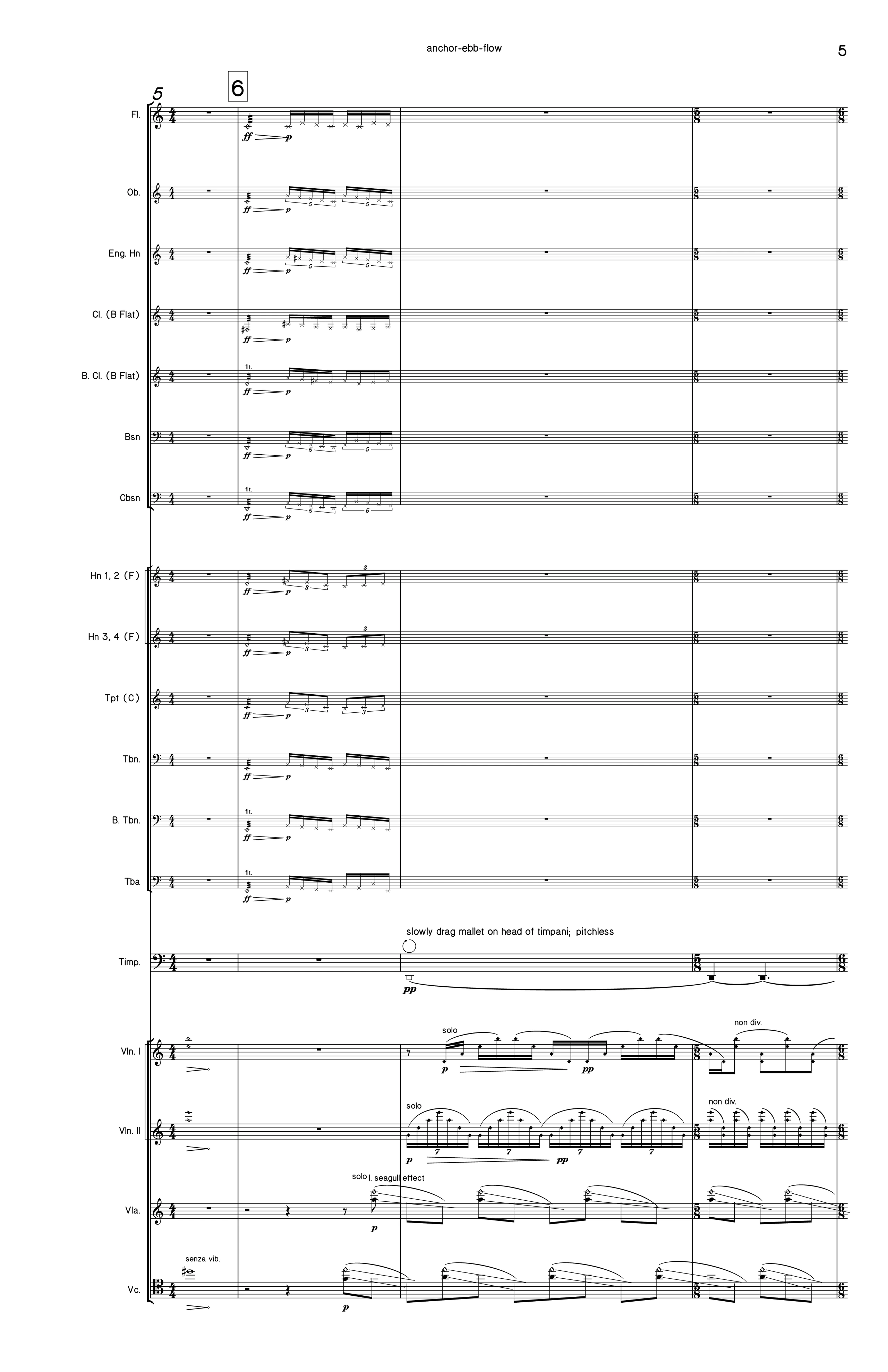
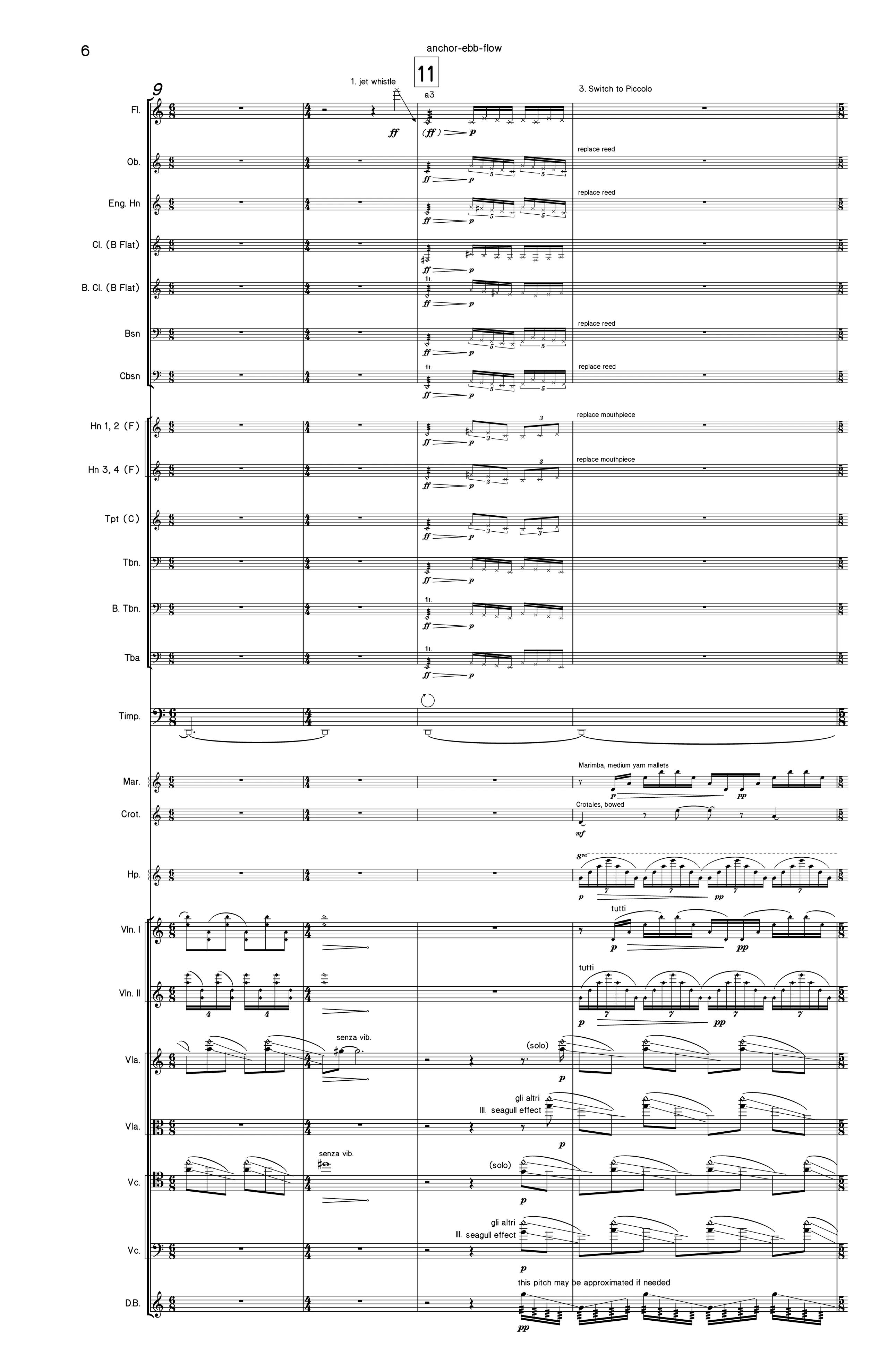
I originally wrote this piece (for chamber orchestra) with the title “chrysaora”, referring to a genus of jellyfish called sea nettles. I wanted the piece to be a summation of my hyper-romantic experiences with the Pacific Ocean. In hindsight, I realize what I wrote has nothing to do with the Pacific. I listen to the piece, and I think about the Seawall, the Spirit Airlines of beachfronts, the beach I grew up with, a place where I kissed and played and cried. With this reimagining of “chrysaora”, I have decided to embrace the true subconscious inspiration that guided the original.
The chamber orchestra version of this piece was selected for Pacific Chamber Orchestra’s 2022 Dream American Workshop. The full orchestra version was premiered by the USC Thornton Symphony, conducted by Donald Crockett at the annual New Music for Orchestra concert in 2023.
- Performer Credits
- USC Thornton Symphony
- Publisher
- Ella Kaale Music