1 / 39
0:00/0:00
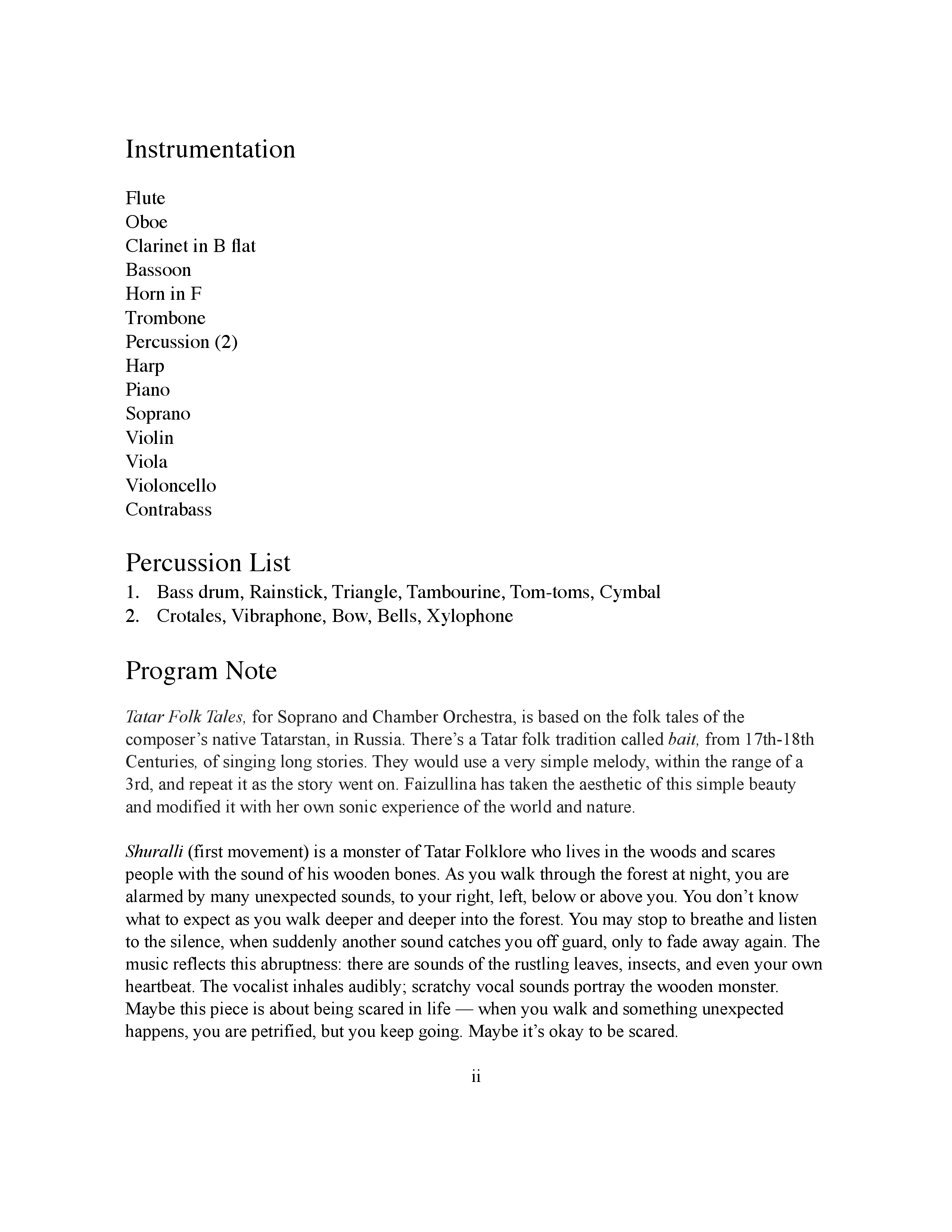
Tatar Folk Tales (2018), for Soprano and Chamber Orchestra, is a work based on the folk tales of the composer’s native Tatarstan, in Russia. There’s a Tatar folk tradition called bait, from 17th-18th Centuries, of singing long stories. They would use a very simple melody, within the range of a 3rd, and repeat it as the story went on. Faizullina has taken the aesthetic of this simple idea and modified it with her own sonic experience of the world and nature.
Tatar Folk Tales consists of four movements - three of which (movements I, II, and IV) are featured in this video:
Shuralli (first movement) is a monster of Tatar Folklore who lives in the woods and scares people with the sound of his wooden bones. As you walk through the forest at night, you are alarmed by many unexpected sounds, to your right, left, below or above you. You don’t know what to expect as you walk deeper and deeper into the forest. You may stop to breathe and listen to the silence, when suddenly another sound catches you off guard, only to fade away again. The music reflects this abruptness: there are sounds of the rustling leaves, insects, and even your own heartbeat. The vocalist inhales audibly; scratchy vocal sounds portray the wooden monster. Maybe this piece is about being scared in life — when you walk and something unexpected happens, you are petrified, but you keep going. Maybe it’s okay to be scared.
Sak Sok (second movement) takes from a Tatar folk story featuring two sons and a mom, who keep disobeying her. She asks them to bring water, but they keep playing; she asks them to bring firewood from the forest, but they keep playing. So, she curses them, turning them into birds. The moral is that parents shouldn’t say such bad things, even when they’re angry, and, children should be obedient to their parents. The theme of this story is echoed in one of the Muslim books that are taught in Tatar schools, which teaches children how to love their families. Faizullina considers the sounds of the story: the echoing sadness, how the brothers call for each other, as birds — how they fly where they hear distant sounds but can’t find one another. She used to walk with her grandma in Tatarstan, hearing the birds above her and imagining this story.
Arba (fourth movement) imagines the motion of driving, while hearing all the sounds in the village. The pentatonic melody and full, open strings characterize Tatar village life. We hear the cart driver’s whip, and “hai,” a word frequently used in folk songs. “Hai” with an ascending glissando imitates the sounds that the cart drivers make, shouting to their horses. “Hai” sung very high and with a glissando would have been used as the method of communication across great distances, between villages.