1 / 16
0:00/0:00
Trio
2025
Clarinet
Oboe
Piano
- Program Notes
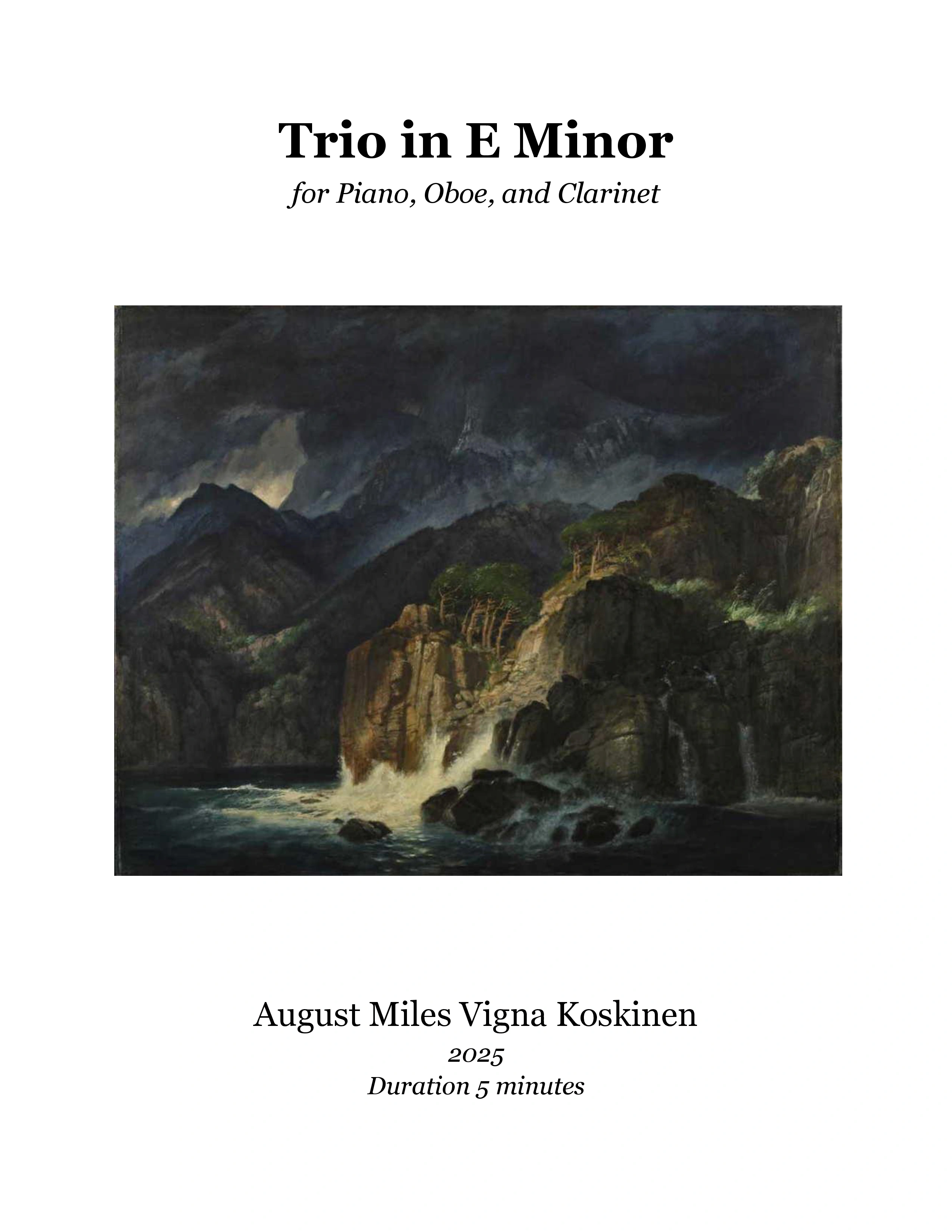
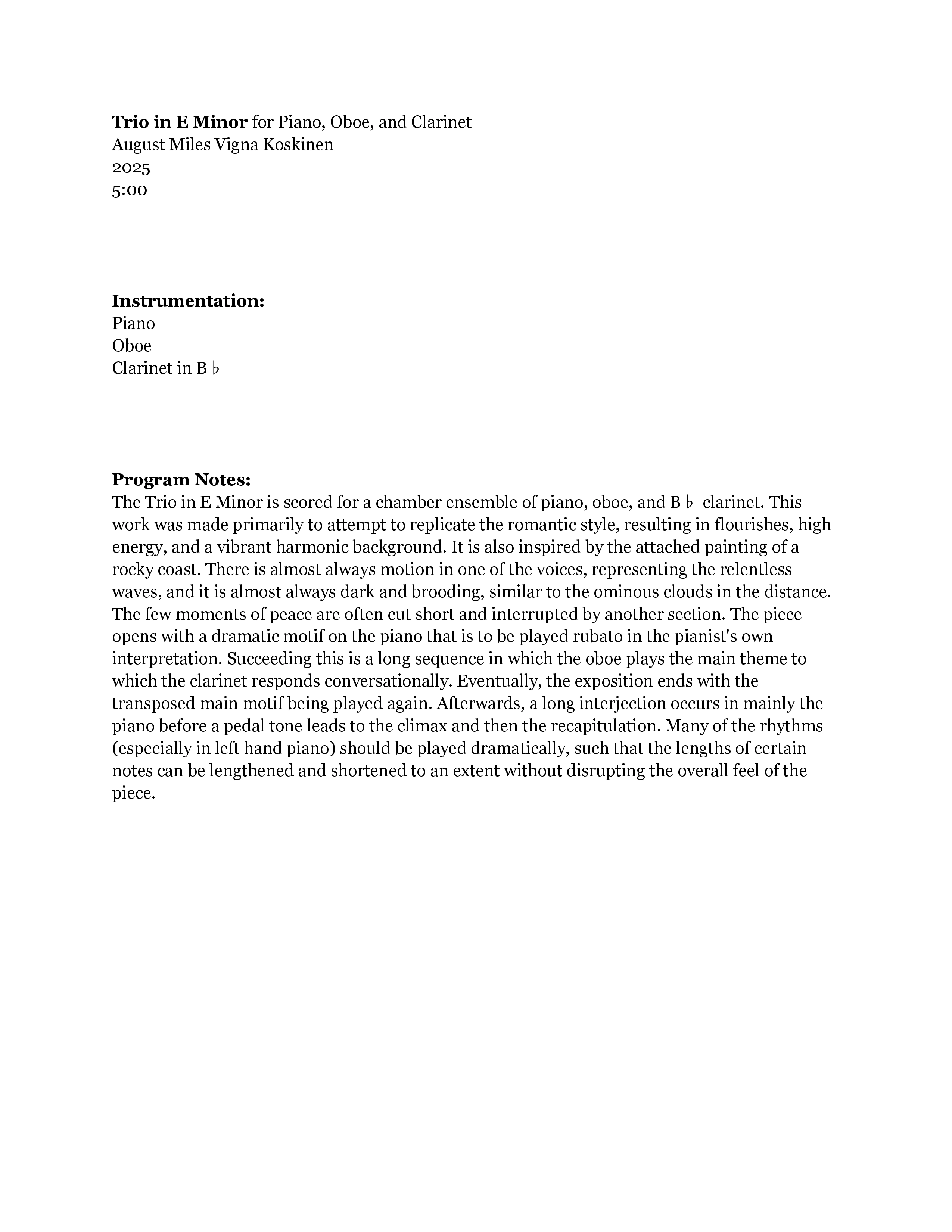
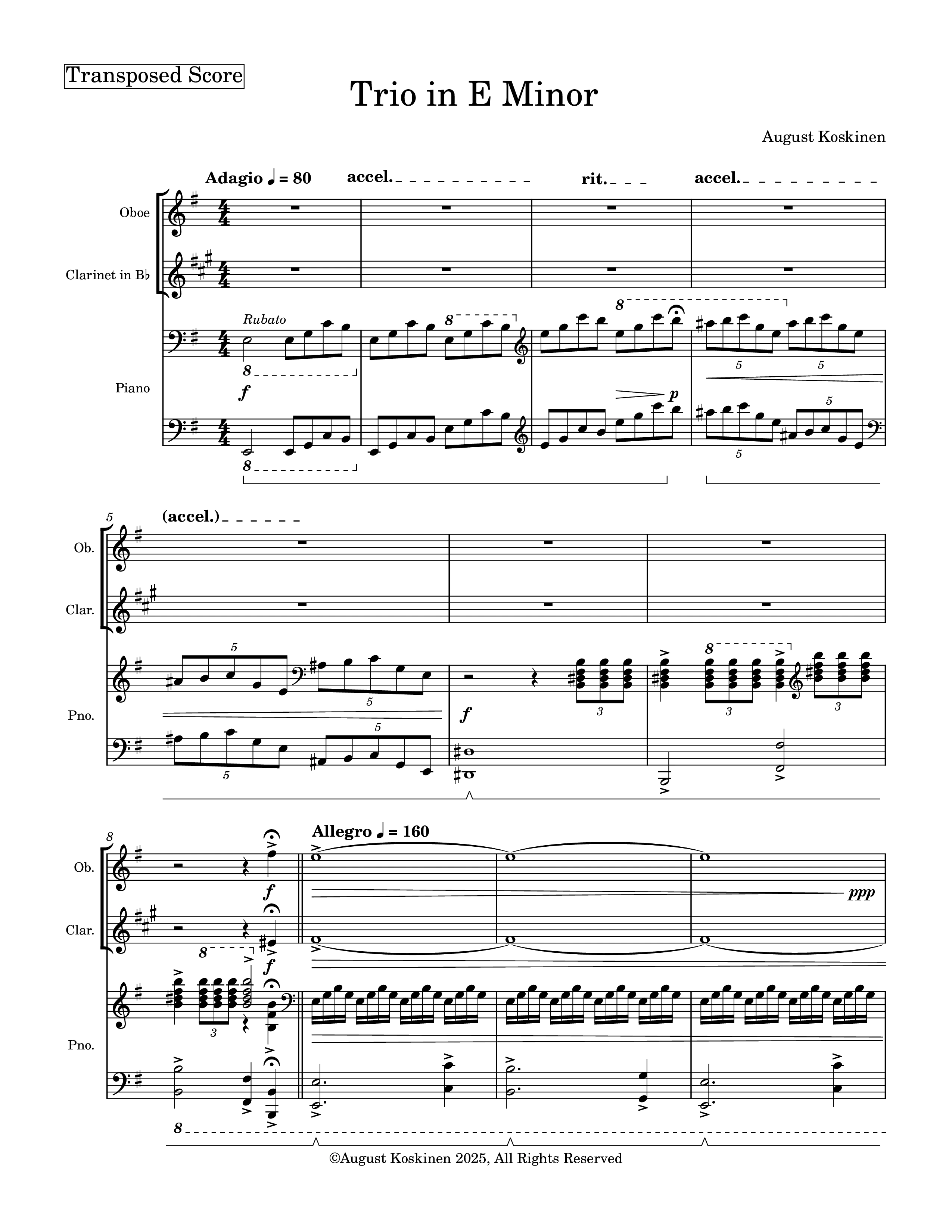
The Trio in E Minor is scored for a chamber ensemble of piano, oboe, and B♭ clarinet. This work was made primarily to attempt to replicate the romantic style, resulting in flourishes, high energy, and a vibrant harmonic background. It is also inspired by the attached painting of a rocky coast, with the towering shadow of Prometheus in the distant mountains. There is almost always motion in one of the voices, representing the relentless waves, and it is almost always dark and brooding, similar to the ominous clouds in the distance. The few moments of peace are often cut short and interrupted by another section. The piece opens with a dramatic motif on the piano that is to be played rubato in the pianist's own interpretation. Succeeding this is a long sequence in which the oboe plays the main theme to which the clarinet responds conversationally. Eventually, the exposition ends with the transposed main motif being played again. Afterwards, a long interjection occurs in mainly the piano before a pedal tone leads to the climax and then the recapitulation. Many of the rhythms (especially in left hand piano) should be played dramatically, such that the lengths of certain notes can be lengthened and shortened to an extent without disrupting the overall feel of the piece.
- Performer Credits
- Javier Gorelik, Claire Brown, Cassidy Miao, Yucheng Xu