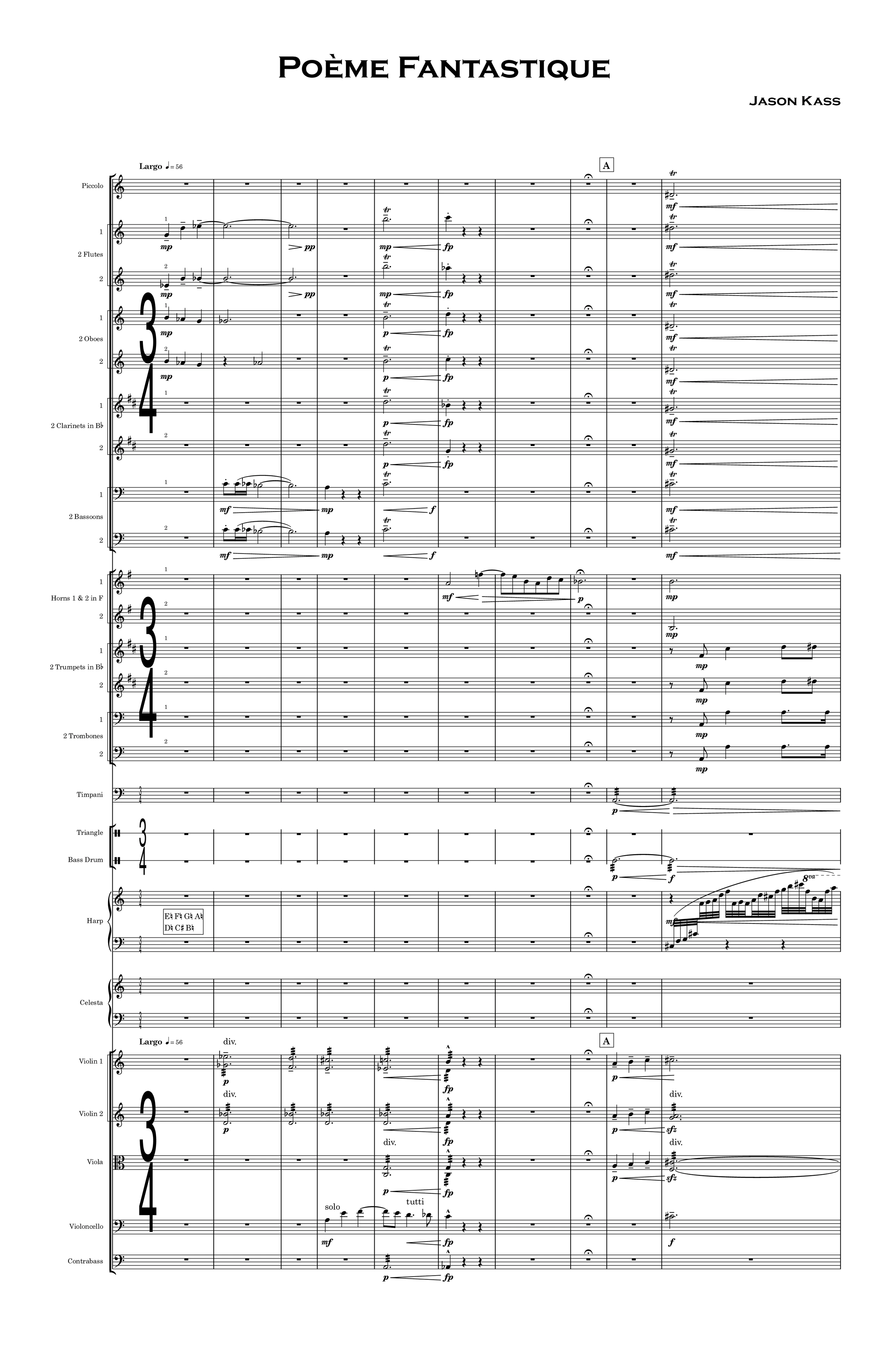
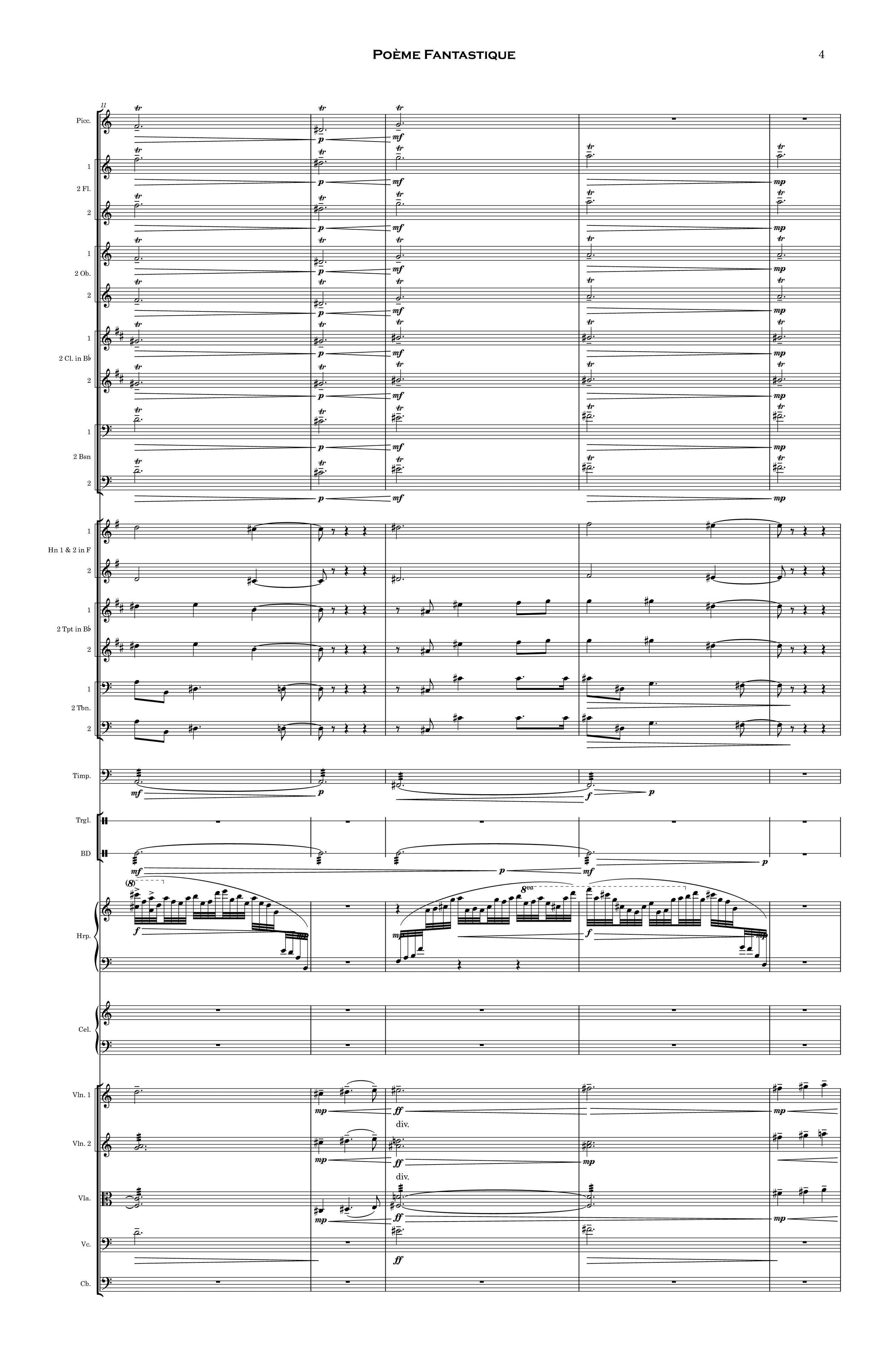
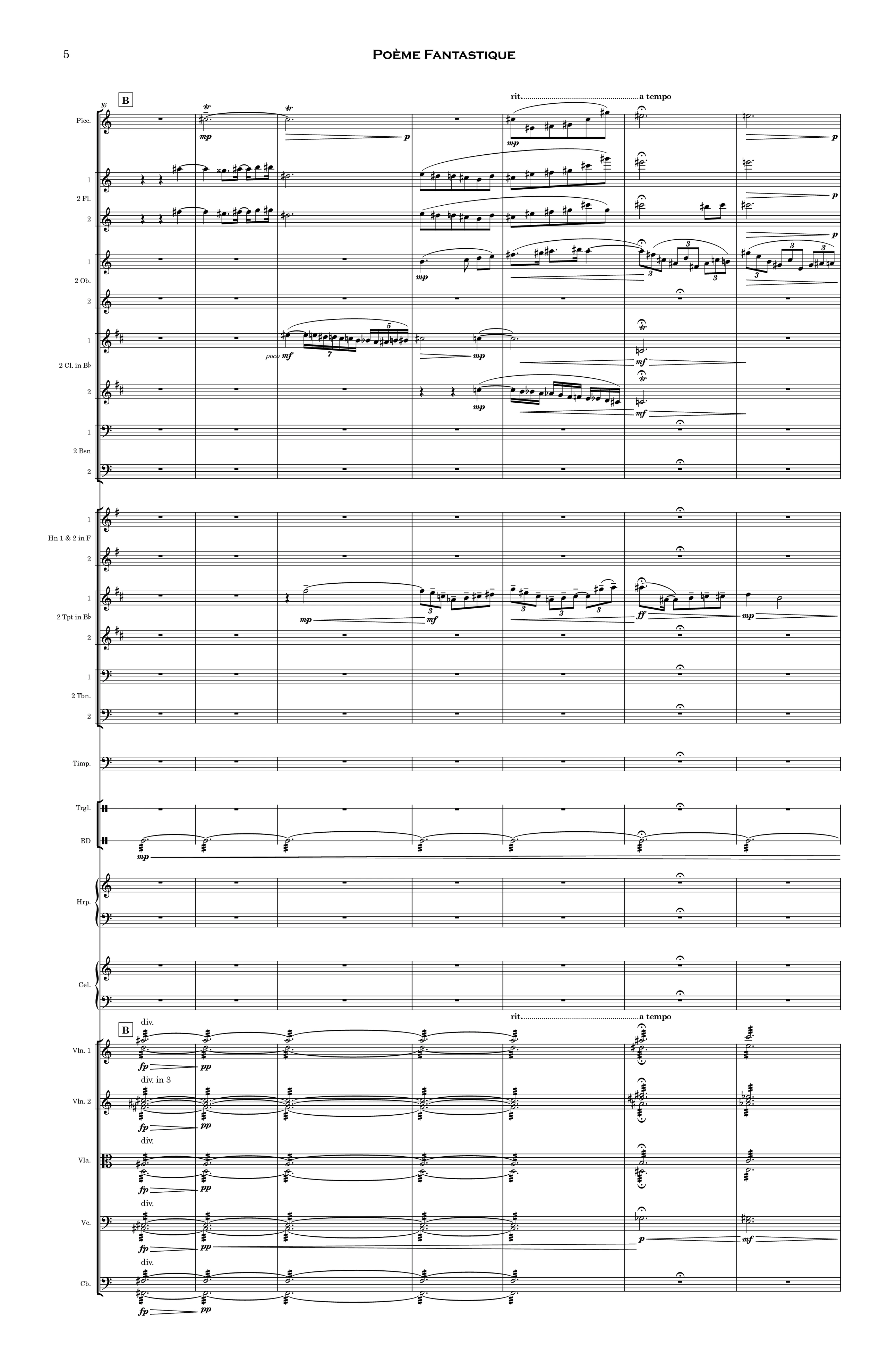
The Poème Fantastique is a case of the dreamer. It is an exciting piece, though it does not seem so at first. The drawn-out, melancholy introduction paints a picture of the drab reality of things. Aside from the lush string interlude (symbolizing physical “love”), the first two minutes of the piece are generally mediocre—in the sense that the music lacks “life” or vibrance. Then a set of chords cues the transition from reality to the dream, and immediately afterward a completely new section occurs. This dream section lasts for the majority of the piece and is vibrant with multiple important motifs. The first theme of this dream is whimsical and effortlessly graceful, leading to a rabid climax which soon collapses into the second theme. This second theme—or third, counting the string interlude—also embodies ideas of love, but in a more transcendent sense. For the rest of the piece, the dream works around these themes until it culminates in an ecstatic climax, restating the transcendent theme. Finally, the chords repeat, indicating that the dream has ended. The piece then promptly ends with a massive crescendo, showing the dreamer's newfound happiness and transcendence gained in the dream.