1 / 46
0:00/0:00
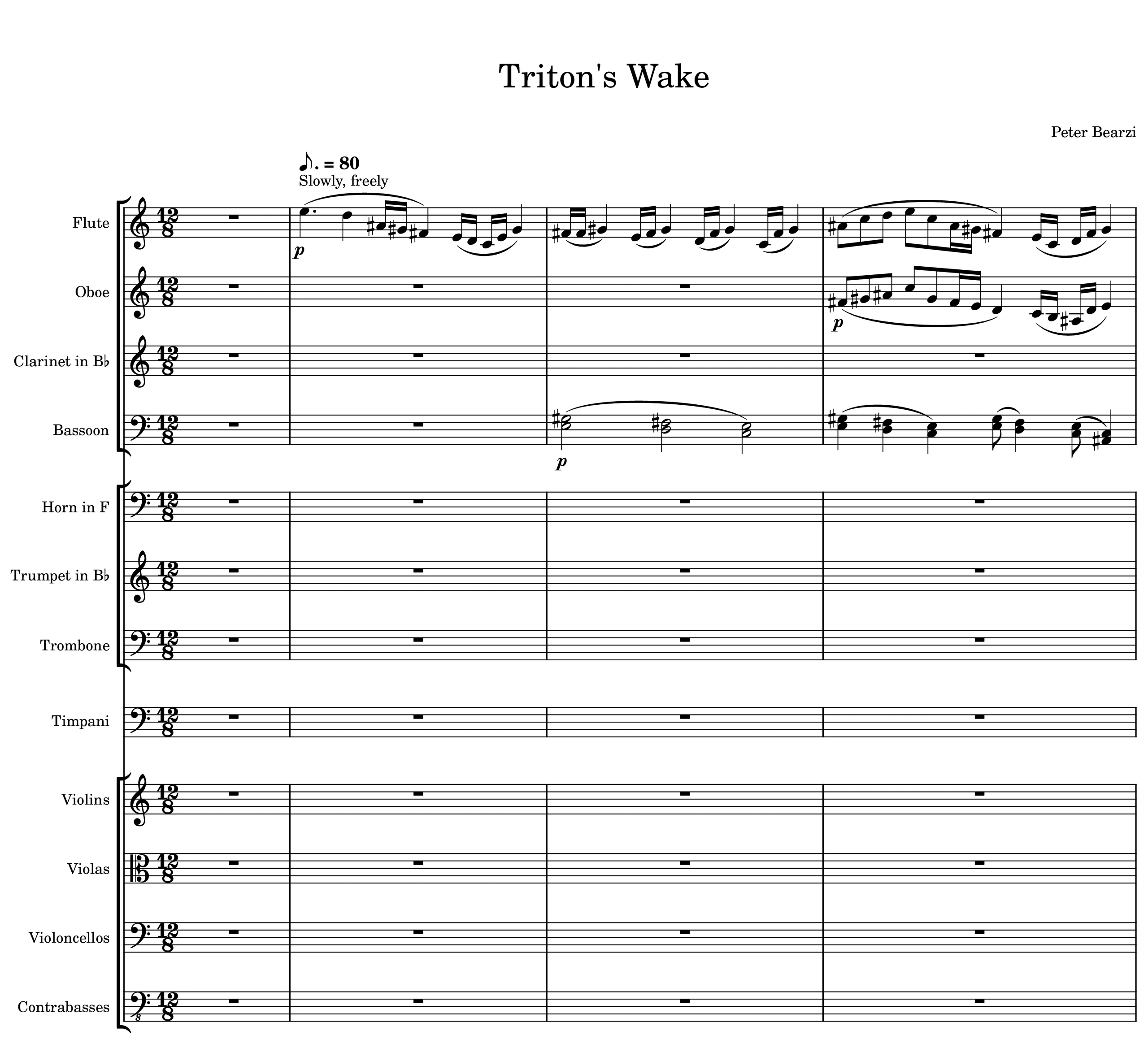
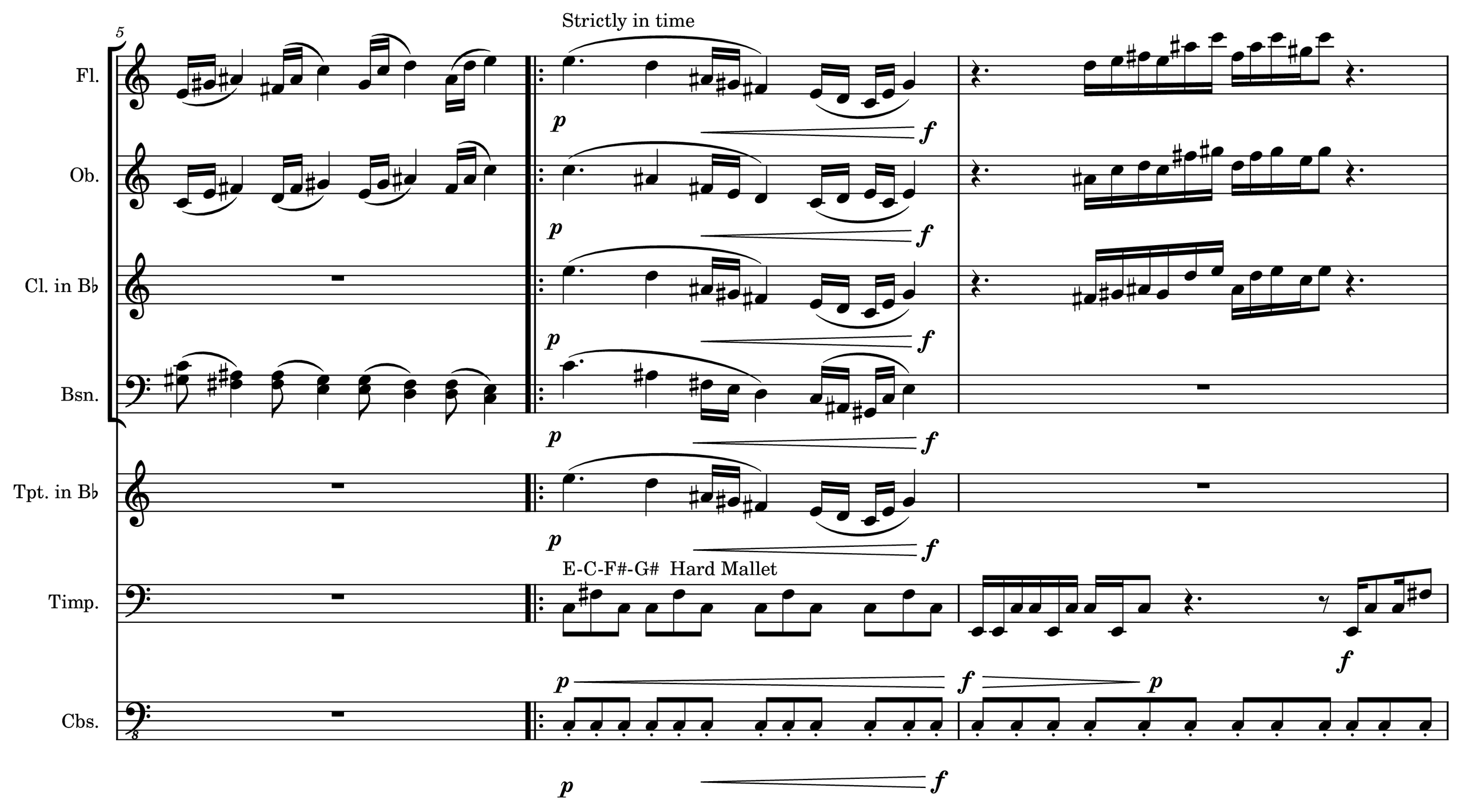
The name "Triton's Wake" is a pun. Because the piece is structured around both the F and C whole tone scales, it contains an abundance of tritone chords: Triton/tritone.
Wake has a triple meaning:
The trail of disturbed water left behind a moving ship or sea creature, in this case Triton the god of the sea. But also a trail of disturbed air as left by an airplane or, as in this case, air disturbed by the tritone dissonance.
Emergence from sleep, emergence of Triton from the sea, tritones in the air.
A celebration and vigil for one who has died. The end of the piece is the literal death of the tritone when the whole thing resolves to an F major tutti chord.
This composition is most influenced by my love of Mozart's woodwind divertimentos, Debussy in general, and by Stravinski's Rite of Spring.
The recording is a MIDI-Orchestral-mockup.