1 / 40
0:00/0:00
String Trio
2025
Cello
Viola
Violin
- Program Notes
In my research on Ernst von Dohnanyi I have been consistently struck by the vastly different circumstances he found himself in throughout his life. He excelled early as a pianist, composer, and conductor, setting up an extremely successful musical trajectory for his life. Dohnanyi, however, was a man of clear principle, and when the climate in Hungary went with the tide of fascism growing in Germany at the time, Dohnanyi refused to allow political pressure to interfere with musicianship wherever he was. And if he, alone, could not hold back these floods, he would entirely remove himself, refusing to be involved in unjust firings of musicians. This approach, while extremely admirable, did cost him his first appointment at the Budapest Academy for refusing to remove Zoltan Kodaly from his position for alleged ‘leftist views’ in 1919. Later, in 1934, he regained his position at the now renamed Franz Liszt Academy of Music, but again, after facing the prospect of having to enforce anti-Jewish policies at the Academy, he resigned in 1943 in solidarity with Jewish musicians. Dohnanyi also served as the music director of the Budapest Philharmonic Orchestra, starting in 1920, however, his tenure in this role had a similar outcome as his role at the Budapest Academy. Dohnanyi was able to maintain all Jewish members of the orchestra until two months after Germany invaded Hungary in March 1944, which is when Dohnanyi decided to dissolve the ensemble rather than continue without the Jewish musicians. This advocacy clearly influenced his children, especially Hans, who was a leader in the anti-Nazi resistance in Germany during the Second World War and eventually executed for his role. Despite all of this work by Ernst von Dohnanyi to keep fascism at bay and out of musicmaking in Hungary, when he fled to Austria in 1944, it drew major criticism which eventually spiraled into baseless allegations of Nazi collaboration which followed him for the rest of his life and posthumously into his legacy as a composer.
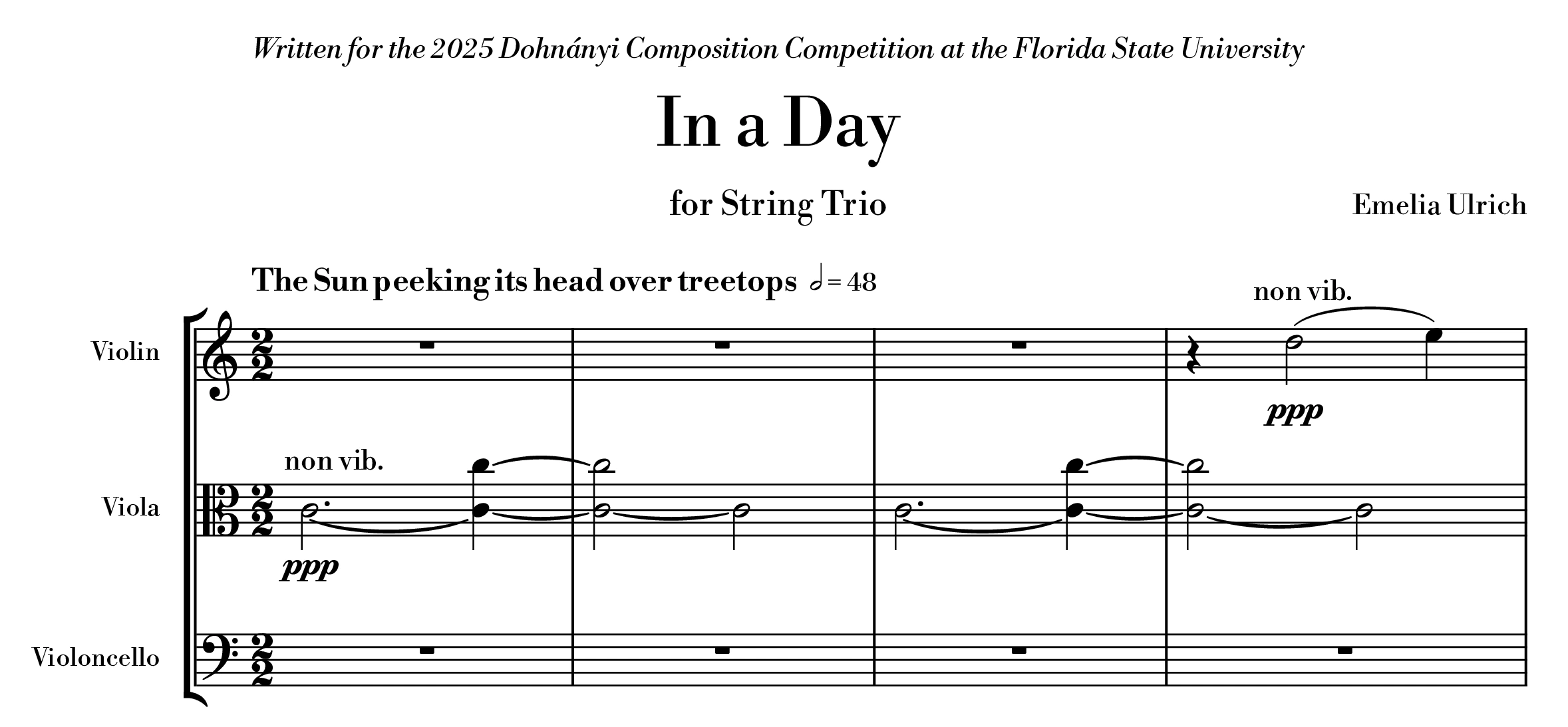
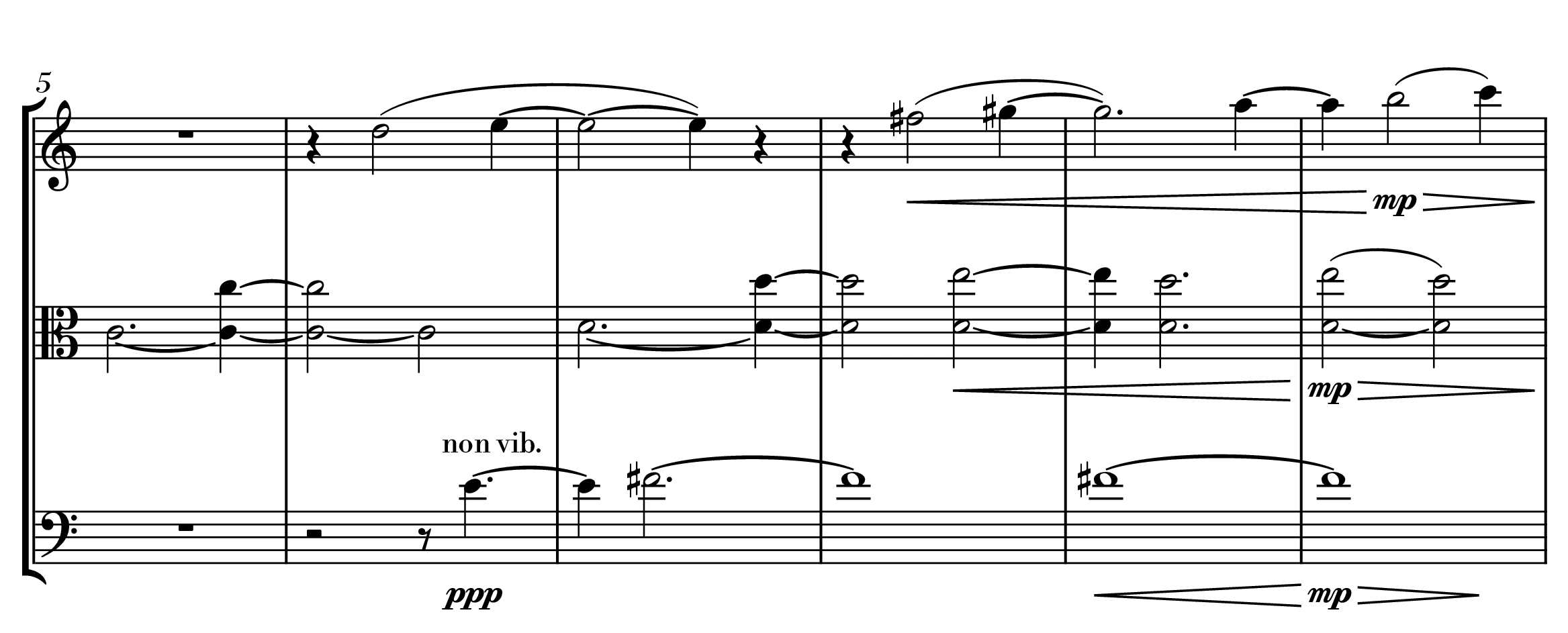
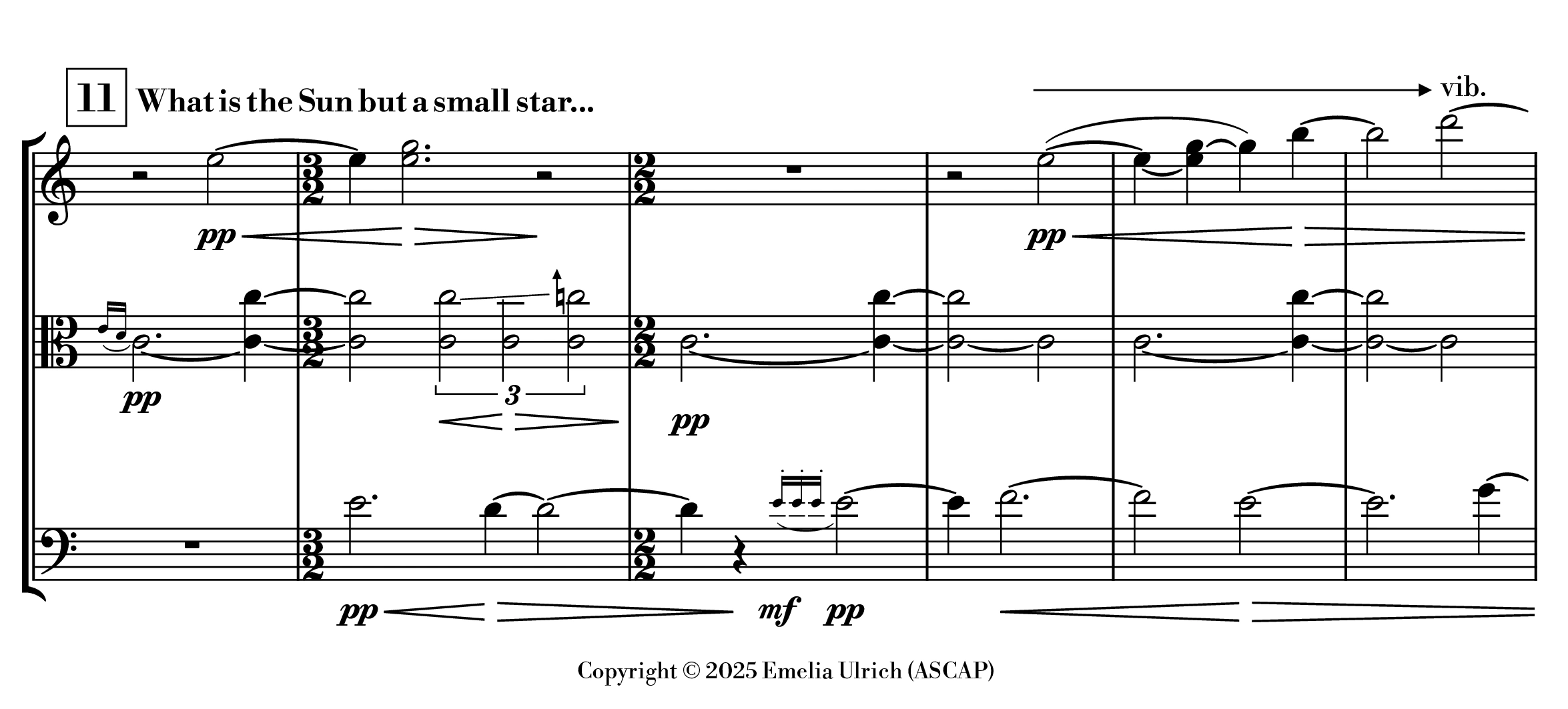
And then Dohnanyi immigrated to the United States in 1949 and settled in Tallahassee, Florida, where he became a professor of music at the Florida State University and taught until his death in 1960. In reading about his life, I was just shocked by the vastly different periods of his life and what it must have been like to have that lifetime of memories in your brain as you are now just living in Florida. As a native Floridian, I wanted to incorporate his time spent in Florida into my piece but couldn’t find a way just to write about his Florida years after reading everything he experienced before immigrating here. But don’t we bring everything we have gone through with us everywhere we go? In this spirit, I composed a work that serves as a “day in the mind of…” Dohnanyi during the final years of his life in Florida, incorporating themes from the works from his time in Florida, specifically his Second Symphony, as well as some from his more prominent early works that I could see getting “stuck in his head,” most notably his Variations on a Nursery Tune and Serenade in C Major, which is specifically honored through the instrumentation of this work, as it was the
first composition of his that I ever heard performed.
The purpose of the extremely reduced biography above is also to give background to what other elements would be present in this work: his grief at the loss of his son; his resilience and refusal to succumb to political pressures throughout his life, even when it cost him his career; the pain of false accusations of Nazi-sympathy by other Hungarian musicians and the herculean effort to which many of his other contemporaries went in order to exonerate him of these accusations. And all these memories living in the head of a man who found himself in Mid-Century Florida. The juxtaposition between his memories and his day to day life once he was in Florida must have been so interesting, likely more interesting than I could even imagine, but this composition would be an attempt to synthesize that feeling.
- Performer Credits
- Anne Roos Hoijtink (violin), Victoria Skinner (viola), Oliver Cole (Cello)