1 / 158
0:00/0:00
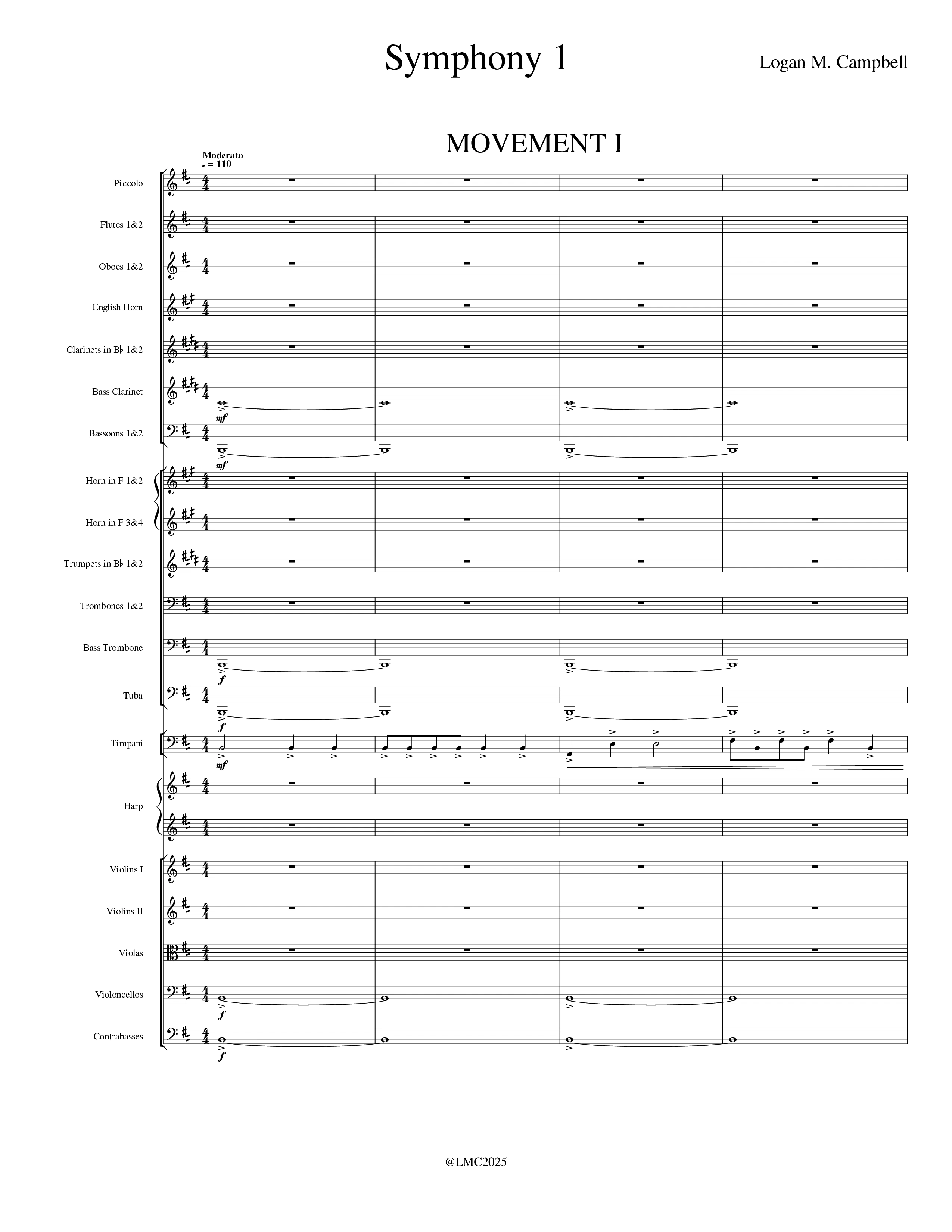
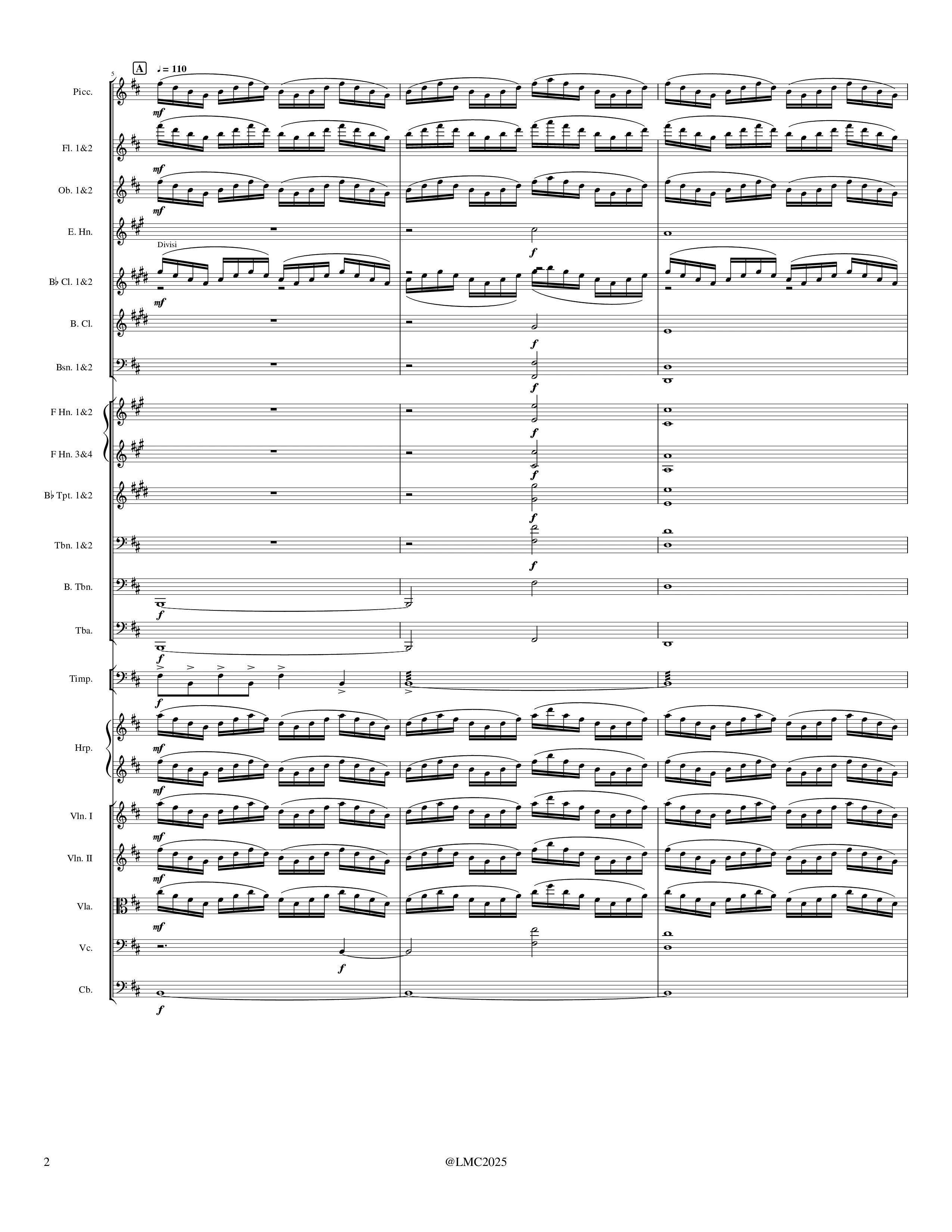
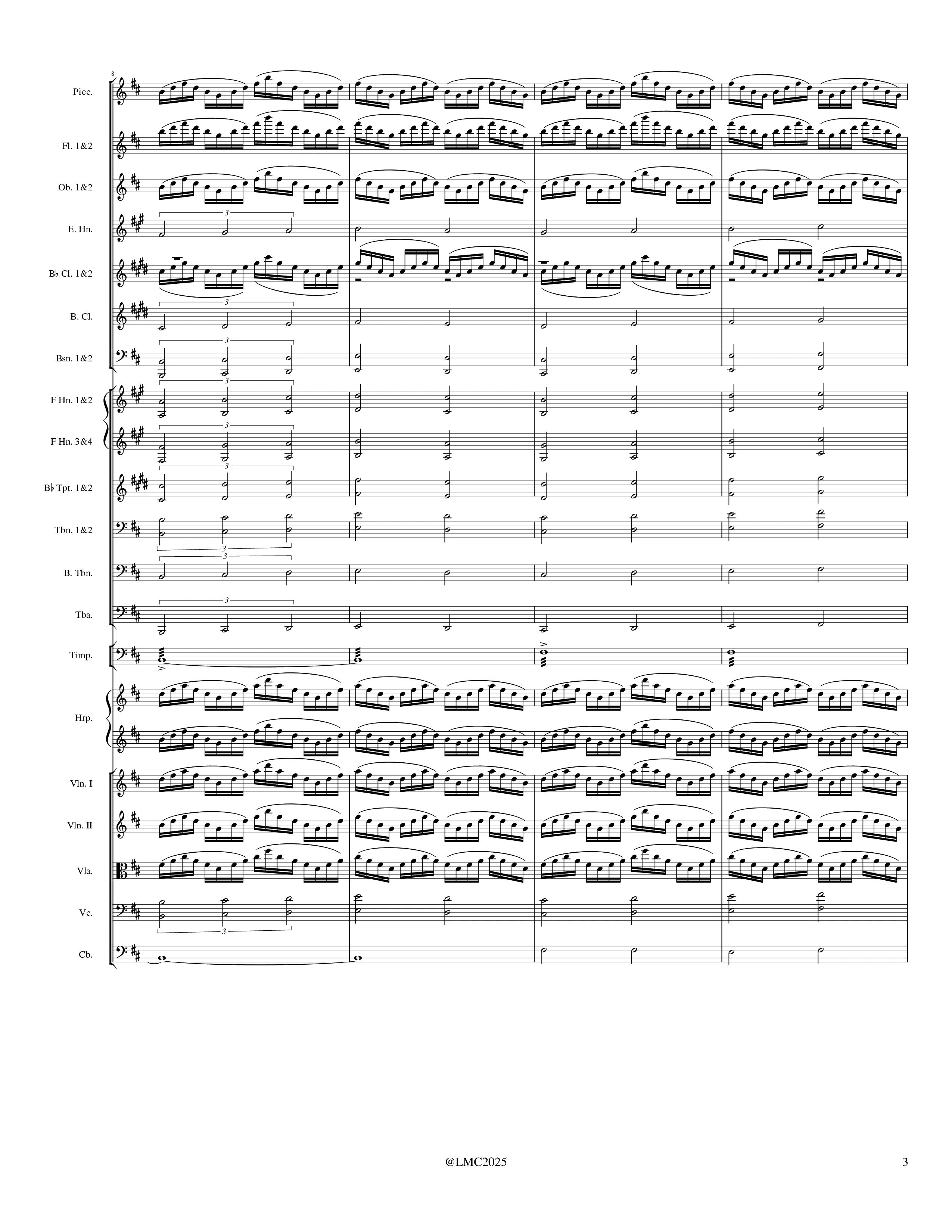
I composed this piece shortly after I graduated college. I had always wanted to compose a symphony and set out to do it. In total it took maybe a little under a month with revisions. The piece is primarily in B minor and begins with a dramatic flourishing melody before brass builds a chord into tonal ambiguity and this leads into an insistent second theme. This movement is filled with echoing layered melodies and grand brass fanfares.
The second movement is in B flat major. This one is a lot calmer and more tranquil than the first movement. The main inspiration of this movement was the third movement of Sir Malcolm Arnold's Four Scottish Dances. This movement is cyclical as it begins and ends with the same opening brass chords with woodwind and has a harp and piano arpeggiating under it. It resolves on a final B-Flat Major chord.
The third movement is in F major and D minor respectively. This movement is a scherzo in 6/8 time. The hemiola is 1,2, 1,2,3 for this movement. This movement heavily features the timpani as it eventually becomes an upbeat dance, a baroque dance called the Canarie. The piece repeats this dance by adding brass then adding in woodwind with the rest of the orchestra exploding the rest of the melody. There is a brief repeat of previous material and then the dance before we end on an ambiguous D minor chord.
This leads us to the fourth and final movement. This movement begins in D major and has a brass chorale as an opening statement. This is the basis for the movement as a whole. This is, in fact, a theme and variations. The first variation id the woodwind restating the chorale, but it restates the chorale, but it has been harmonized using negative harmony. This makes it feel very tonally ambiguous. Then we use the chorale as the basis to use the chords within the negative harmony version as the basis for a I-vii-I progression with various rhythms and repeats from the orchestra. This is an homage to Phillip Glass and the minimalist style. This resolves back to b minor where some arpeggios come in harkening to the opening of the piece as a whole and have a melody that sounds like a continuation of the opening of the symphony. The piece eventually brings back the chorale and D major before restating the second melody of the first movement in major and using a unison chord to finally restate the opening of the symphony in major now. The piece ends on a final B minor chord.