1 / 11
0:00/0:00
Duo
2023
Drum Set
- Program Notes
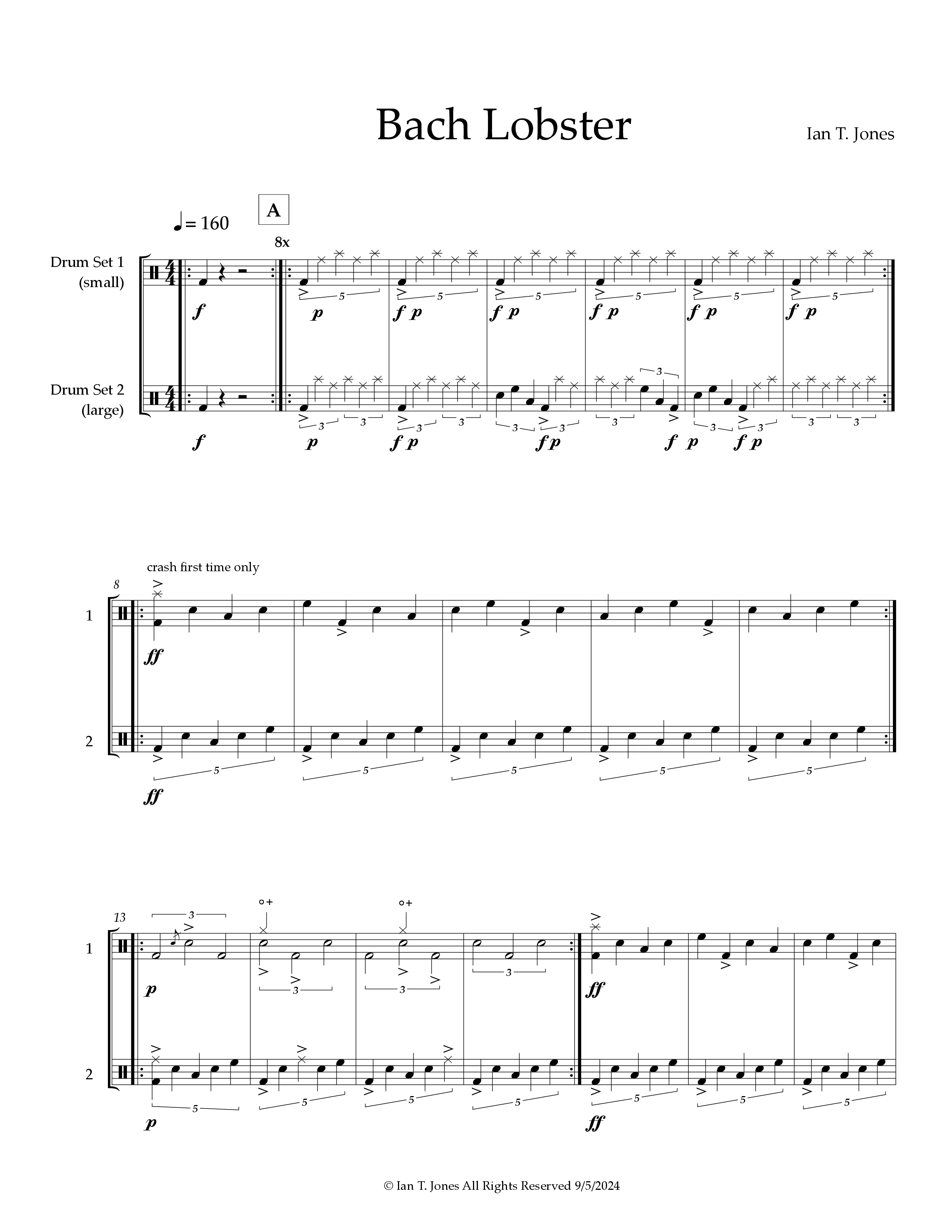
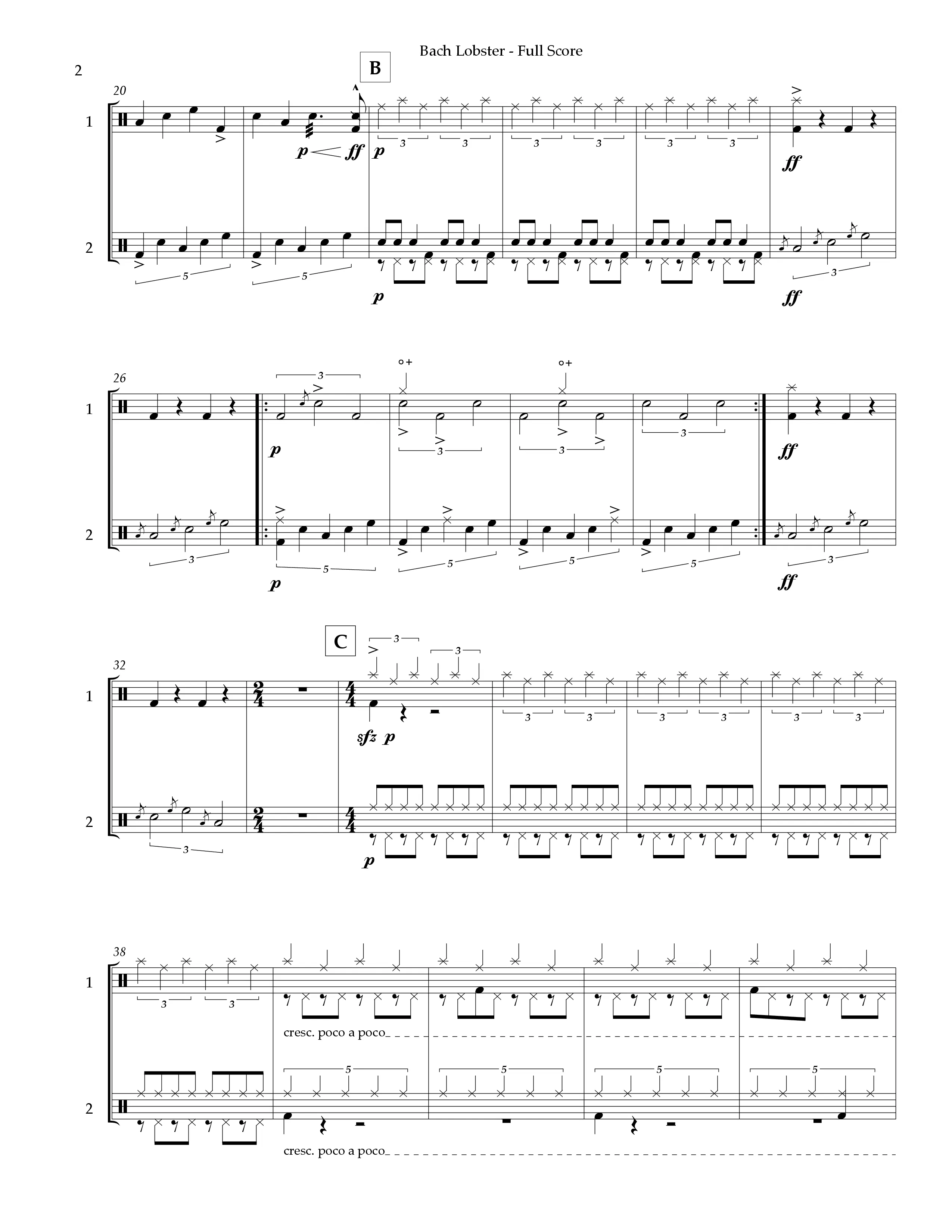
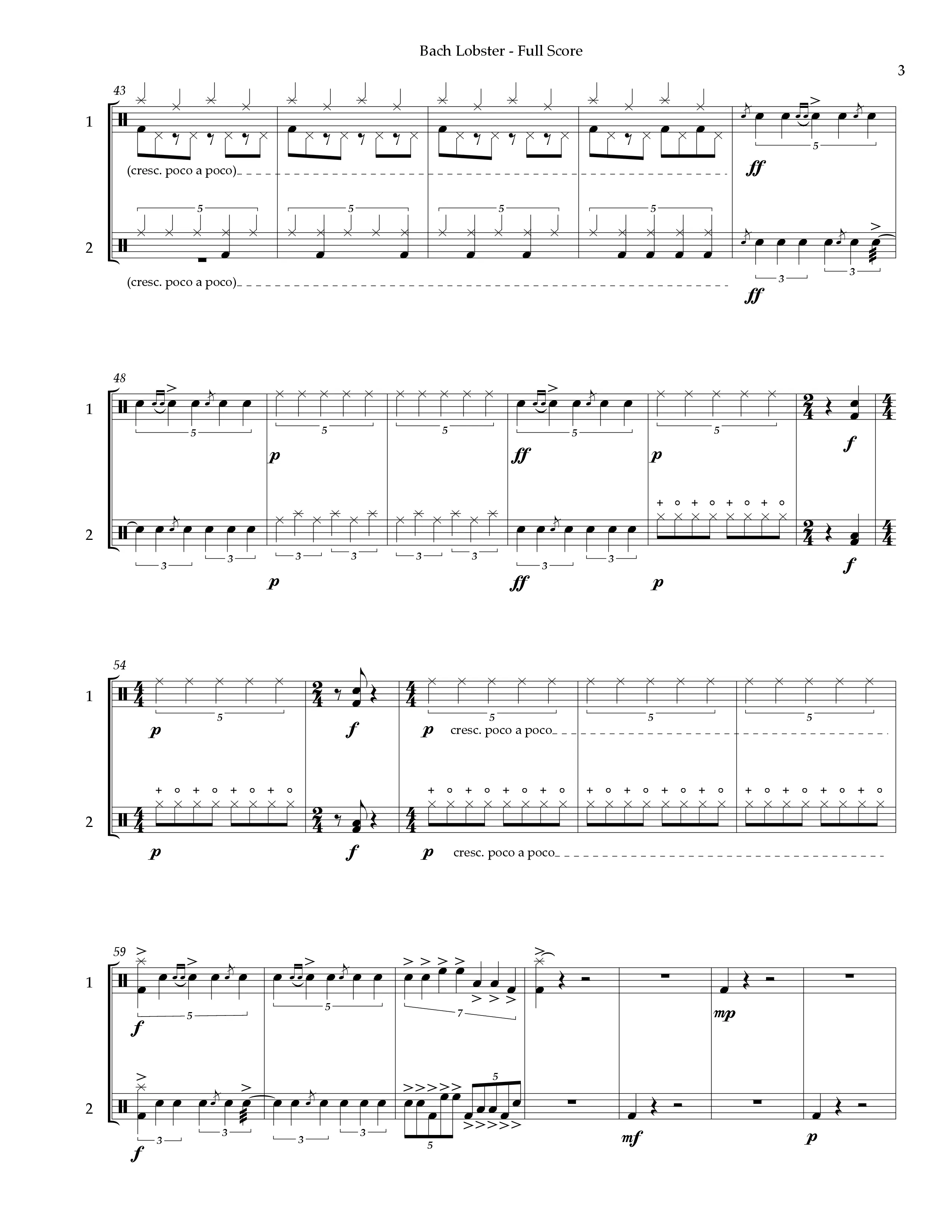
- The pitch of A4 lies at 440 Hz—meaning there are 440 cycles a second which results in the sounding of that note. Hertz (Hz) is how frequency is measured. If you have two pitches playing simultaneously, they both have their own frequencies, and they can be analyzed as having a ratio to each other. For example, in just intonation, if you have an A and an E together, the interval is a perfect fifth, but the E can be analyzed as vibrating 3/2 (three halves) as fast as the A, so the interval ratio for this (and any perfect fifth) is 3:2. But, if you lower the pitch of those two notes at the same time, eventually, as their frequencies slow down, you will get what resembles a 3:2 polyrhythm (the combination of two contrasting rhythms). The concept of pitch having this relation to rhythm is what Bach Lobster was inspired by: analyzing the intervals from J.S. Bach’s crab canon, a canon where the second voice is the theme in retrograde motion, from the Musical Offering BWV 1079, and pairing them with their respective ratios. The result is an interesting study of the polyrhythms produced from harmonic intervals, and how they could be orchestrated around two drum sets.
- Performer Credits
- Ian T. Jones, drum sets