In April of 2024, many of us were fortunate to witness the rare total solar eclipse, one of the most spectacular astronomical phenomena visible to the naked eye.
The existence of this phenomenon is somewhat miraculous: the Sun's diameter is approximately 400 times larger than the Moon's, and the Sun is about 400 times farther from Earth than the Moon is. This unique alignment is seemingly a uniquely terrestrial phenomenon rarely found elsewhere in the universe.
I found it touching to think that the next total solar eclipse which would be visible from the exact spot where I wrote this composition, from where I was also fortunate to witness the 2024 eclipse, will not happen until 2144: 120 years in the future.
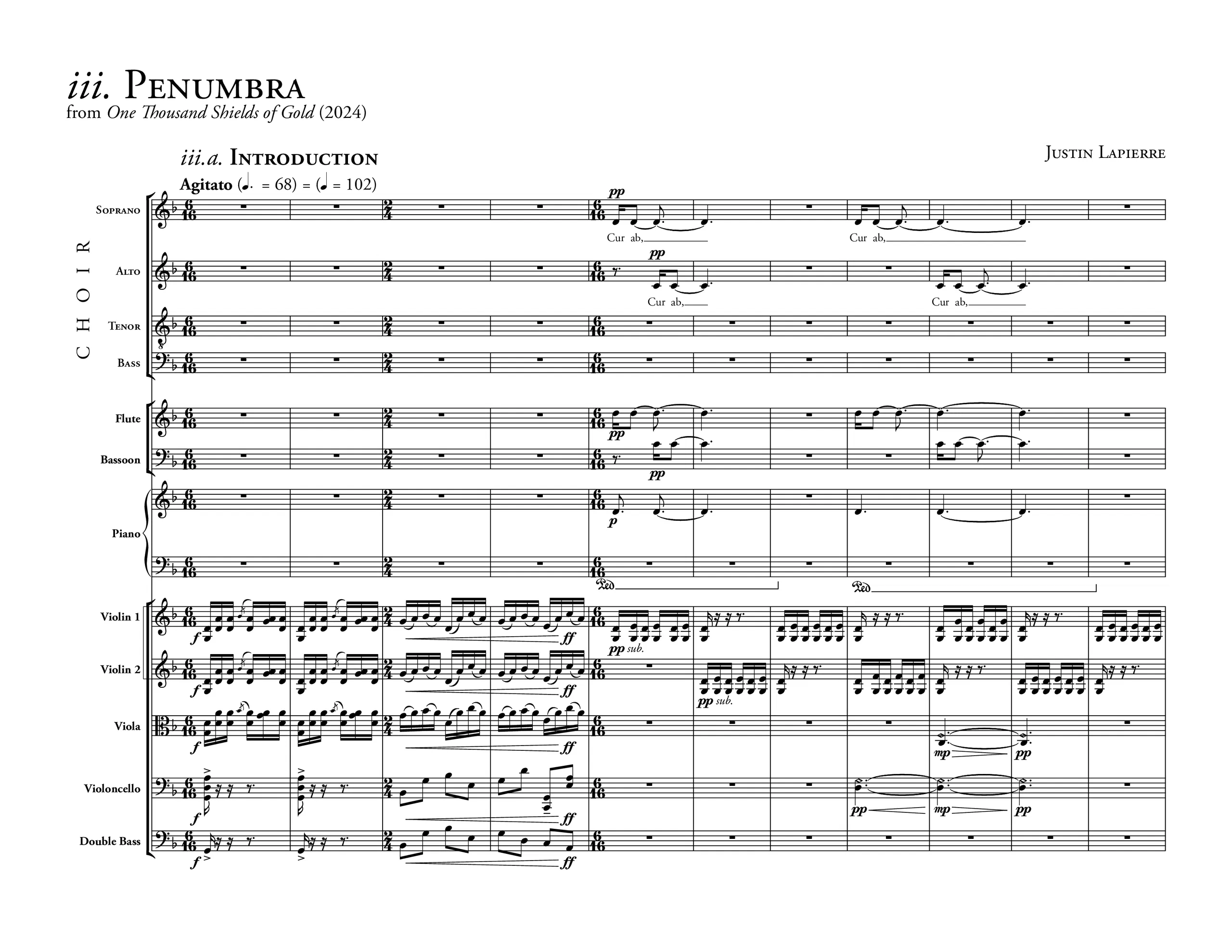
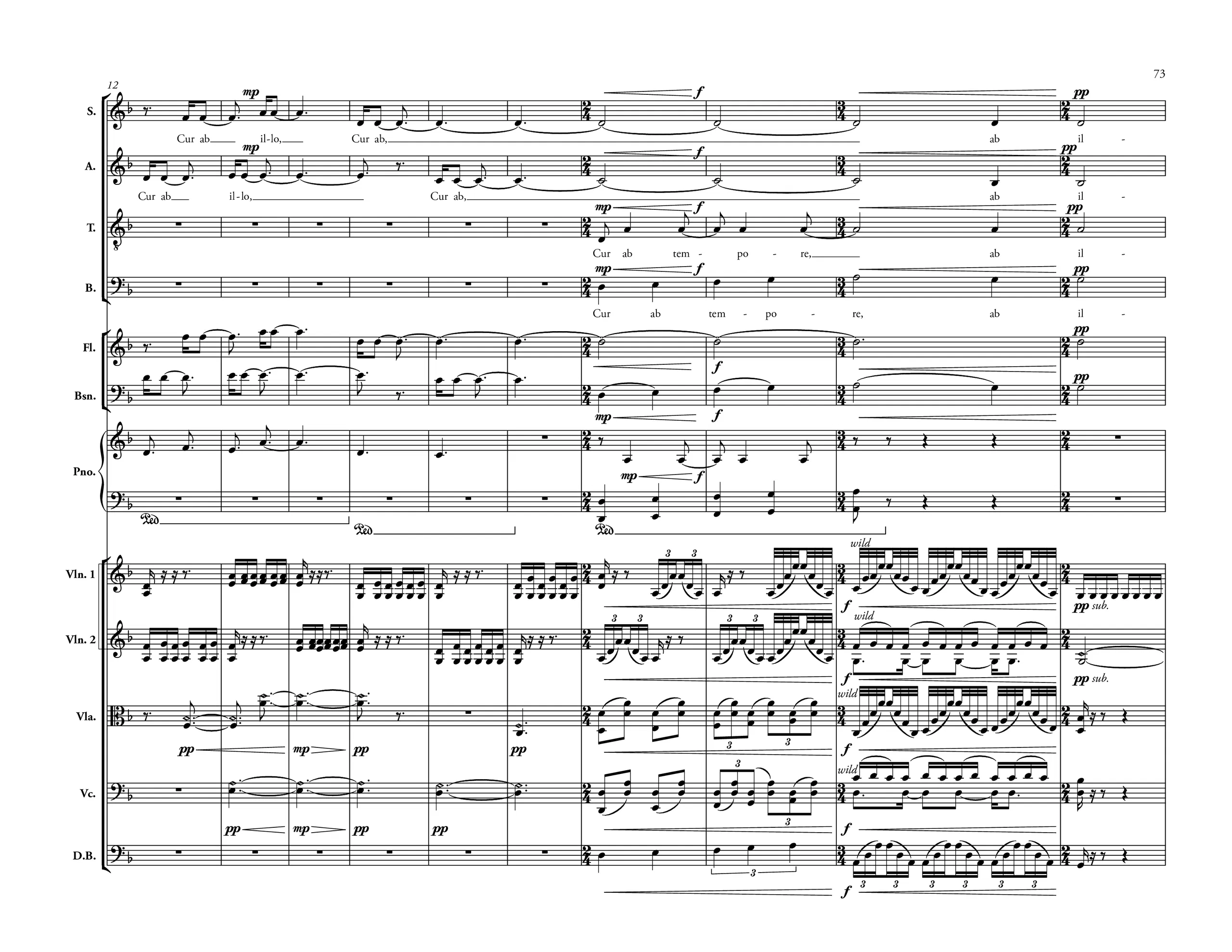
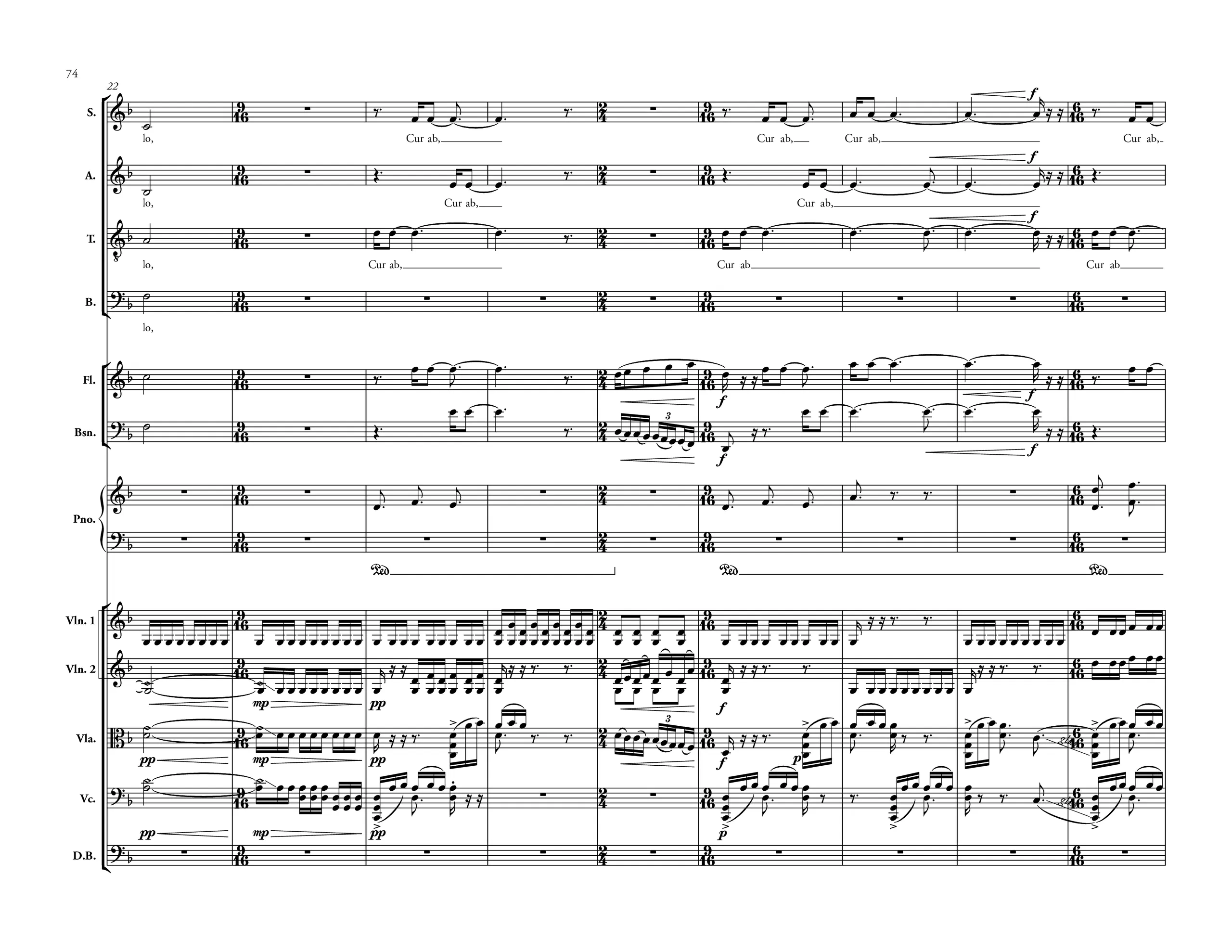
The third movement delves into doubt and delusion. The choir is locked in a stubborn ritornello of tonic and dominant, singing incorrect, medieval predictions of solar eclipses in Latin, highlighting the uncertainty and contradictions in our own understanding. The choir takes on a turba persona like a delusional mob, alternating between vissa est and non vissa est—it is seen and it is not seen, respectively—as though they cannot decide among themselves. This is exemplified by the title Penumbra, which is the faded shadow around the point of eclipse and—usually—the shadow in which most of us find ourselves when viewing the eclipse due to its sheer size.
Performer Credits
Fauré-1000SoG Chorus and Orchestra. Ben Wallace, conductor.