1 / 42
Quintet
2025
Cello
Piano
Saxophone
Violin
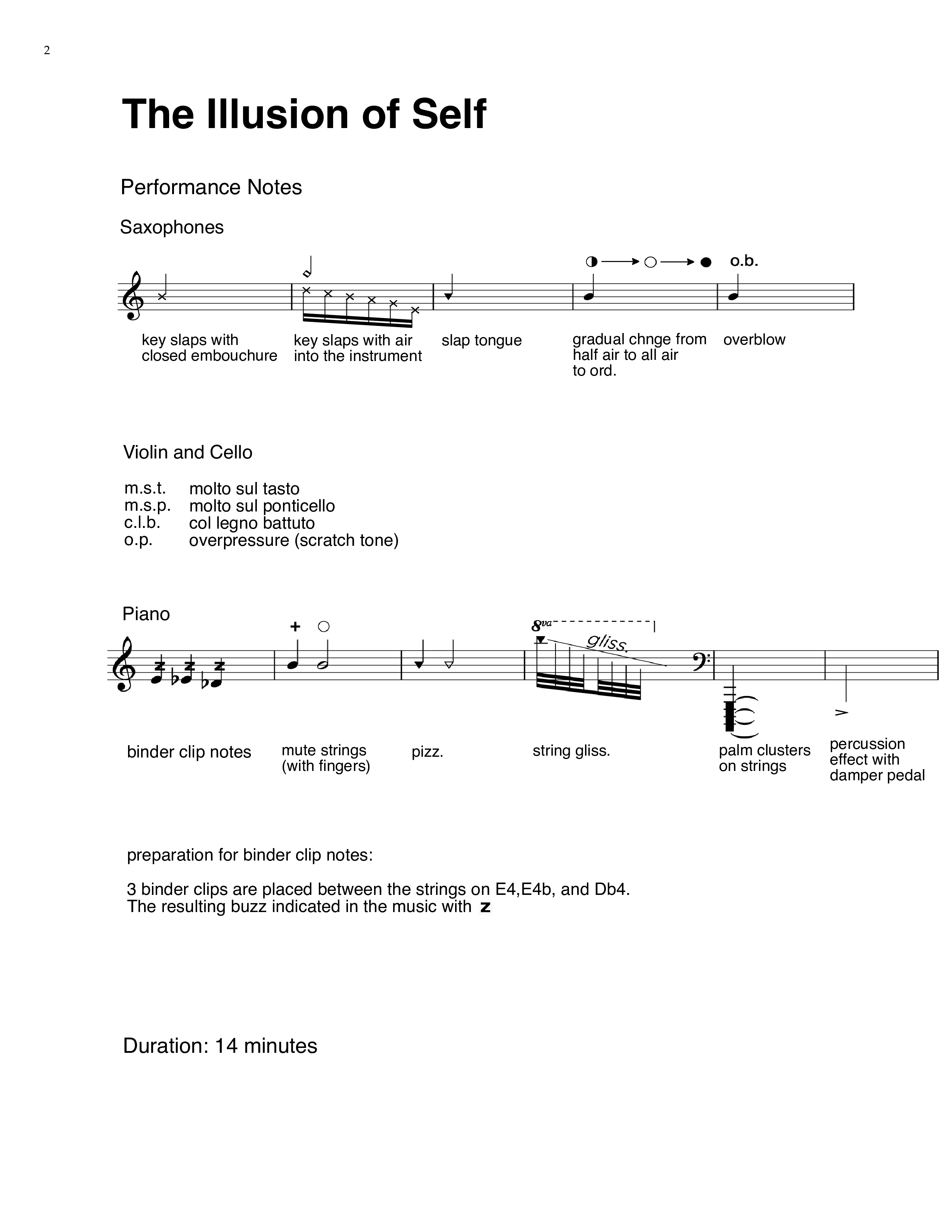
- Program Notes
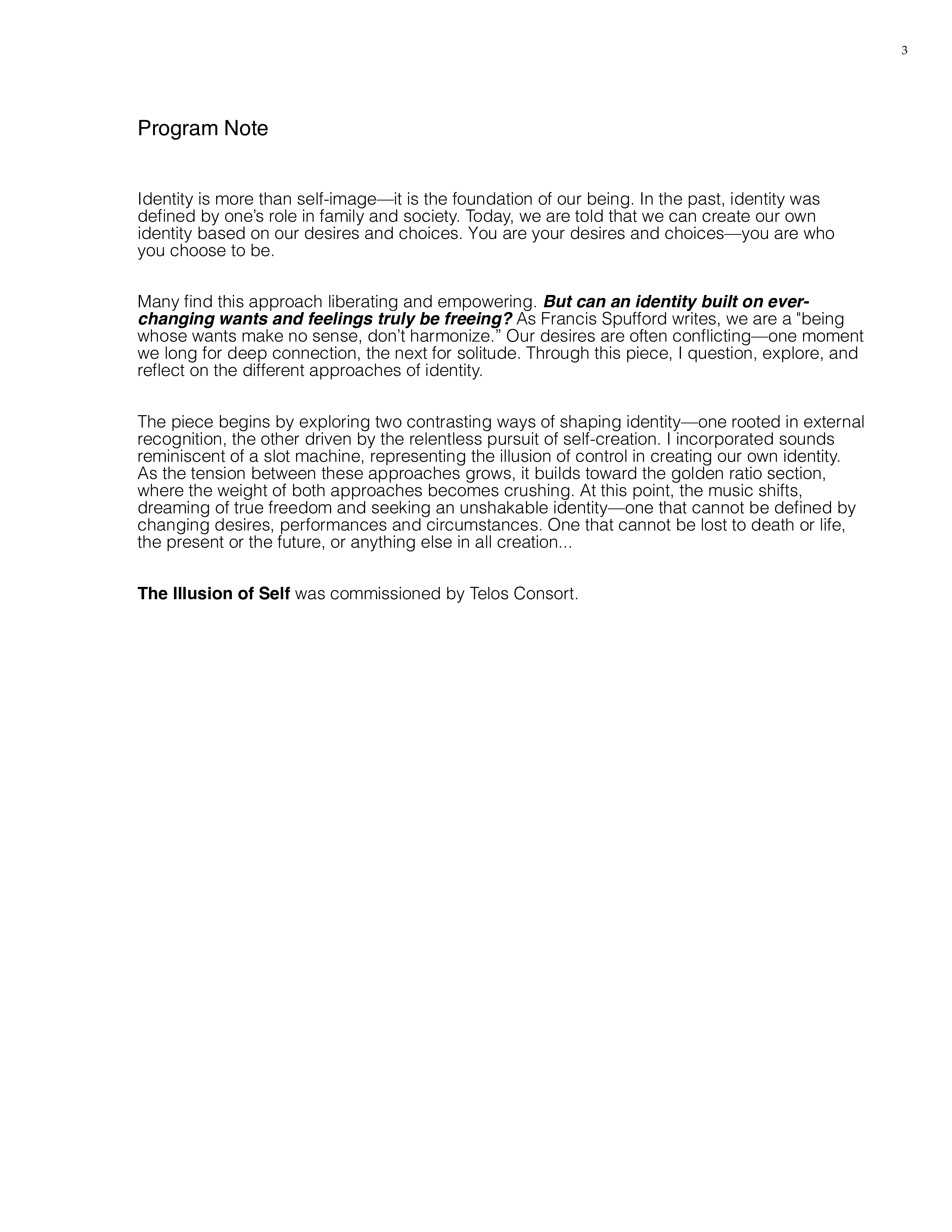
I dentity is more than self-image—it is the foundation of our being. I n the past, identity was
defined by one’s role in family and society. Today, we are told that we can create our own
identity based on our desires and choices. You are your desires and choices—you are who
you choose to be.
Many find this approach liberating and empowering. But can an identity built on ever-
changing wants and feelings truly be freeing? As Francis Spufford writes, we are a "being
whose wants make no sense, don’t harmonize.
” Our desires are often conflicting—one moment
we long for deep connection, the next for solitude. Through this piece, I question, explore, and
reflect on the different approaches of identity.
The piece begins by exploring two contrasting ways of shaping identity—one rooted in external
recognition, the other driven by the relentless pursuit of self-creation. I incorporated sounds
reminiscent of a slot machine, representing the illusion of control in creating our own identity.
As the tension between these approaches grows, it builds toward the golden ratio section,
where the weight of both approaches becomes crushing. At this point, the music shifts,
dreaming of true freedom and seeking an unshakable identity—one that cannot be defined by
changing desires, performances and circumstances. One that cannot be lost to death or life,
the present or the future, or anything else in all creation. . .
- Recording Notes
Performed at South Oxford Space, May 17, 2025 Thomas Giles, saxophones Kyle Landry, saxophones Charlotte Munn-Wood, violin Thea Mesirow, cello Huizi Zhang, piano
- Performer Credits
- Telos Consort
- External Links