1 / 8
0:00/0:00
Duo
2009
Piano
Violin
- Program Notes
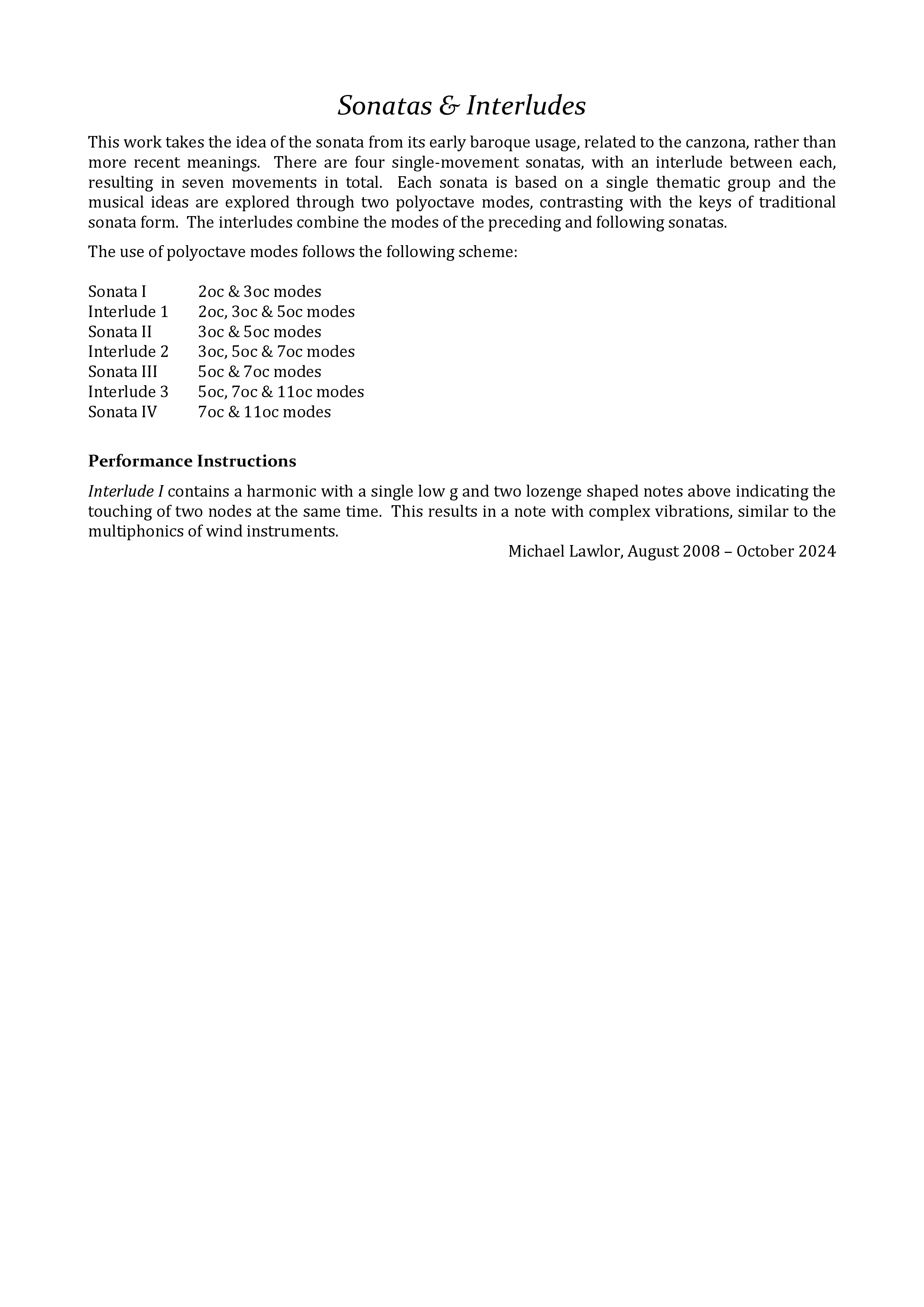
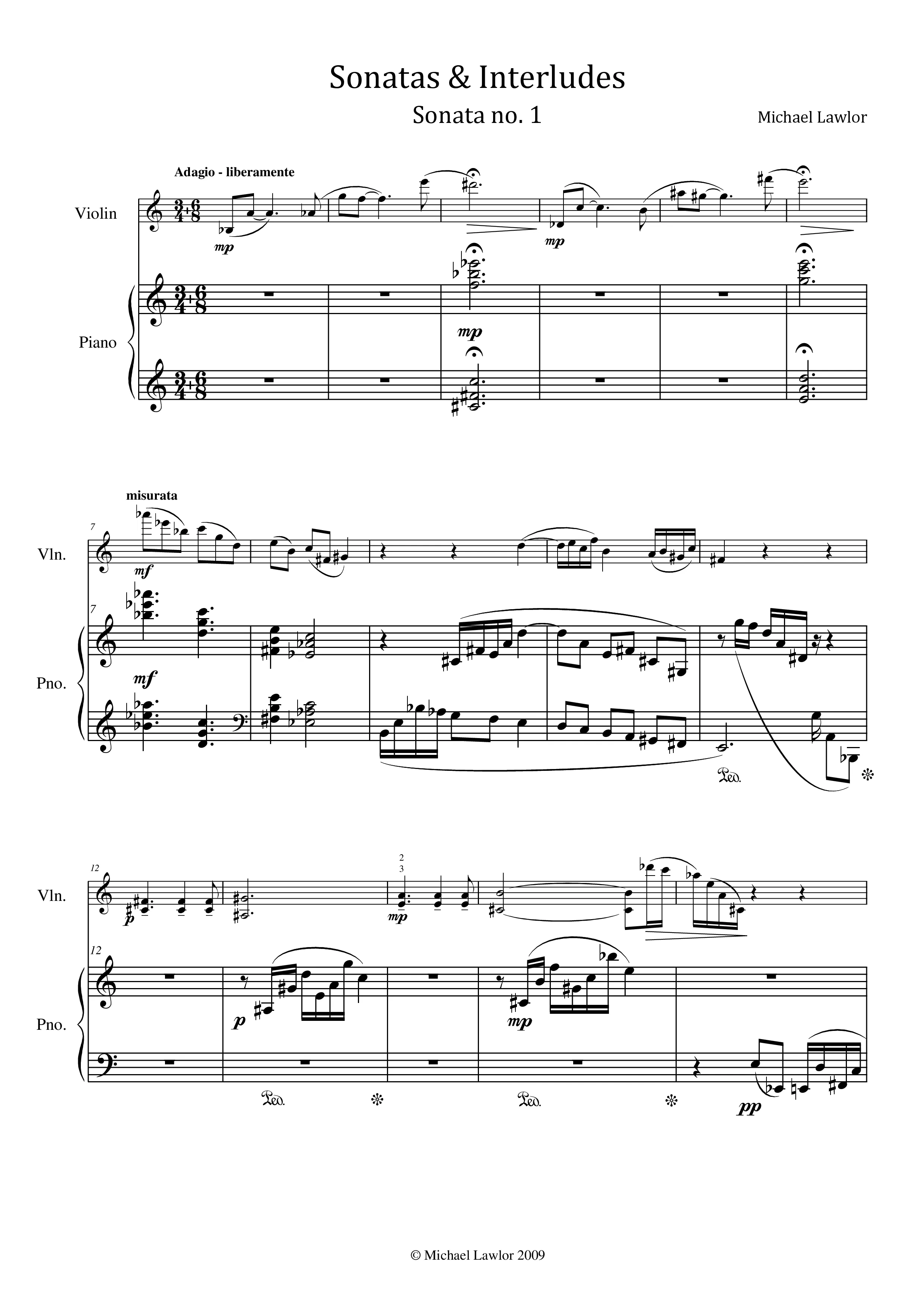
- Sonatas & Interludes is an exploration of what I call polyoctave modes. Polyoctave modes are modes or scales that do not repeat after one octave, but at some multiple of octaves. So far, I have created many of these, from two octaves to 19 octaves. In Sonatas & Interludes I use modes of two, three, five, seven and eleven octaves. Each mode has its own characteristic harmony and melody, which provides a harmonic unity to the overall sound world of each mode. Over the complete ambitus of a mode the total chromatic exists, although within a narrow range, not all chromatic pitches will be available; however, for each mode there are several transpositions, as in the manner of Messiaen’s modes of limited transposition, allowing freedom of choice to create highly chromatic music. By choosing appropriate modes and transpositions, and even combining two modes at the same time, it is possible to create a varied range of harmonic and melodic material, from simple triadic harmony to 12-tone and serial music. There are four single-movement sonatas, with an interlude between each, resulting in seven movements in total. In each sonata the musical ideas are explored through a pair of polyoctave modes, contrasting with the keys of traditional sonata form. The interludes combine the modes of the preceding and following sonatas. However, “sonata” here is more akin with the renaissance canzona via the early baroque sonata rather than the later, classical form. The first sonata uses the two-octave and three-octave modes. The violin and piano are always in the same transposition of the same mode and the melodic and harmonic material is built from groups of fourths, overlapping by seconds with occasional use of scale passages to strongly highlight the character of the mode. The contrasting material is based on expanding intervals: second, third, fourth, fifth and sixth, but always within the mode. Michael Lawlor
- Recording Notes
- Recorded in LeFrak Hall, Queen's College, New York.
- Performer Credits
- Catherine Lawlor (violin) and Abram Korsunsky (piano)
- External Links