1 / 47
0:00/0:00
Solo
2019
Harp
- Program Notes
The main idea of the piece was somewhat inspired by an experience I had years ago when attending to a harp recital. An adaptation of a movement from a Bach solo violin sonata was part of the program. I perfectly knew the piece, since, coincidently, I had studied the violin version that same year. So, when the harpist started to play, something very curious happened with my perception: unwittingly, I started to hear all the resonances, the “residual echoes” (the hall was very resonant), that kind of “aura” that is created by the harp playing, and which is never present in the violin version, as the main thing; and the structural elements from the Bach language, that is, the succession of pitch and rhythm that should have been in the foreground; as a subsidiary echo. The experience was similar to that which occurs when observing those images used to depict the Gestalt phenomena, or even sometimes when looking at a random sky: suddenly a new form of organization emerges, and one ceases to perceive what one was perceiving before. After the recital we talked with the performer about the topic, and she told me that when playing, in order to concentrate as much as possible on what is relevant to the execution, the harpist tends to develop a kind of aural blind spot (psychology calls it “scotoma”) in relation to the layer composed by those sounds that keep sounding after the action of setting the strings to vibrate.
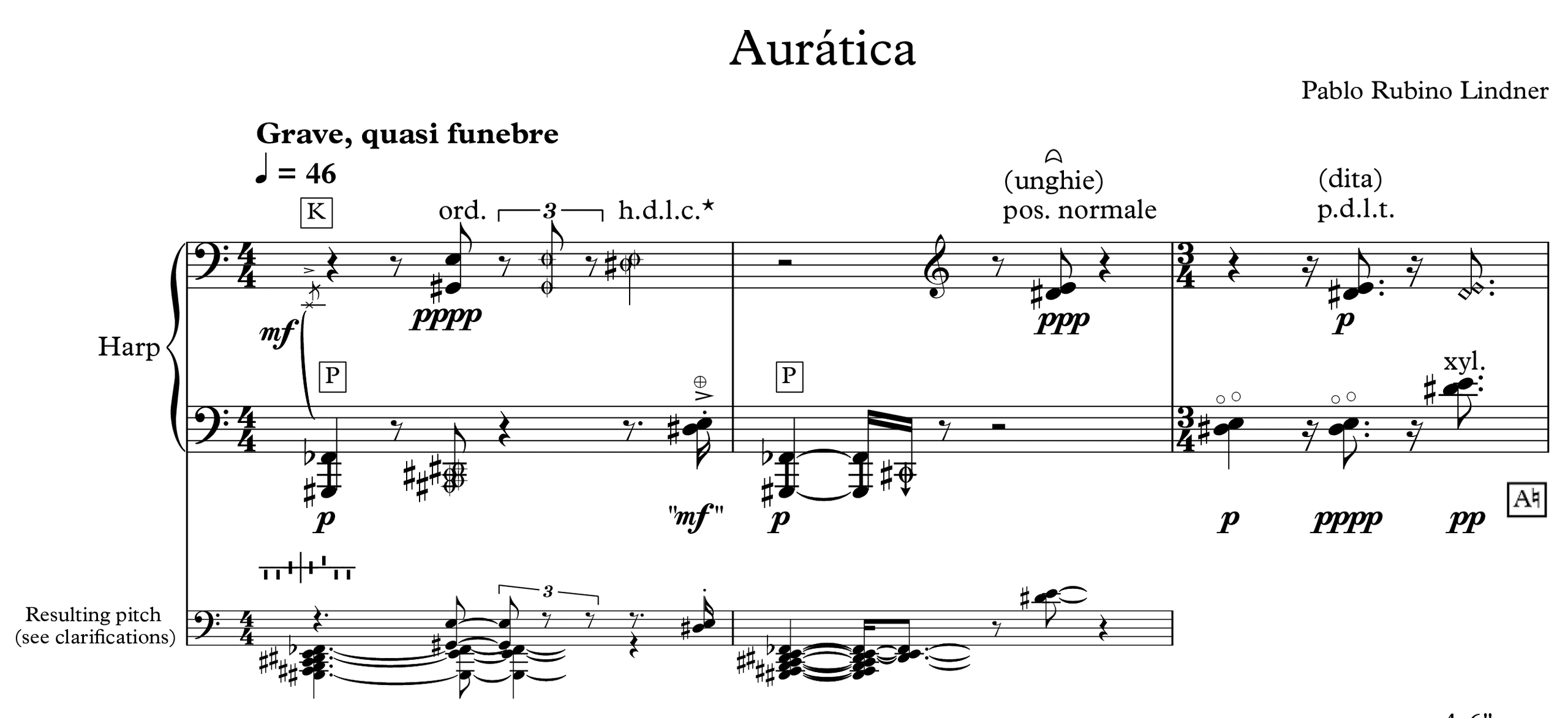
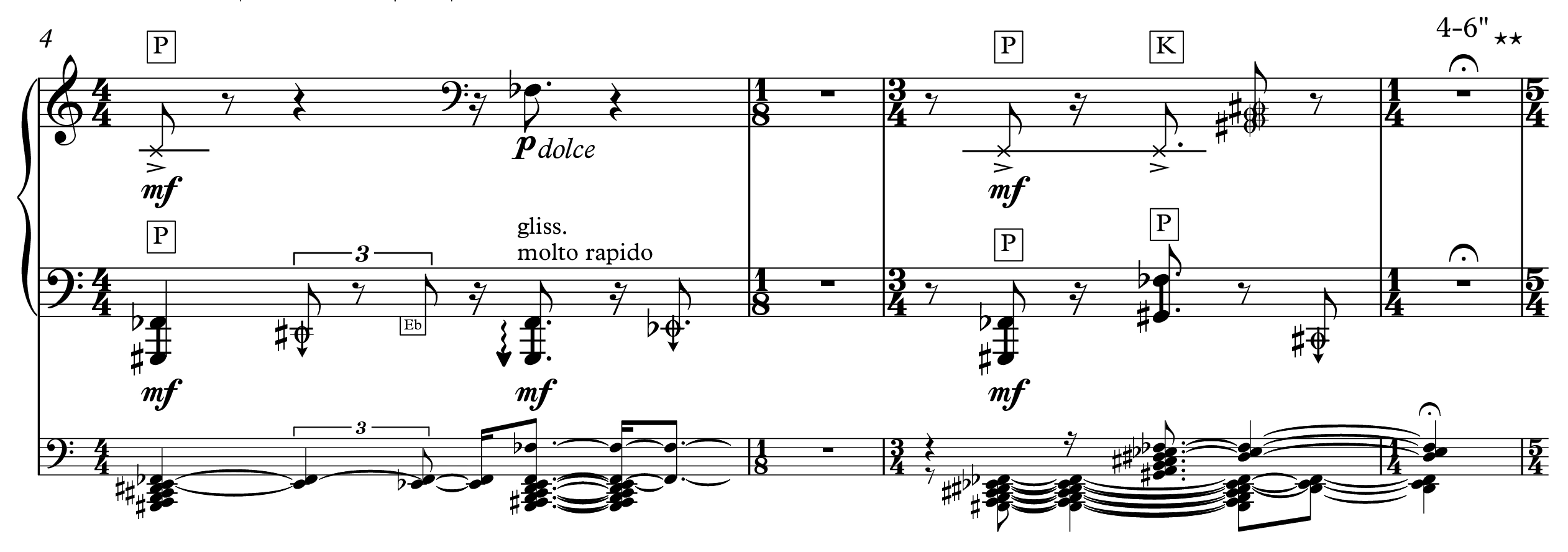
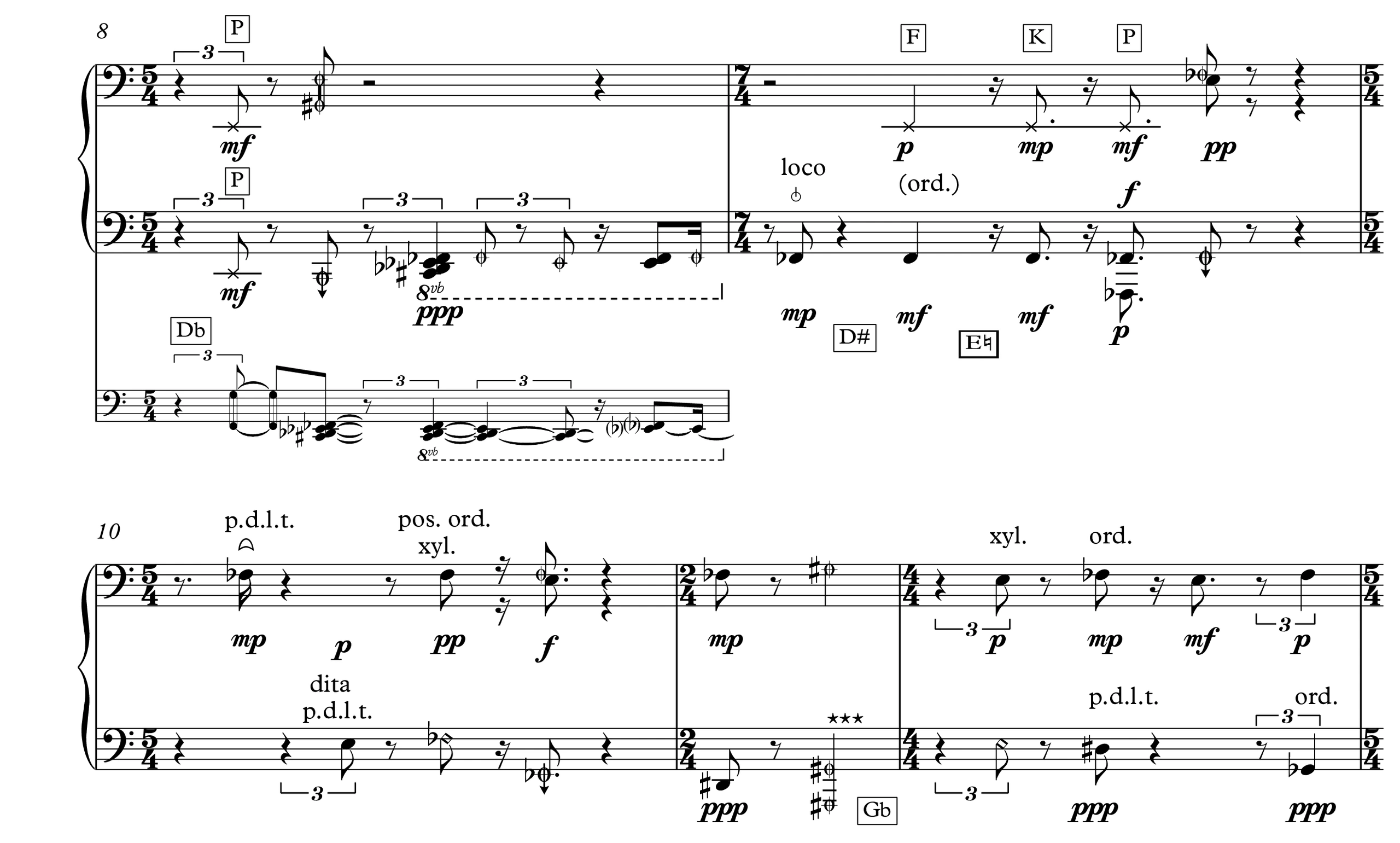
In Aurática, those subsidiary, collateral sounds become the main sonic subject, and, along with the choreography implied in the instrumental actions of playing and coupled with some elements derived from the arts of prestidigitation (like misdirection, masking, visual induction, etc.), form the substance of the piece.
- Recording Notes
Cana San Martín: sound director
Recorded at Domus Artis, Buenos Aires
- Record Label
- -
- Performer Credits
- Alina Traine - Harp
- Publisher
- Babel Scores
- External Links