1 / 39
Orchestra
2015
- Program Notes
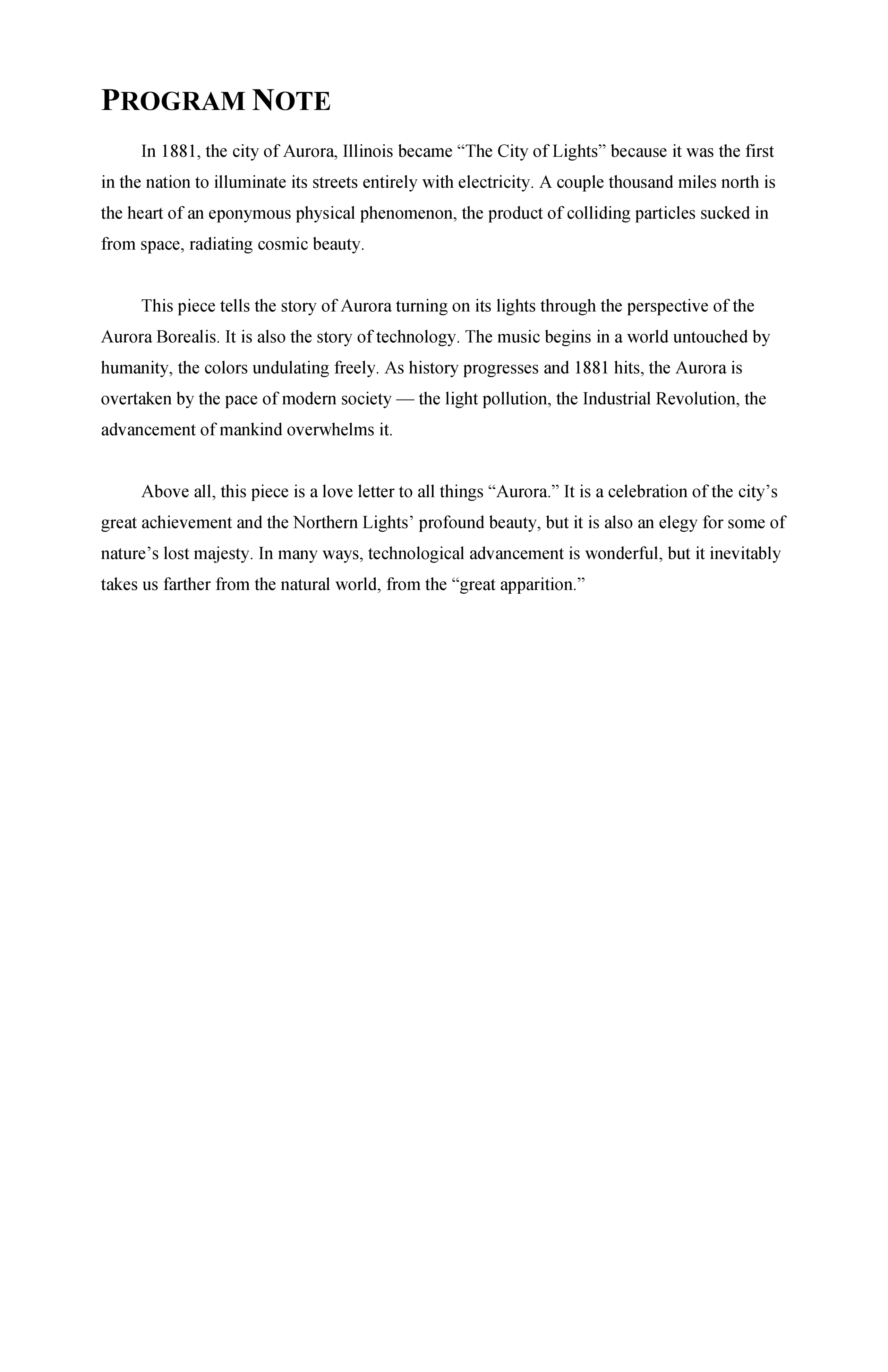
- In 1881, the city of Aurora, Illinois became “The City of Lights” because it was the first city in the nation to illuminate its streets entirely with electricity. A couple thousand miles north is the heart of an eponymous physical phenomenon, the byproduct of colliding particles sucked in from space, radiating cosmic beauty. This piece tells the story of Aurora turning on its lights through the depiction of the Aurora Borealis. It is also the story of technology. The music begins in a world untouched by humanity, the colors undulating freely; as history progresses and 1881 hits, the Aurora is overtaken by the pace of modern society — the light pollution, the Industrial Revolution, the advancement of mankind overwhelms it. Above all, this piece is a love letter to all things “Aurora.” It is a celebration of my childhood home’s great achievement and the Northern Lights' profound beauty, but it is also an elegy for nature’s lost majesty. In many ways, technological advancement is glorious, but it inevitably takes us farther from the natural world... from what Emerson called “the great apparition.”
- Recording Notes
- Reading by the Toledo Symphony Orchestra in Kobacker Hall at Bowling Green State University
- Performer Credits
- Toledo Symphony Orchestra
- External Links