- Program Notes
- In the early 16th century, the east was still a universe of mysteries. Beginning in the 13th century, travelers, who were not particularly adept at drawing, would depict strange animals they claimed to have encountered in the east. Although their veracity was questioned by some European intellectuals, these drawings circulated as documents that reinforced curiosity about exotic lands and their mysteries, and they always aroused interest. Among the gifts Muzaffar Shah presented to the Portuguese king, the most interesting one was undoubtedly a rhinoceros that attracted everyone's attention as it was unloaded from the ship. A German printer who had the chance to see this rhinoceros in Portugal drew a depiction of the animal, and this depiction reached Albrecht Dürer through the merchants of Nuremberg. Dürer produced his "rhinoceros", one of the most famous engravings in history, based on this drawing and the narratives that were intended to depict this being. This is highly unusual, especially considering the history of the "classical" plastic arts. Imaginary events, imaginary places, and imaginary beings have long been produced in the history of western art, but it is not often that something whose existence is certain - especially a creature - is produced on the basis of an unconvincing sketch and dubious narratives. Dürer, of course, knew that a real rhinoceros looks different from the engraving he produced. His painting was not "a rhinoceros" but a "rhinoceros painting" - just like Magritte's "pipe". But for a long time Europe took it as a reference for what a rhinoceros was.
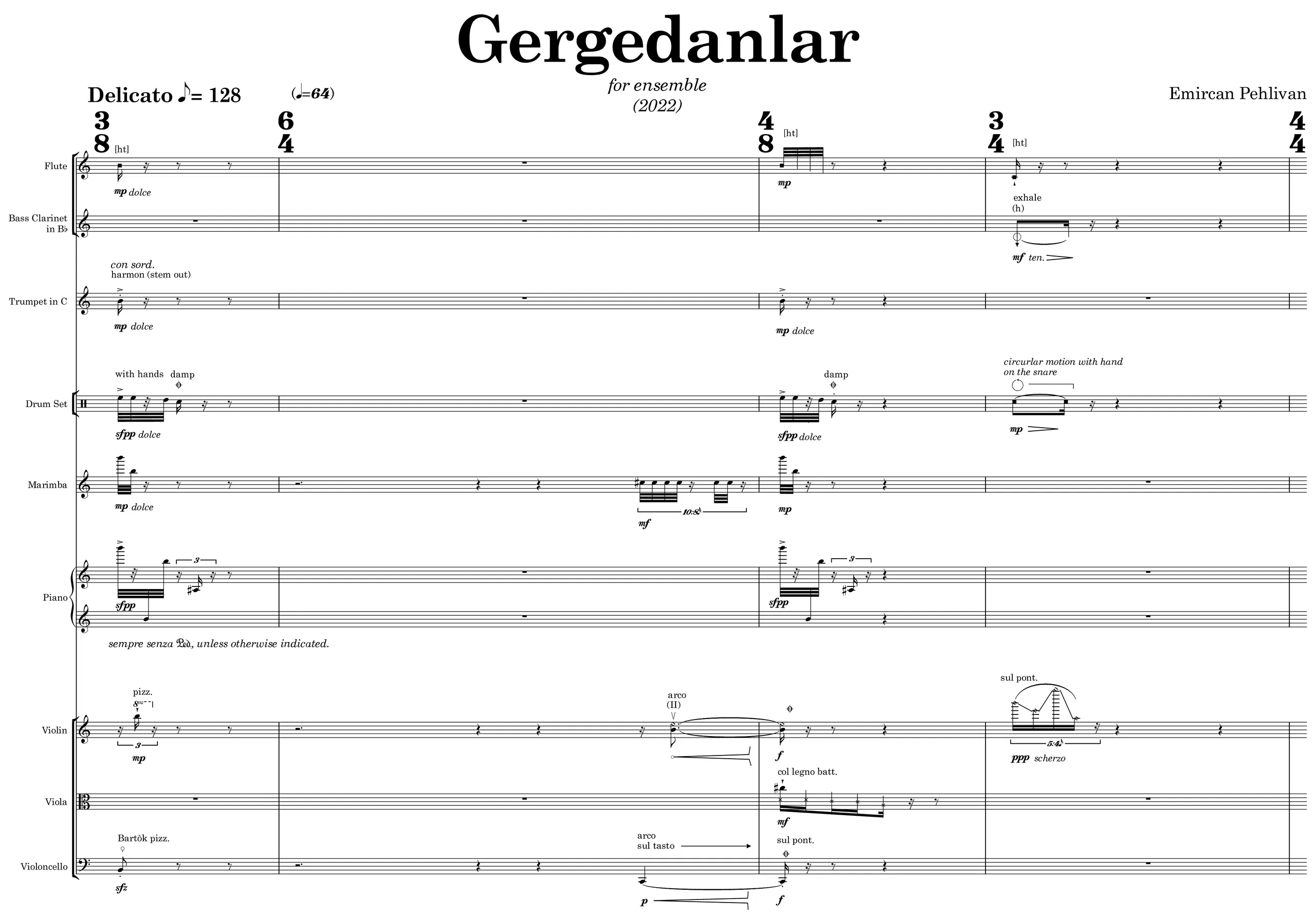
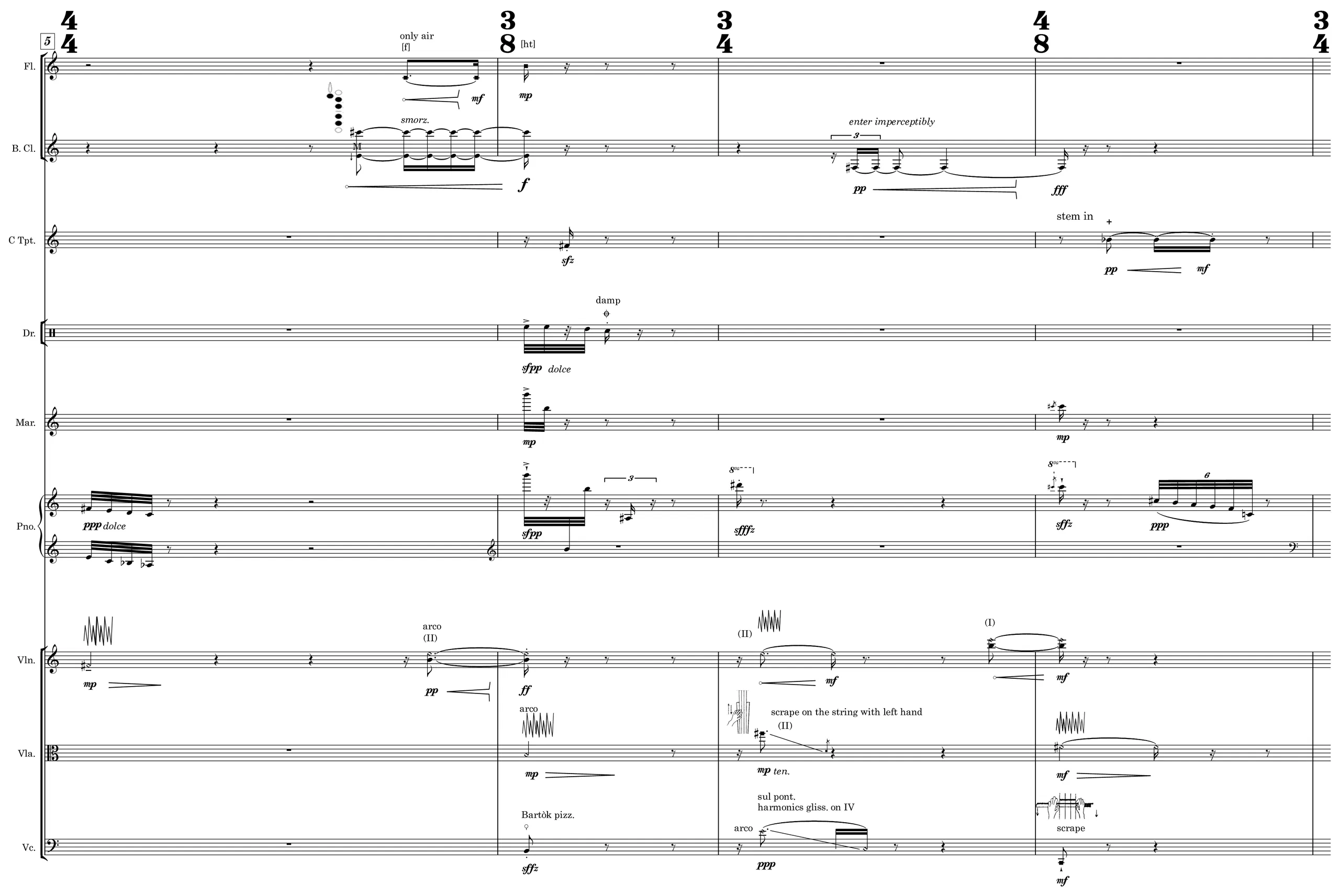
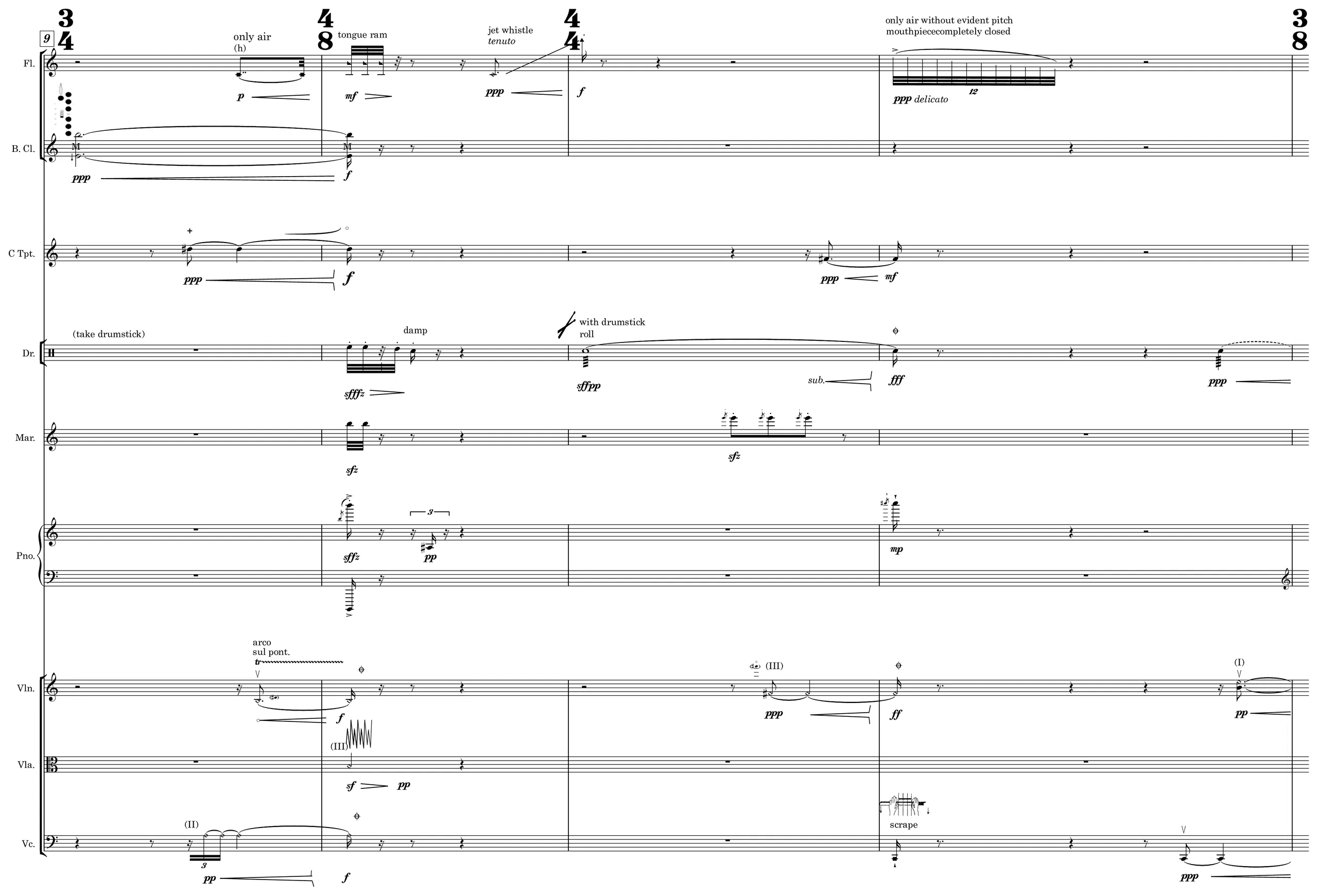
This music is just like what Dürer saw and heard about what he was going to draw - it is a summation - an engraving on paper - of images that vaguely wandered in my mind, images that tried to materialize at some point, sound traces that I don't know where they reached me, sensory memories that I don't remember. So in fact, besides being music, this is also a kind of engraving. The score that will be presented to the musicians is the result of an "engraving" process, both literal and metaphorical. My "rhinoceros" is a "sonic creature" that I have always I heard mentioned, that I long for, but have been struggling to "catch" what it is. This work is the musical equivalent of this "sound creature" image.
- Recording Notes
- Performed by Ensemble Modern
conductor: Bas Wiegers
Recorded by Ensemble Modern, as part of young_talents of the ICCS (International Composer & Conductor Seminars) of Ensemble Modern and the International Ensemble Modern Academy for the promotion of young composers and conductors 2023.
- Record Label
- -
- Performer Credits
- Ensemble Modern / conductor: Bas Wiegers
- Publisher
- -