1 / 31
0:00/0:00
ZW
and—by giving way,
Zachary WilkinsonQuintet
2025
Piano
Saxophone
- Program Notes
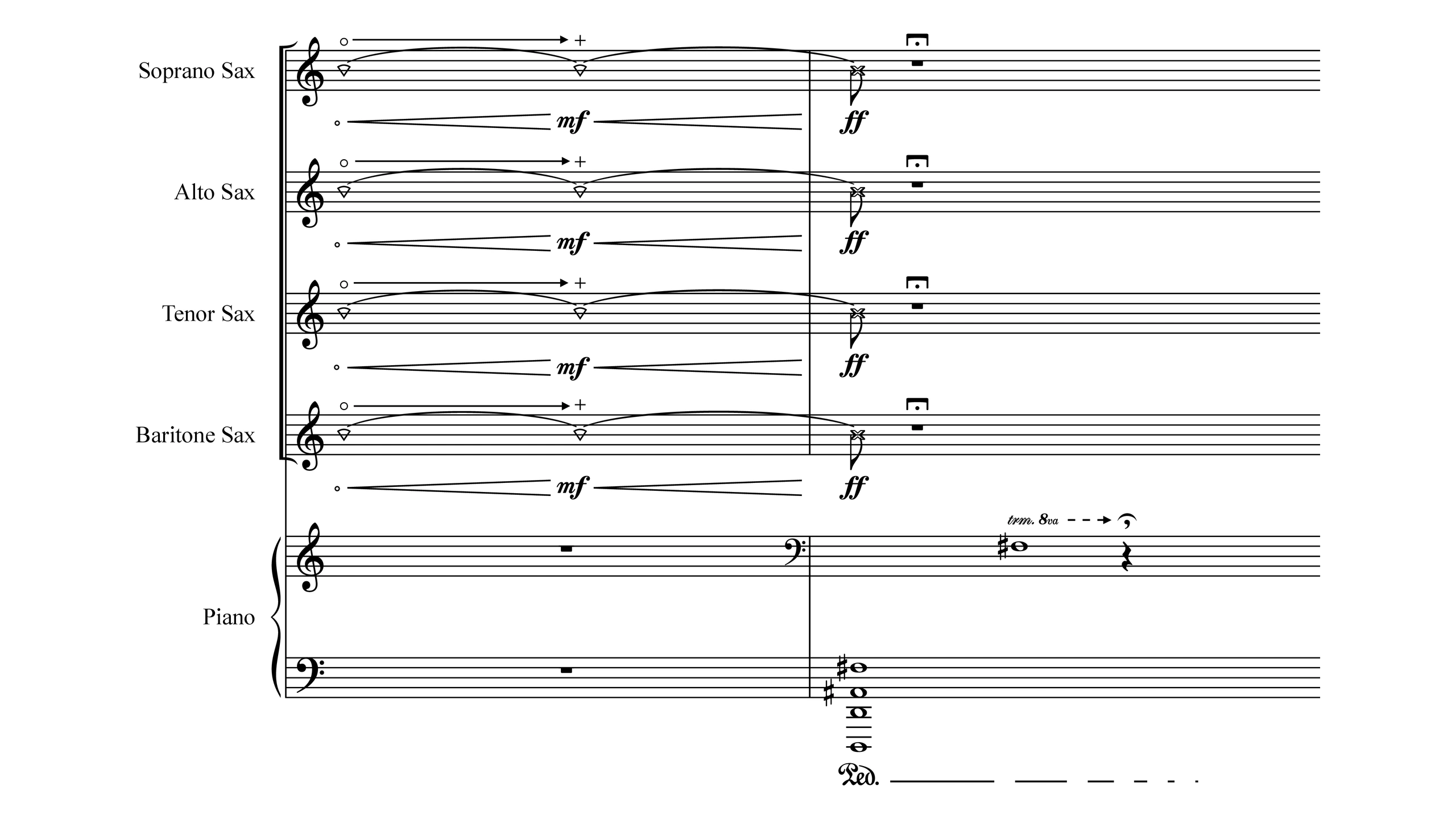
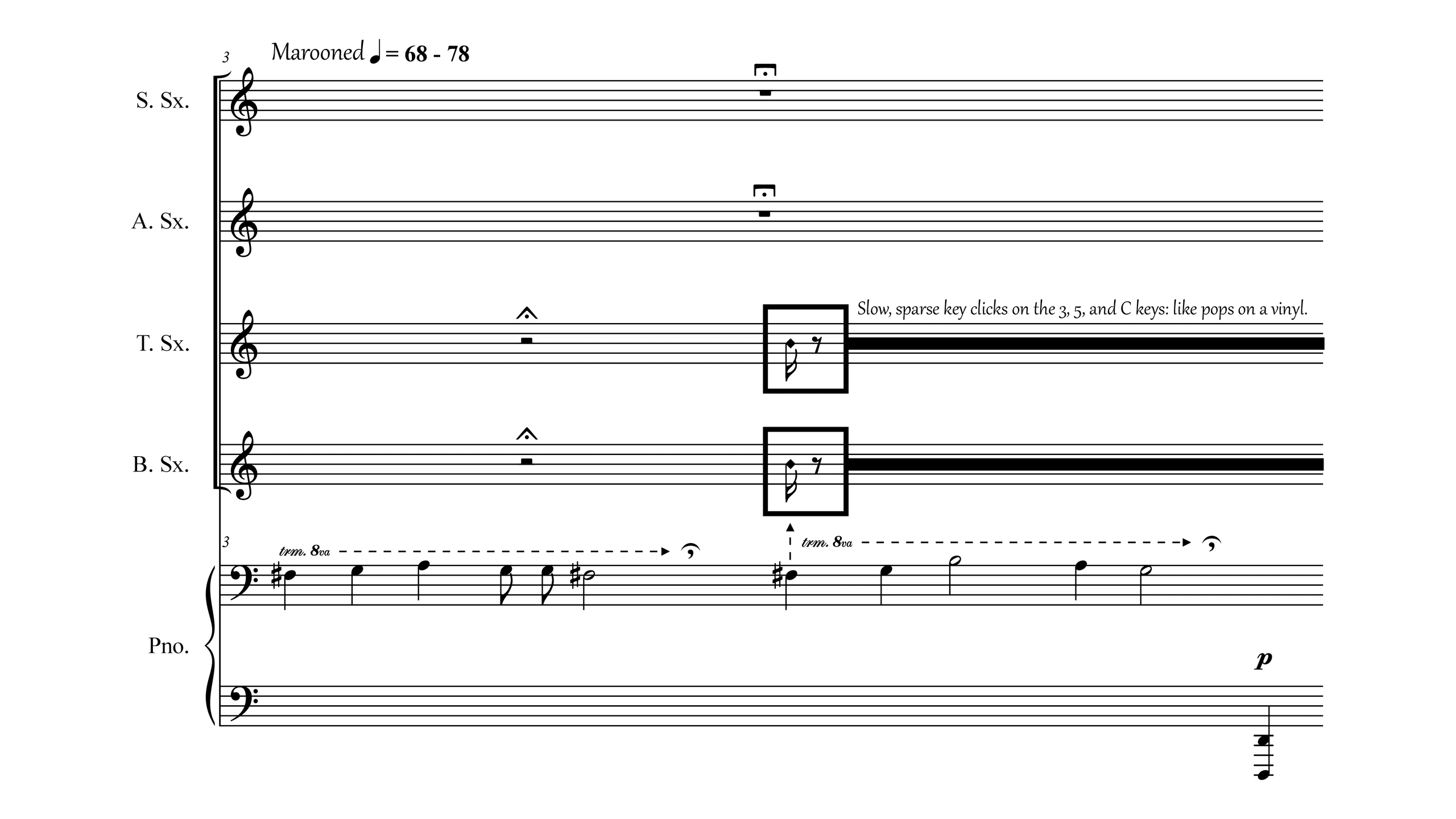
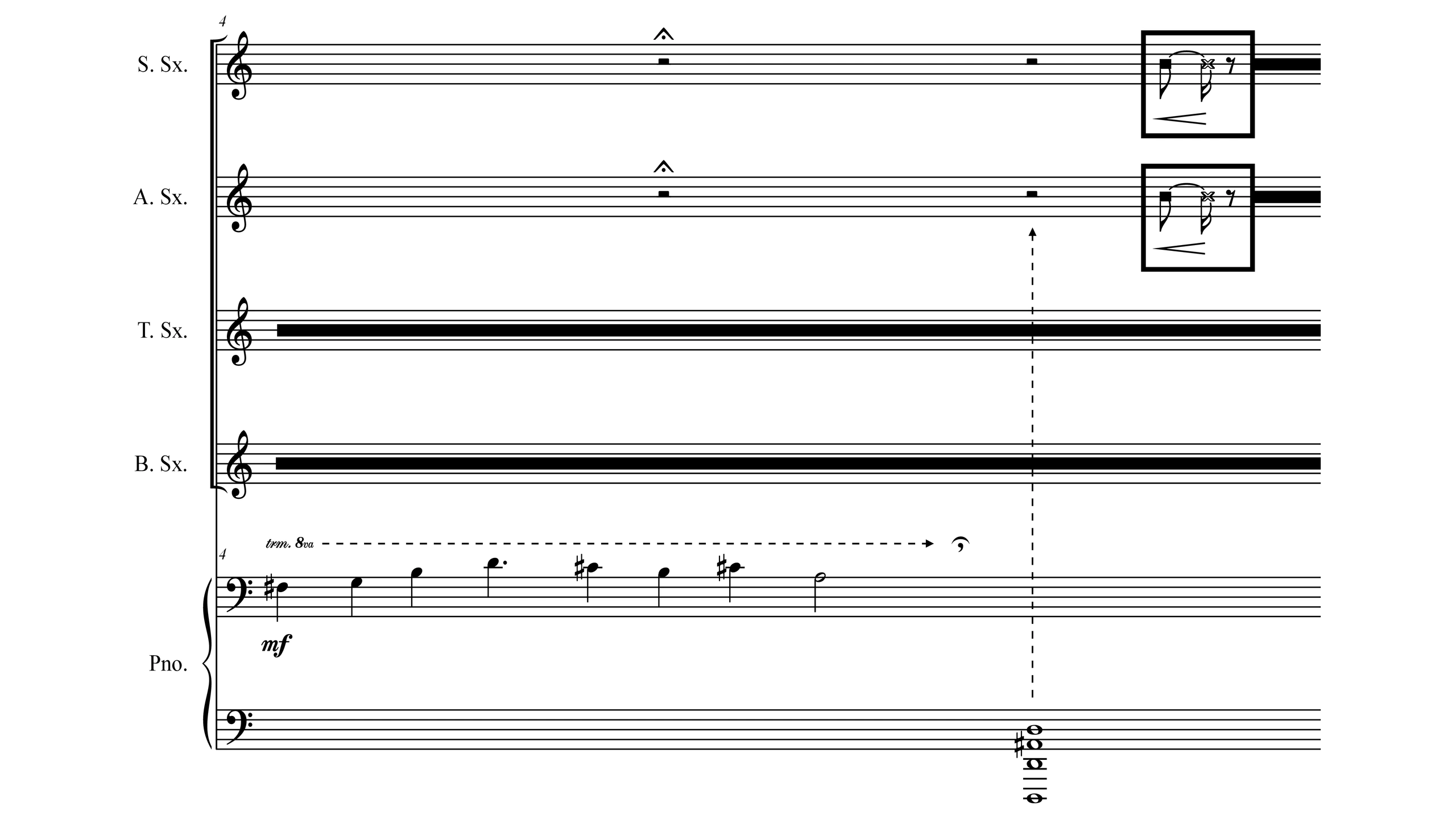
and—by giving way, aims to capture the emotional complexity of surrendering to one's own feelings specifically in relation to grief. The piece opens in a state of dissociation following the unexpected death of a loved one: a numbness that disconnects an individual from those around them, distorting the memories they return to. Life continues at a strange, hurried pace, carrying them forward as though on a current, while they drift above it all, untouched and unmoored. When the Tenor Saxophone takes over the melody, it signifies confronting the idea of loss, yet refusing to move on from that initial acknowledgment. Its line steady but fragile, a voice that carries weight without yielding. As the other saxophones enter, the melody begins to fragment across the ensemble, echoing and blurring, the way memory often does. These fragments overlap and distort, like voices heard through a wall, suggesting the instability of repeated recollection. The second half of the piece does not relent. It confronts the listener with anger, confusion, and resistance. The music becomes dense, almost suffocating, as the refusal to let go reaches its peak. And then, suddenly, something shifts. Not with resignation,orclosure butwithquietinevitability.Agesturethatsuggests,rather than moving on, we have grown to carry the grief more easily.
- Performer Credits
- Solomon Caraway, Alex Rodriguez, Matthew Rendon, Issac Nuño, Zachary Wilkinson
- External Links