1 / 10
0:00/0:00
Orchestra
2025
- Program Notes
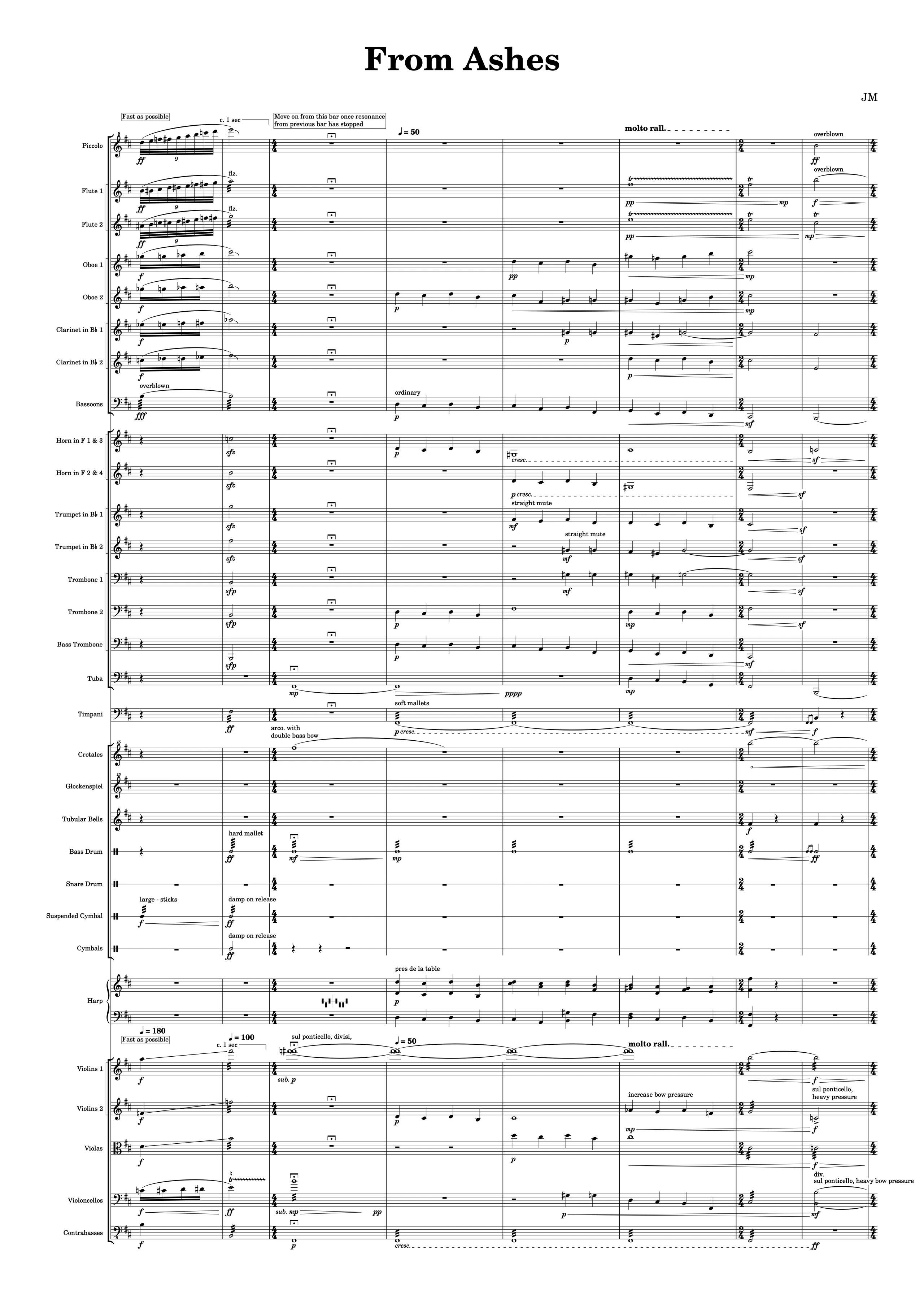
From Ashes is inspired by the various conflicts unfolding around the world at the moment and the devastation that occurs as a result. Below I explain how I’ve tried to reflect a narrative in the composition.
The piece begins with an imitation of an explosion from the orchestra using heavy dissonance, flutter tonguing and overblown reeds. This explosion subsides leaving an ear ringing sound created by a bowed crotale. From this emerges a canon at the tritone.
This melody is taken from the Gregorian chant Dies Irae which is often used as a symbol for death after it was made infamous by Verdi. After this, we are left with a bleak atmosphere created by sul ponticello playing and harmonics as well as trills in lower tessitura woodwinds.
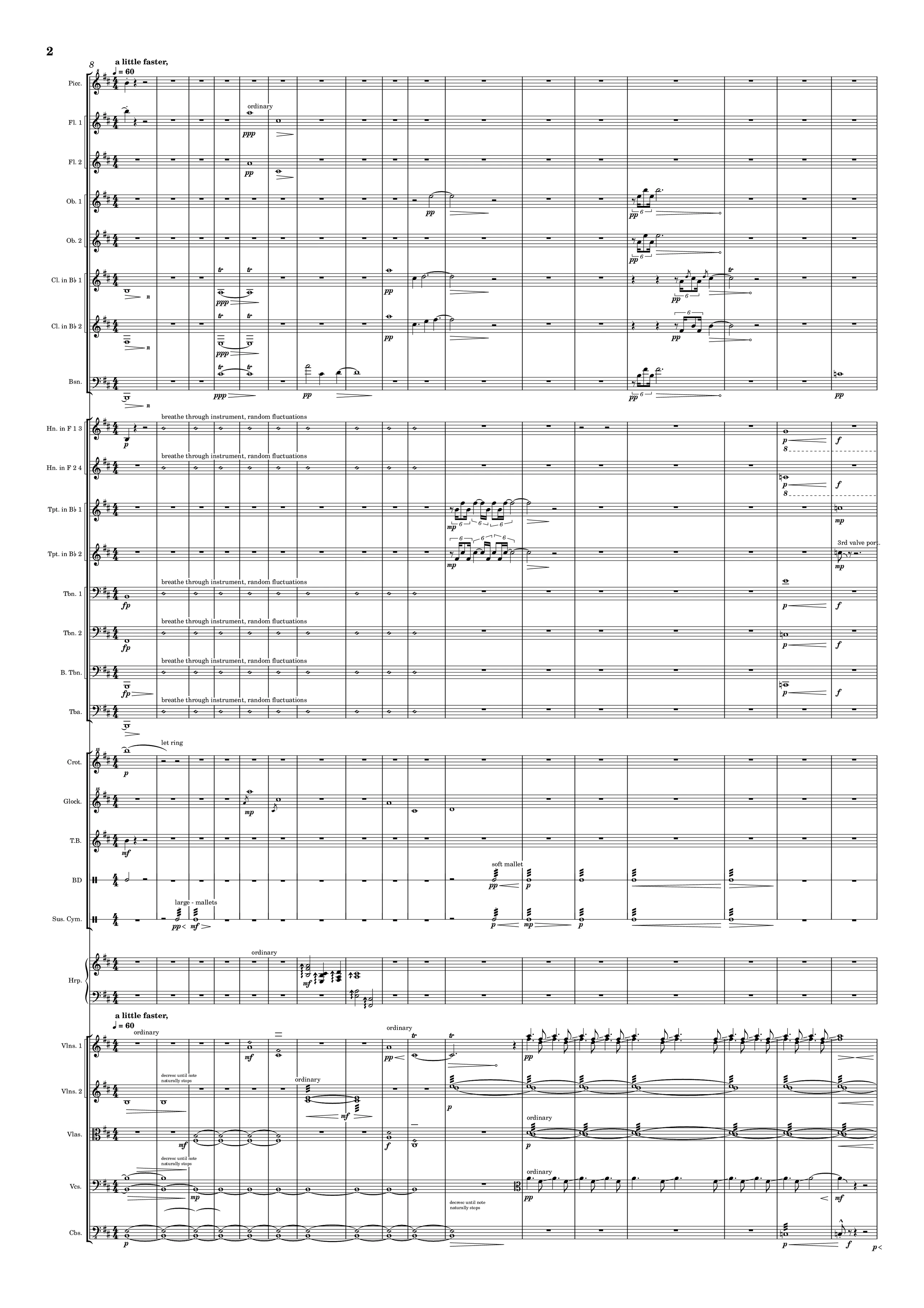
The brass breathe through their instruments, a technique which Victoria Polevá uses in her symphony “the Bell” in which it is used to reflect the devastation of the war in Ukraine.
From this desolate soundscape, there are two fragments which are scattered around. The first is the muted trumpet battle calls which echoes into the woodwinds. This creates a very different impression of a fanfare that is weak and distant rather. The second is the portamenti violin motif which is supposed to be evocative of sirens in the distance. This motif recurs throughout the piece as a backbone representing the ongoing struggle. Under this, tremolo strings crescendo and decrescendo creating a gentle ebb and flow intended to replicate
breathing.
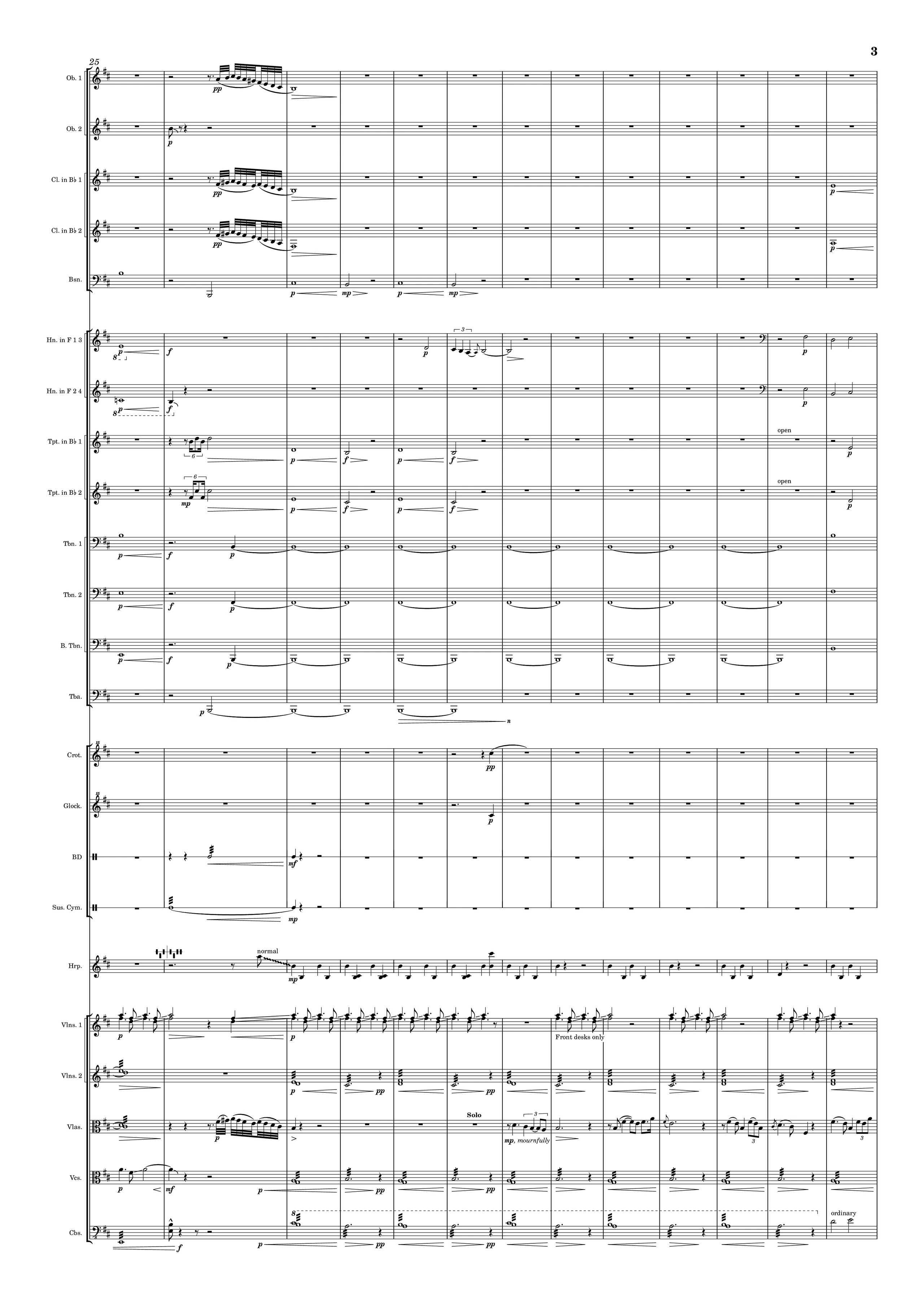
From this soundscape, the main melodic material emerges as a mournful viola solo. The upper strings and woodwinds join in as well as doubling in octaves by the cello as if more voices are joining in on the collective lament. This is underlayed by a snare and a driving tonic pedal, creating a more powerful feel than before.The lament is suddenly interrupted by more violence in a passage of dense counterpoint, rapid arpeggios, and alternating chords a tritone apart, hopefully creating a shocking contrast.
This then comes crashing down again with a tutti C# minor scale.
This violence has led to a heightened sense of urgency with the tonic pedal under distant passing modulations and a subtle accelerando. The main theme is heard again, this time rhythmically shortened, in a high register cello and accompanied by slowly expanding chords.
The high register of the cello creates a colder and more intense sonority than the viola, transforming the theme into one of anger rather than sadness. After a tertiary modulation, the theme is repeated, with even more urgency and power. The accompaniment is formed of both a tonic and dominant pedal as well as various siren motifs out of sync with each other.
Then the strings soar into the top of the register and the theme is heard in a new major harmonisation. The two halves of the theme are turned into a quick call and response between The violins and the flutes. The orchestra then rushes into a huge A major flurry with horn rips and rapid ascending sextuplets in the woodwinds.
However, this climax is cut short and instead the audience is left with just tremolo strings a third apart. All that can be heard is the ringing of the bell and distant sirens all out of sync with each other creating an ethereal atmosphere. Final echoes of the theme are heard overlapping with each other until the piece runs out of energy on a D6/9 lydian chord over A.
The use of wholetone dissonance and the lydian mode at the end leave the audience with a sense of hopeful ambiguity; resolution has not been reached yet but it is close.
- Recording Notes
All sounds used are Musescore 4 and Logic pro X Plug ins