1 / 357
0:00/0:00
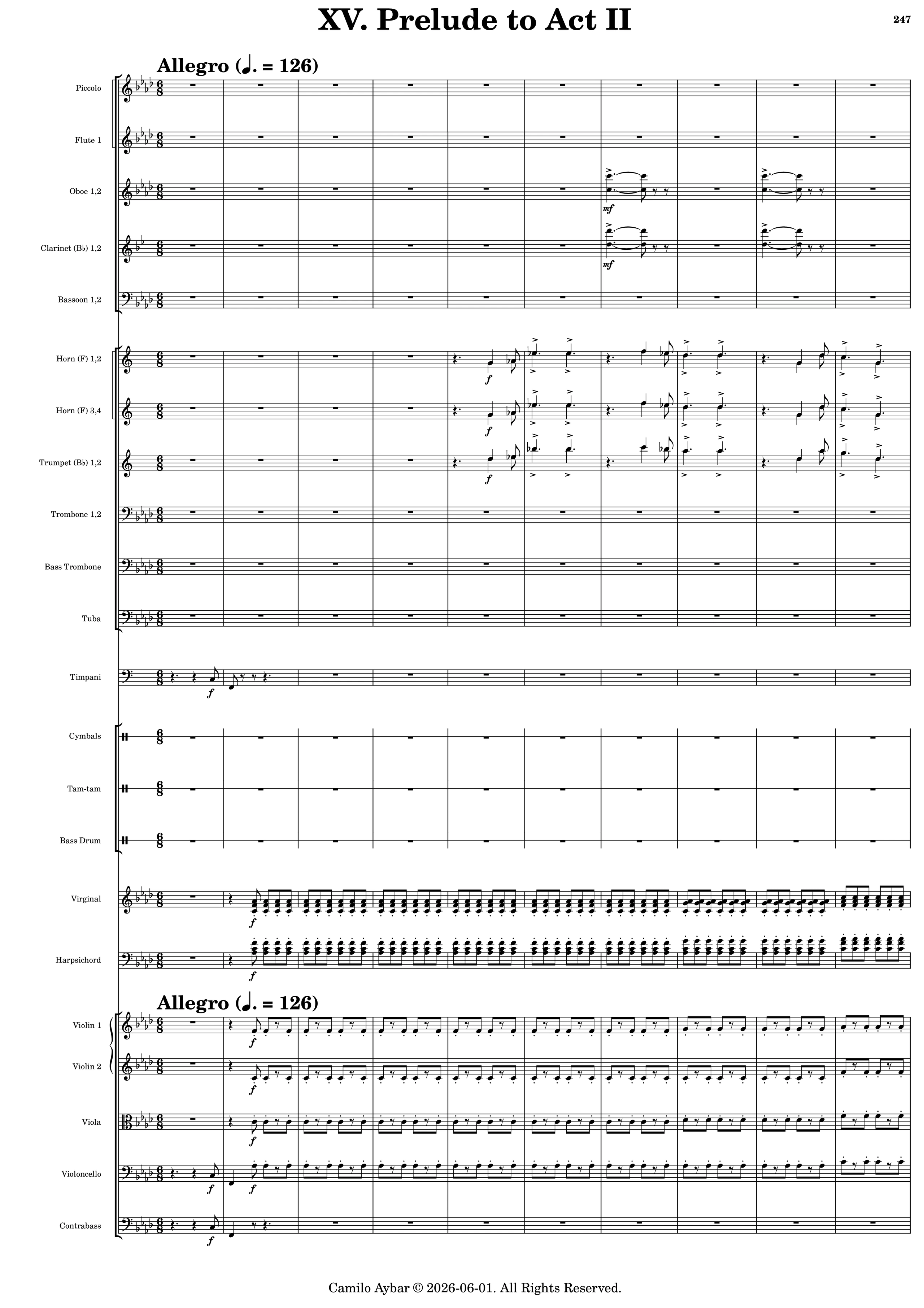
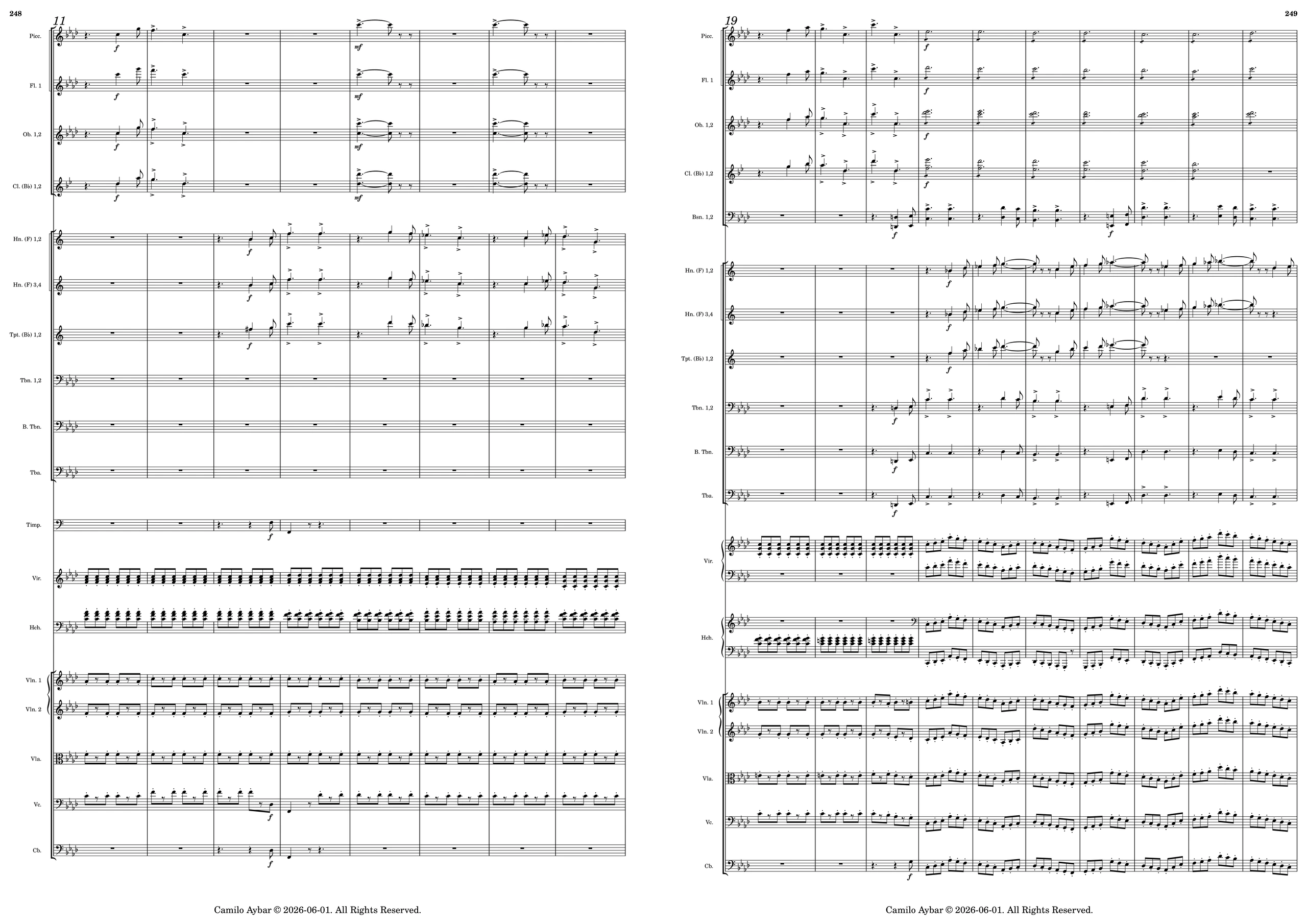
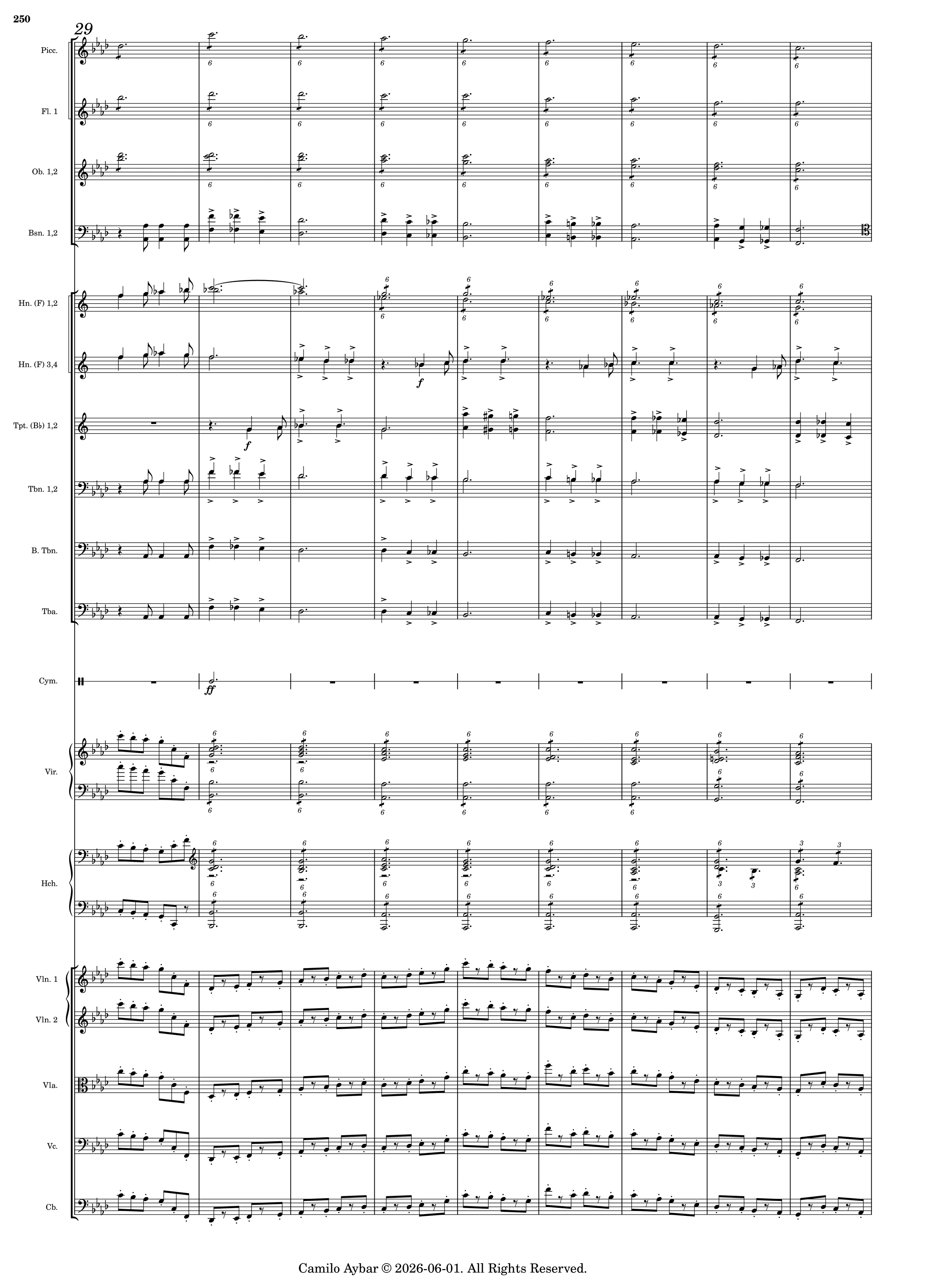
Camilo Aybar's most ambitious project to date. A massive Ancient Roman opera seria exploring themes of power dynamics in relationships, human greed, contradiction, desperation, and distrust (basically his compositional canon in a nutshell) with text written by his good friend Librettist-Baritone Rayn Jandos. Unique in its integration of neo-Baroque and neo-Romantic idioms combined with the use of microtones imitating Ancient Roman tuning systems, the libretto channels Jandos’ obsession for the Roman Empire. It follows lesser-known Emperor Domitian on his path of mental degradation, where after succumbing to love with his servant, Aelius, Domitian’s manipulative niece, Julia Flavia, commits several murders and atrocities in order to secure her power, exploiting this newfound tender side of Domitian.
Act II Summary:
Domitian publicly announces his upcoming marriage, igniting
controversy among the Roman people. Meanwhile, Prefect
Casperius Aelianus seeks to regain the Emperor’s trust,
apologizing to Aelius and vowing to investigate the murder of a
Praetorian Guardsman—an act secretly committed by Julia
Flavia. Determined to undermine Domitian, Julia deploys a spy
and bribes a Naval Admiral to sink a bireme transporting
livestock, triggering riots that the Praetorian Guard struggles to
control, further damaging Domitian’s reputation.
Julia attempts to seduce Aelius, but Domitian misinterprets the
situation and banishes them both. Later, he recalls Aelius and
the two reconcile. Seizing the unrest, Julia conspires with Consul
Evander and the Senate, exposing Domitian’s perceived
transgressions and rallying legions to force his confession. Aelius
begs Domitian to escape with him, but Domitian refuses,
believing he can protect him.
When confronted by the enraged citizens and assembled
legions, Prefect Aelianus reveals Julia’s role in the sinking of the
bireme and the murder of the guardsman. Julia and the Senate
lash out at Domitian, ridiculing his masculinity. In a moment of
weakness, Domitian renounces Aelius, devastating him. Aelius
pleads for mercy, but Domitian orders his execution despite
Aelianus’ objections.
As the crowd rejoices, Julia is imprisoned, the Senate is subdued,
and Domitian spirals into paranoia and despair. The opera ends
in darkness and isolation.