1 / 36
0:00/0:00
For years now, I have been researching the embargo that the United States has forced on Cuba since 1962. The embargo has had a devastating effect on the Cuban people, precipitating several black market networks in the country and severely limiting the supply and range of food, energy, technology, and other essentials. Even though I have never visited Cuba and have little family left there, I have always felt a strong connection to my Cuban roots thanks to my close relationships with my grandmother and aunts, uncles, and cousins.
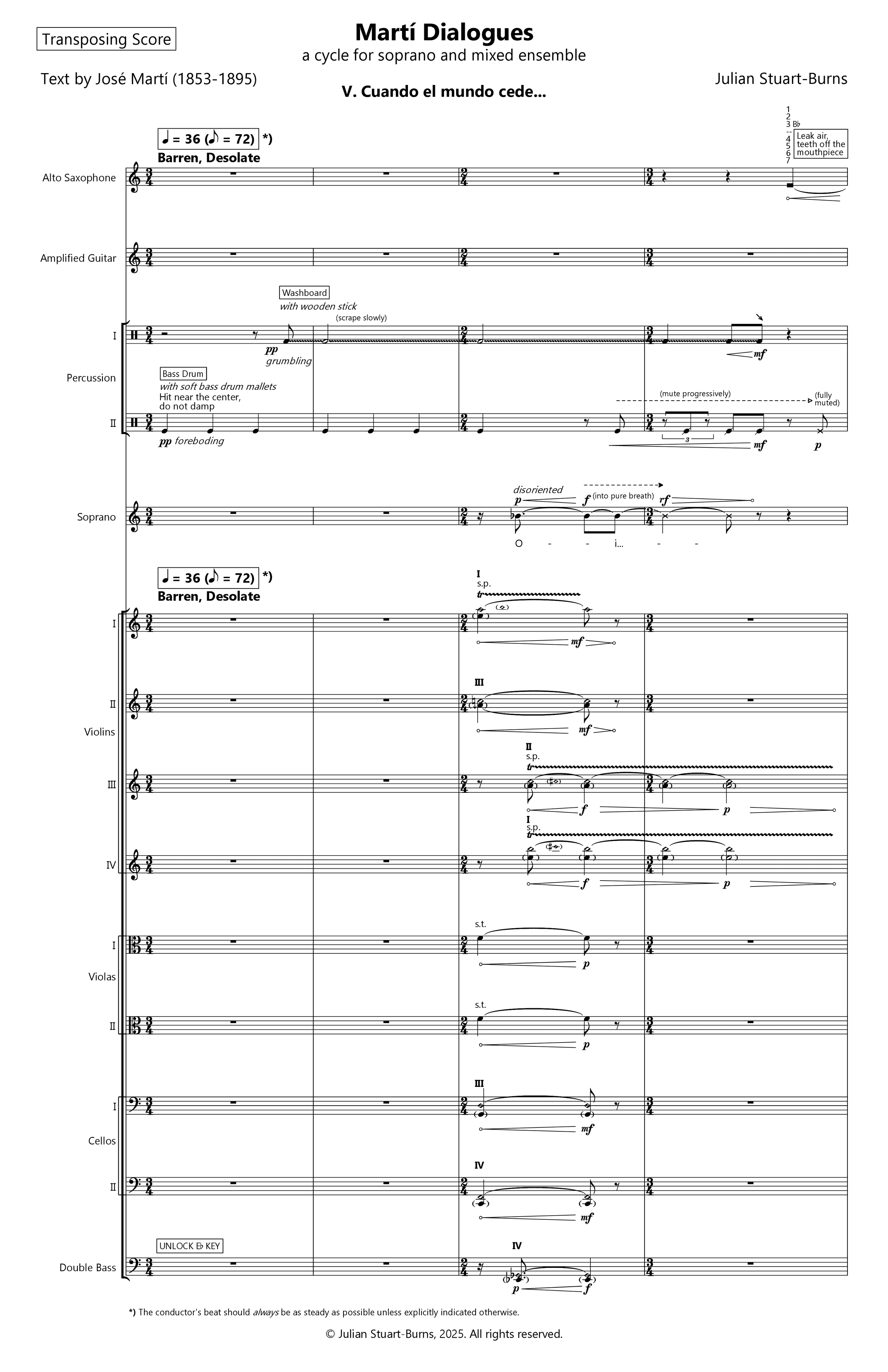
Each of Marti Dialogues’ six movements is set to a poem from José Martí’s legendary Versos Sencillos. Between five of the movements, four interludes set primary and secondary sources related to the Cuban Revolution and the embargo. The movement enclosed here, Cuando el mundo cede…, is the second to last in the cycle, with text from a selection of stanzas from the first poem in Versos Sencillos.
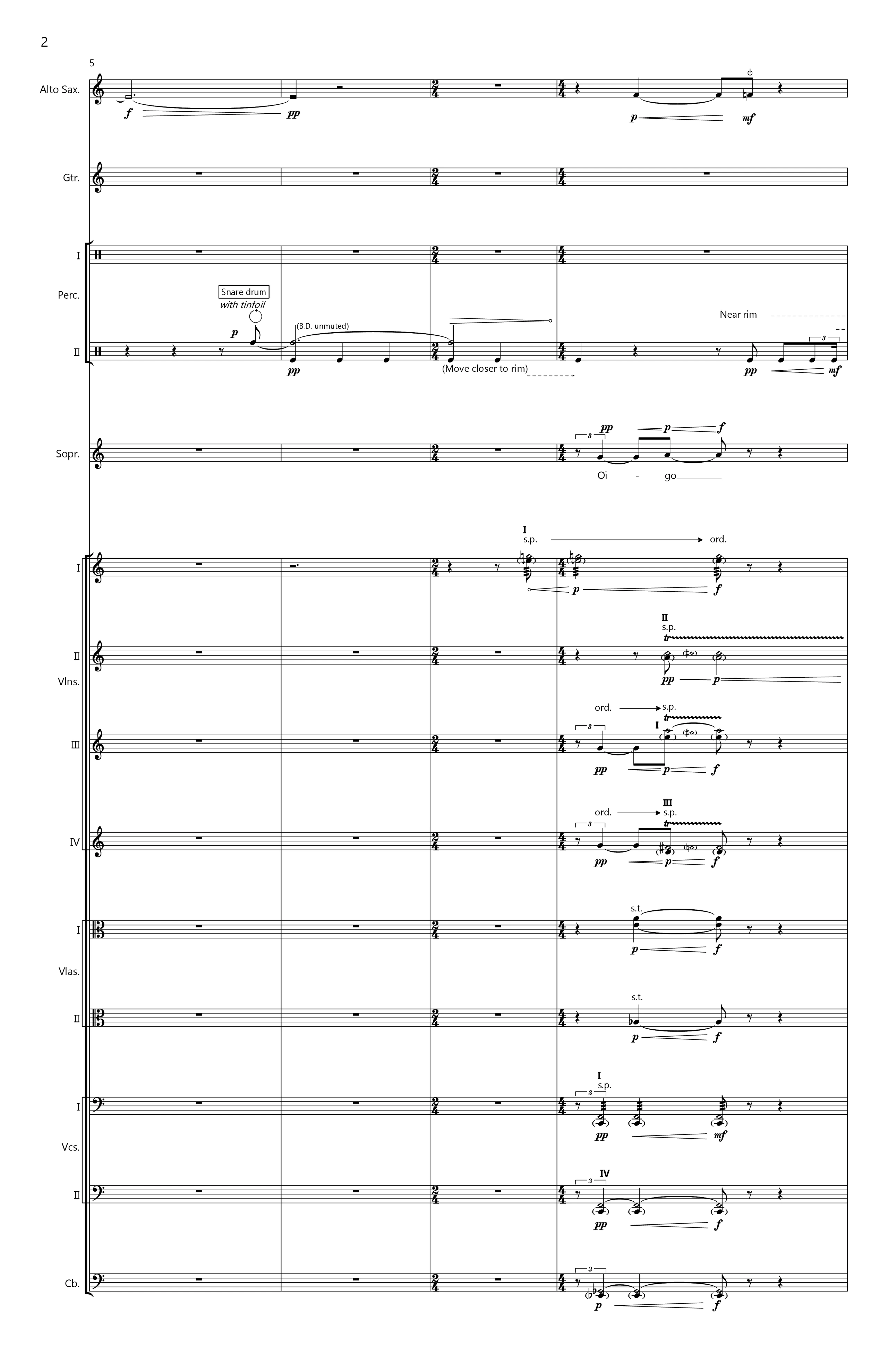
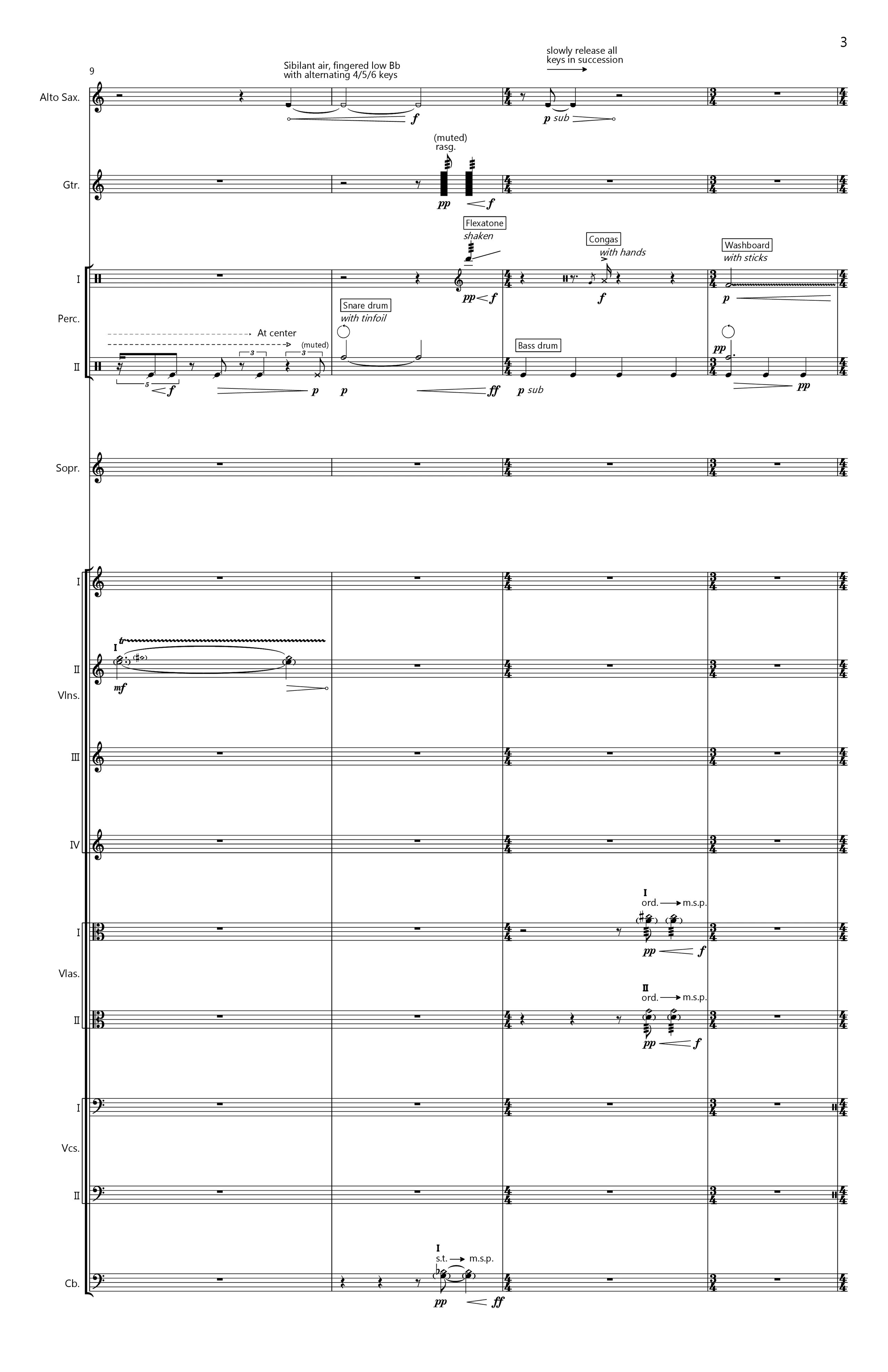
This movement is one of desolation, ghostliness, and apocalypse. The text is a prophetic vision succinctly describing a struggle leading to the end of the world. Because of the gravity of the words, I use repetition as a crucial musical device, with the singer dwelling on each word for an almost painstaking amount of time. As this vision of the end of the world keeps repeating, the music becomes more and more restless, with the emanations of the bass drum and the resonances emerging from the bowed cymbal becoming increasingly chaotic as the piece continues. At the end, the music, true to the text, yields to its own weight, collapsing in a moan of indeterminate pitch.
Performed at the Eastman School of Music's Kilbourn Hall by Musica Nova, conducted by Peiwen Zou.