1 / 168
0:00/0:00
CA
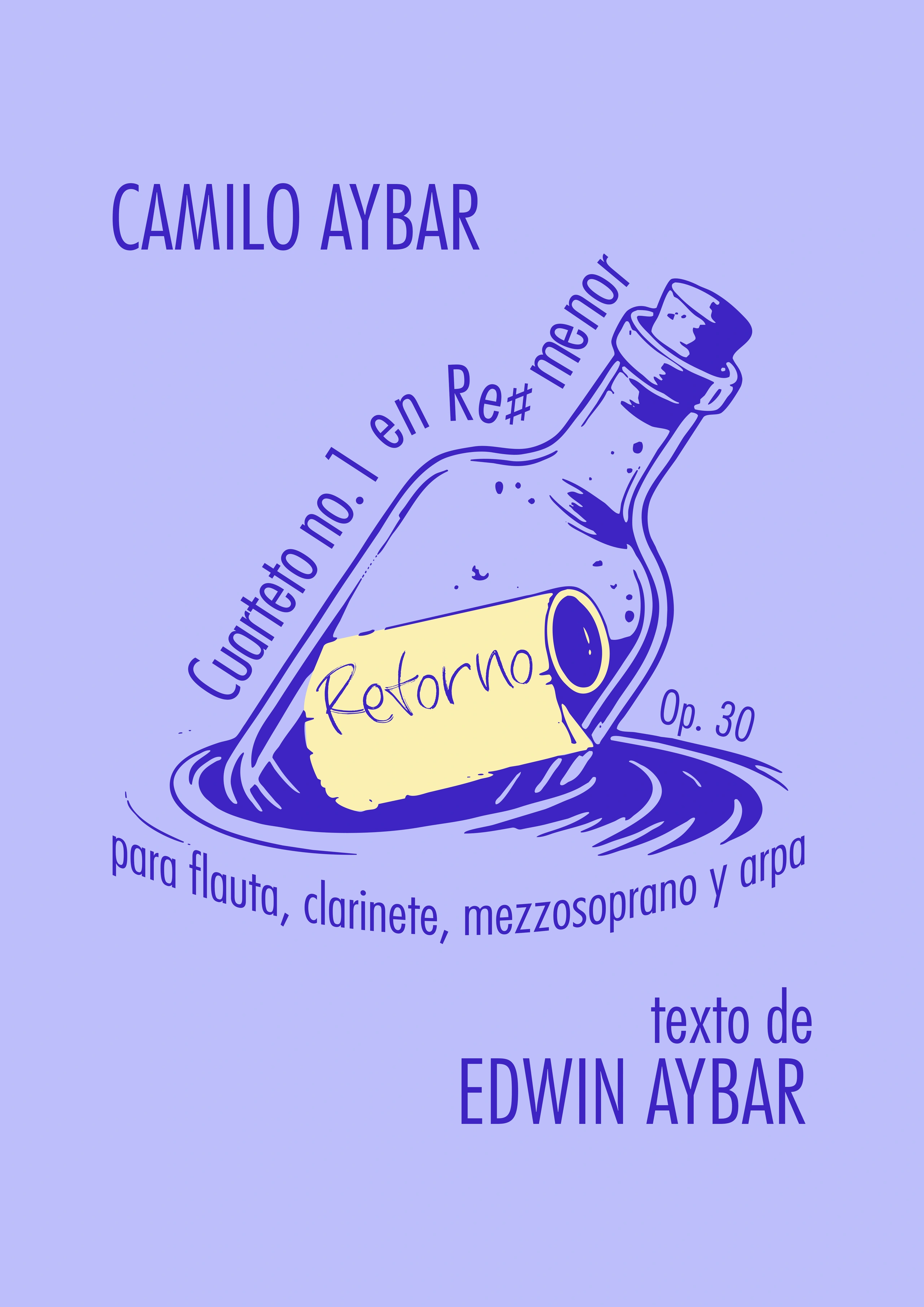
Op. 30 - Quartet No. 1 in D♯ Minor for Flute, Clarinet, Mezzo-Soprano, and Harp "Retorno"
Camilo Aybar194 views
Quartet
2026
Clarinet
Flute
Harp
Mezzo-soprano
- Program Notes
“¿De qué sirve cantar hoy si lloraré mañana?” (“What is the use of singing today if I will cry tomorrow?”)
- Edwin Aybar
Why enjoy the aroma of the spring blossom when the indifferent winter wind will inevitably choke at our nostrils once more, killing all that was once beautiful? Aybar’s Quartet No. 1 in D♯ Minor, birthed immediately after a descent into madness and unorganized atonality in the finale of his Second String Quartet (Op. 29), seeks to answer these very questions. Through its three fleeting movements, it coerces us to feel that this is the very reason to sing louder—to find comfort in and embrace the very indifference and coldness that once froze us to death. One will then discover that the warmth we seek actually comes from within, and perhaps the coldness we dreaded was in the end a self‑fulfilling prophecy.
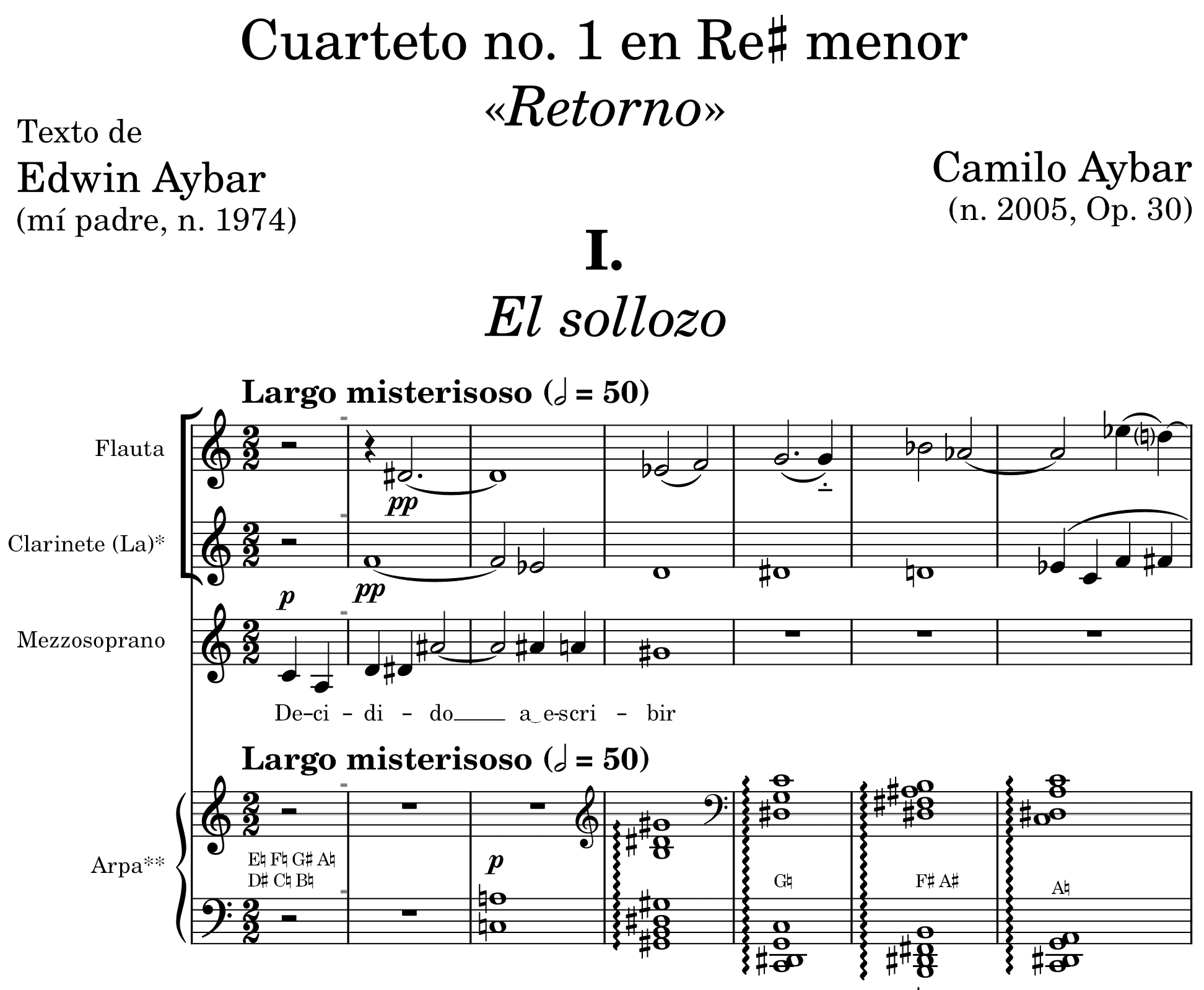
I. Largo misterisoso "El sollozo"
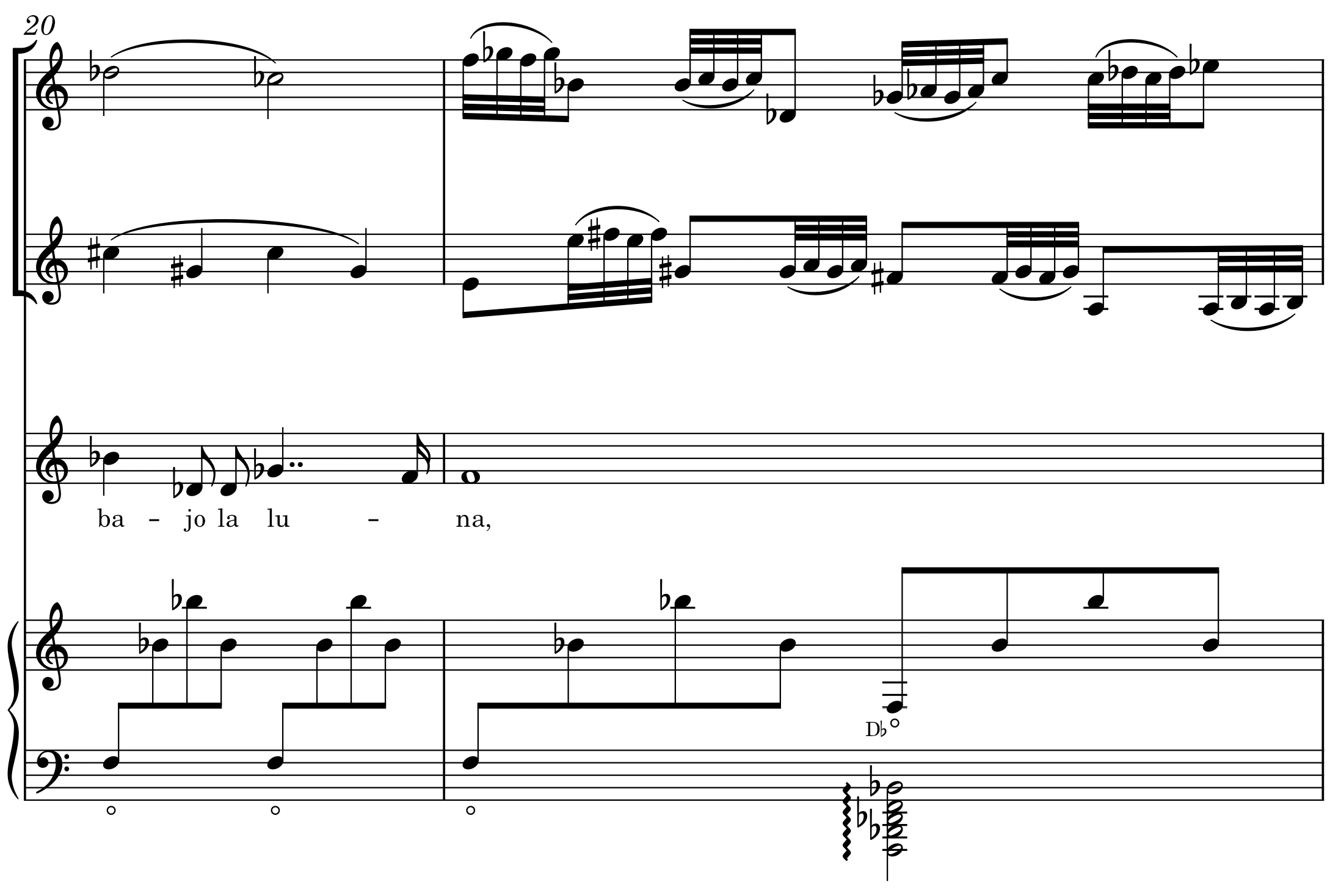
A five‑note motif blooms, each member of the quartet a petal. The mezzo is hesitant in their delivery of the opening text, isolated in a moonlit wintry landscape of minimal accompaniment, punctuated by bursts of winter (wood)winds. The mezzo is hit with an untimely sob punctuated by shocking minor‑major chords. In a dialogue with the winter winds, they question their sobbing, and eventually become enchanted with their own mournful cry. An uneasily meandering development and recap leads us to the crux of the piece’s fabric. Time stands still in a recitative where the pivotal question is posed. The mezzo comes to understand the true depth of their suffering and falls into a pit of despair. But then, light rains down in gleaming E♭ major, delivered through the sweet timbre of the heroine flute. The soulful clarinet joins and lulls in this newfound warmth. The mezzo sings a chorale pledging to hold on to this new light for as long as they can. The flute and clarinet meld into a beam of light that guides us to a new beginning.
II. Vivacissimo vigoroso "Galope de primavera"
With this bridge to a new beginning, the flute and clarinet excitedly take it into a rustic dance, which eventually becomes a bit uneasy—as with every new beginning comes new uncertainty. After these woodwinds tire themselves out, the mezzo begins describing all the ways in which they envision this return in bright F♯ major, with hints of nostalgia for a memory that does not even exist. These repeated affirmations start to border on insanity as the harmony becomes increasingly unnerving and destabilized, until we are left with a five‑note scale on which the flute and clarinet vigorously and insistently dance.
III. Tema con variazioni. "Botella de instantes"
Aybar announces a return to Romanticism and tonality with a printed key signature and a (rather sappy) bel canto theme. The mezzo lulls on how they will always want more, as each variation is cut short in an irregular phrase structure. In the second variation, a recitative comes dangerously close to resembling the echoes of the cries from the first movement, but the mezzo refuses and runs into Variation 3, Aybar’s umpteenth (successful?) attempt at counterpoint in an obligatory fugue—a testament to “fake it ‘til you make it.” Variation 4: the frost begins to finally melt as we peer into a world of mesmerizing beauty, Aybar’s first sincere outburst of Romanticism in a long time. Variation 5, which quite literally emerges from a dream, takes up a suspenseful march that lingered in Aybar’s unconscious during a liminal visit to a distant land of intrigue. Variation 6: a simple sequence leads us up an ethereal staircase to a proverbial heaven of passionate and heart‑wrenching suspensions. Simplicity can be liberating. In the culminating Variation 7, the mezzo finally breaks the cycle and pledges to bottle this eternal desire in a closing chorale, where the flute and clarinet intertwine into a transformed five‑note motif which finally fulfills its promise and returns—but to where? It is hidden in the spring mist of the final pensive chord.
A cold and forlorn teenage Edwin Aybar surely would never have envisioned his son, exactly 29 years later, uncorking the very bottle of uncertainty that once choked him. From poet to composer, father to son, the question of Retorno raises one truth: no matter how fleeting life can be, how arduous it is to hold on to the warmth of spring when winter always lurks around the corner—meaning and hope thrive in that very waiting, warmth is found from within that very coldness. The final chord is not an end. It is a pause. The spring mist lifts, and somewhere, the motif starts again. Here’s to another 29 years.