1 / 49
0:00/0:00
String Quintet
2017
Cello
Double Bass
Viola
Violin
- Program Notes
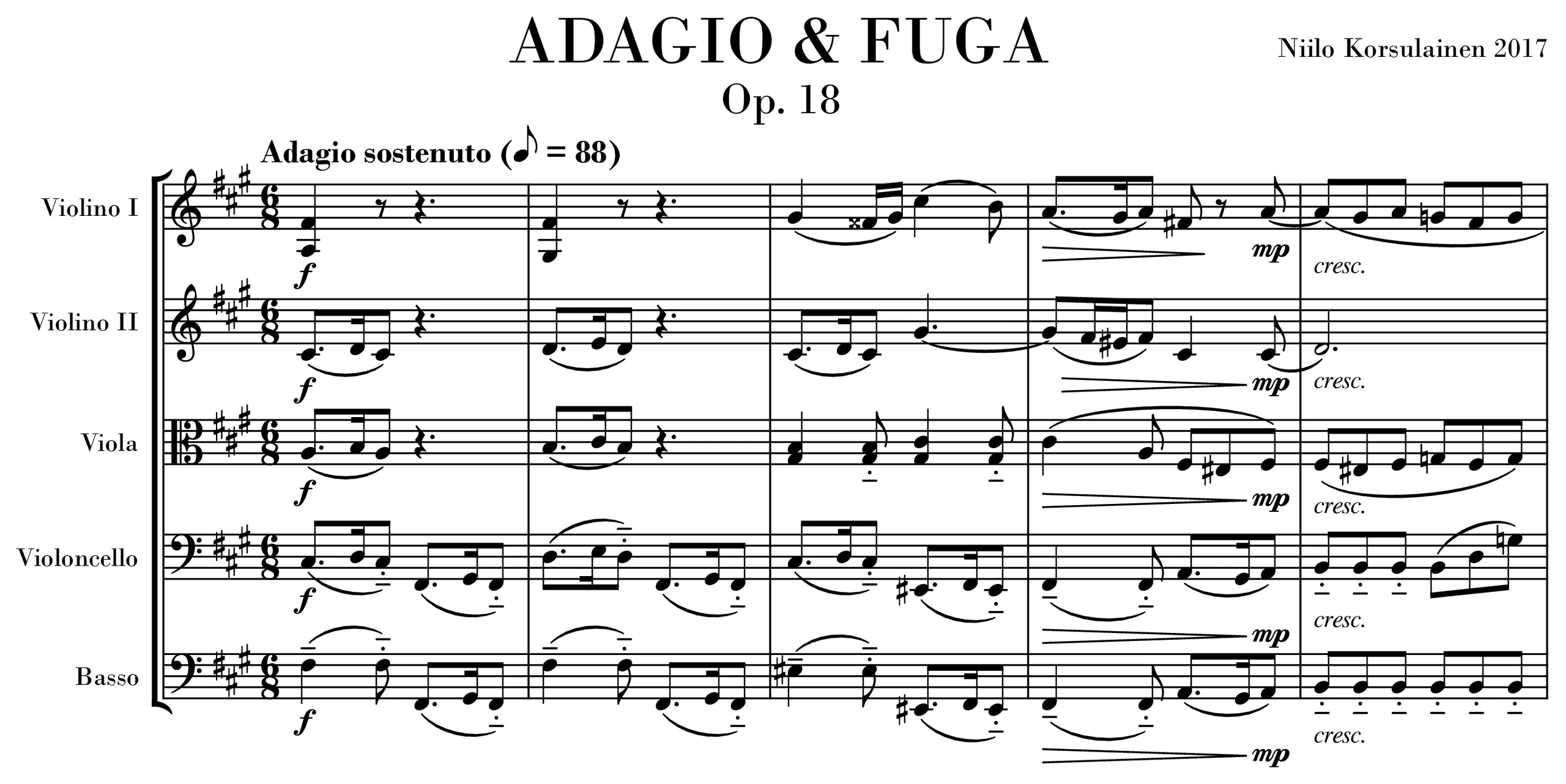
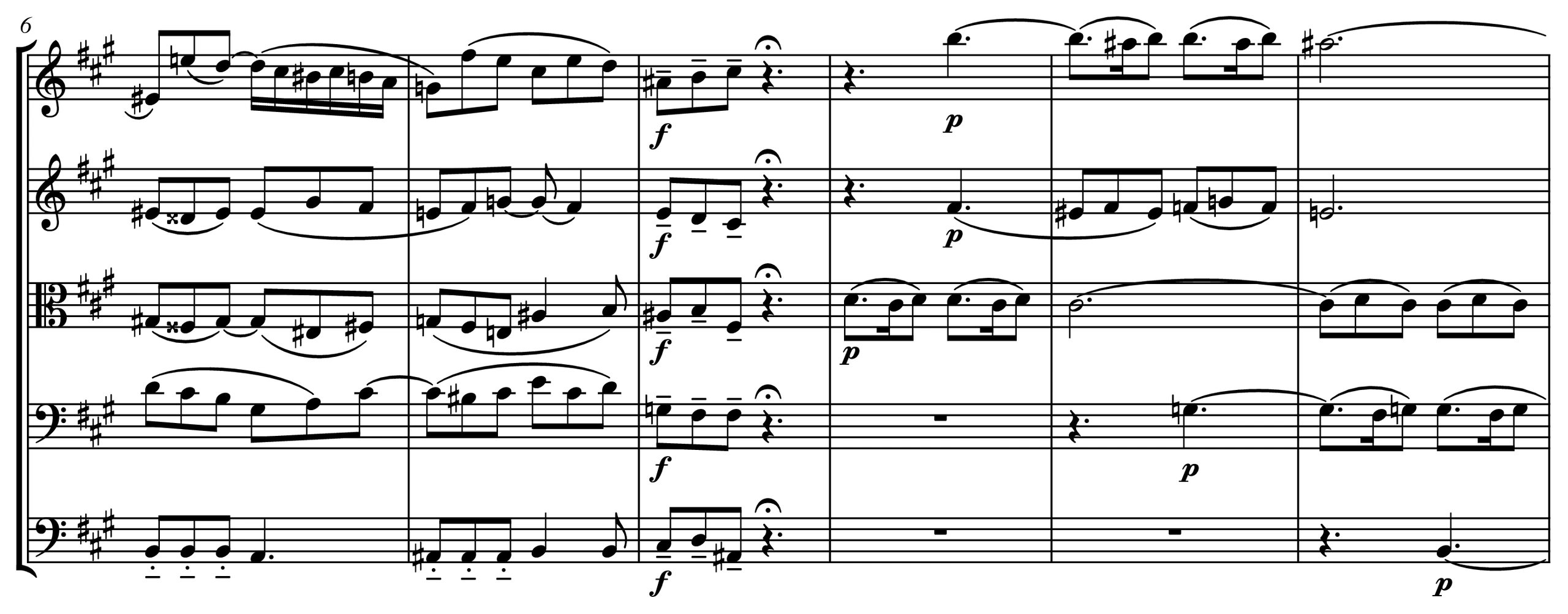
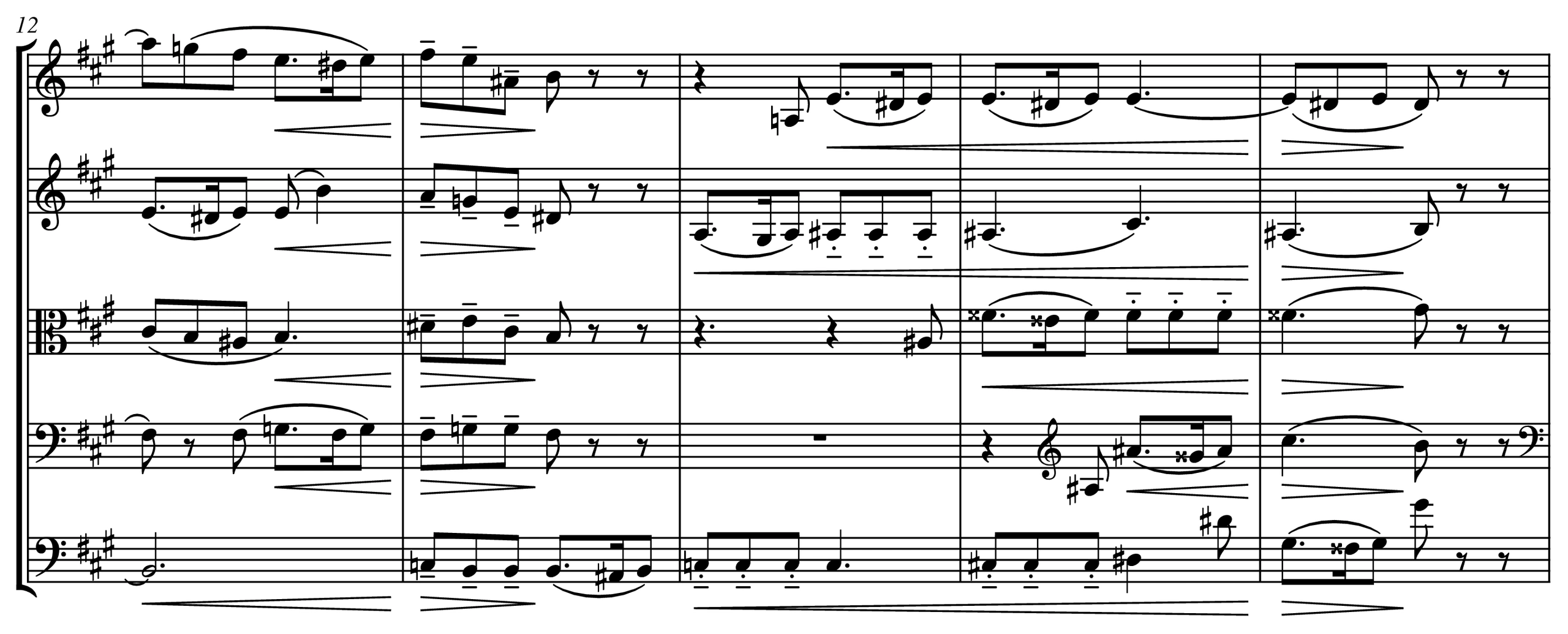
This Adagio and Fugue for strings was modeled after another piece by the same name, namely Mozart's K. 546 in C minor which is among his most harmonically adventurous works. I discovered it in 2016, and it instantly became a favourite; the kinship is especially evident in the softer, gloomy passages of the Adagio as well as the appogiatura-heavy second countersubject in the fugue which resembles the tail of Mozart's subject in K. 546. However, I took things a step further to suit my own artistic expression: this is not a Mozart-style piece by any means, even if there are moments that maintain the familiar elegance of K. 546. Although some people have characterised the piece as "late Romantic" (likely influenced by the at times heavy chromaticism and the general thickness of the string writing which, admittedly, point more towards late Brahms), it is, at least in my mind, much more an extension of Classical rhetoric than a truly Romantic piece. The only piece I had in mind while writing this was K. 546 – everything else is simply a continuation of Mozartian chromaticism taken to its extreme and beyond the bounds of what would've been conceivable in the 18th century.
Finished in early 2017, this piece was awarded 3rd prize in the Uuno Klami Youth Composition Competition held in November 2017 and broadcast live on the radio by the Finnish Broadcasting Company (YLE). It was also performed in March 2018 by top-tier Finnish musicians at Oulu City Hall, and in March 2020 (a week before the pandemic!) in the Lahti Sibelius Hall. Despite being such an old work (the fugue was written nearly a decade ago, in the autumn of 2016), it remains as one of my finest, as well as darkest, compositions. Set in the rare key of F-sharp minor, the piece consists of a mournful 6/8 introduction full of siciliano rhythms and a formidable double fugue (with two quite liberally employed motivic countersubjects and a recurring third "quasi-subject") in five voices. Originally conceived for string quintet, the piece is presented here as a newly revised version for string orchestra, as the Muse Sounds library does not currently feature a solo contrabass sample.